
Red wood ant
Formica rufa
Description
How to identify
The Red wood ant, scientifically known as Formica rufa, is a member of the Formicidae family within the order Hymenoptera. They are recognized by their large, cone-shaped nests built from twigs and pine needles.
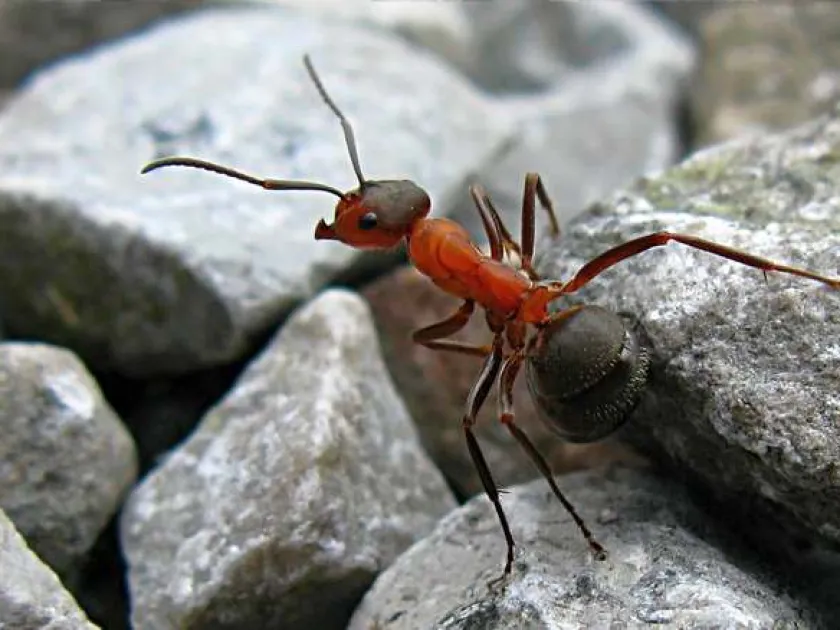
Adult workers measure between 7 and 14 mm in length. Their bodies are typically reddish-brown, often with a darker abdomen, and they possess a very distinct, sharp-smelling formic acid defense mechanism.
These ants are highly social insects with a sophisticated colonial structure. A single nest can contain one or more queens and hundreds of thousands of workers performing different tasks.
Colonies hibernate deep within the soil during winter months to avoid freezing. As soon as temperatures rise in early spring, the colony exits the nest to begin foraging activities.
They are highly active throughout the summer, maintaining clear, well-trodden foraging trails from their mound to nearby food sources, which often include garden plants.
What it damages
The primary economic damage caused by Formica rufa in agricultural settings is their mutualistic relationship with aphids. The ants protect aphids from natural predators to collect honeydew.
By preventing ladybugs and lacewings from consuming the aphids, the ants ensure that the aphid population multiplies rapidly, causing severe infestations on fruit trees and berry bushes.
Feeding by these pests leads to leaf curling, stunted shoot growth, and a general decline in plant health. Furthermore, the excretion of honeydew promotes the growth of sooty mold.
Beyond their role in aphid farming, these ants may cause direct damage to seeds and seedlings. Their tunneling behavior can disrupt the soil around young roots, leading to dehydration.
In some instances, they may feed on soft berries or the skin of ripening fruits, providing entry points for secondary infections or further pest colonization.
Control measures
Controlling red wood ants in a garden setting is best achieved through physical barriers. Applying sticky insect barriers around tree trunks prevents ants from climbing up to manage their aphid farms.
Effective management of aphid populations is essential. By controlling the primary food source of the ants, you reduce their interest in visiting specific trees within your orchard.
Targeted bait stations containing slow-acting insecticides are highly effective. The workers carry the poisoned food back to the nest, which ultimately eliminates the queen and the colony.
Soil management plays a crucial role; regular cultivation and weeding of garden beds discourage ants from building small satellite nests near your prized crops or young trees.
For sustainable control, avoid leaving wood debris or piles of organic matter in the garden, as these provide ideal conditions for ants to establish their nesting sites.
Taxonomy
- Latin name
- Formica rufa
- Order
- Hymenoptera
- Family
- Formicidae
- EPPO code
- FORMRU
Discussion
No discussions yet — be the first.