
Red wood ant
Formica polyctena
Description
How to identify
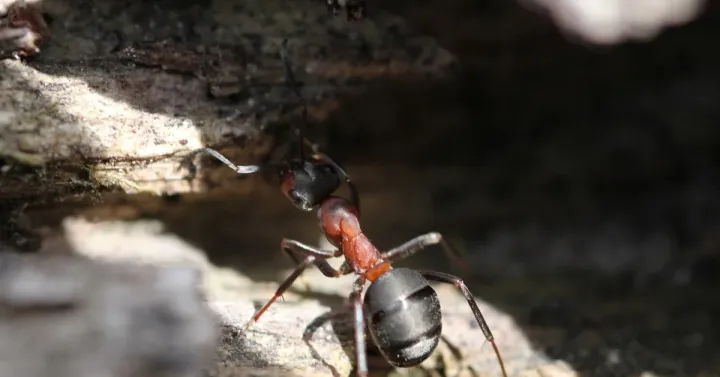
The red wood ant (Latin: Formica polyctena) belongs to the order Hymenoptera and the family Formicidae. These insects are medium-sized, with workers typically ranging from 4 to 9 mm in length and displaying a distinctive reddish-brown to dark color.
They are famous for constructing large mound-shaped nests made of needles, twigs, and other forest debris. These mounds can reach over a meter in height, serving as a landmark for their dense, highly organized colonial presence in woodland areas adjacent to farms.
Unlike many other species, Formica polyctena is polygynous, meaning multiple queens inhabit a single nest. This biological strategy allows colonies to expand rapidly, creating a sustained impact on the surrounding vegetation.
These ants are known for their defensive behavior and aggression. When threatened, workers spray formic acid, which serves both as a chemical deterrent for predators and a tool for neutralizing obstacles or other insects.
Their life cycle includes a complete metamorphosis: egg, larva, pupa, and adult. They spend the winter in the deep, warmer layers of their nest, emerging during the first spring days to begin their foraging activities.
What it damages
While often considered beneficial in forests, in agricultural settings, these ants become pests primarily due to their symbiotic relationship with aphids. The ants protect aphid colonies from natural predators such as ladybugs and lacewings.
Aphids feed on the sap of fruit trees, berry bushes, and vegetables, leading to stunted growth, leaf curling, and severe reductions in crop yield. The constant sucking of sap drains the plant's resources.
Ants actively transport aphid eggs or nymphs to healthy parts of the plant, effectively spreading the infestation across the entire orchard. This human-like management of aphids makes them a significant vector for pest proliferation.
During nest construction, ants may tunnel through the root zone of young trees or seedlings. This activity damages the root system, preventing proper nutrient absorption and causing the plant to wither or die during dry spells.
Furthermore, their presence in vegetable gardens and strawberry patches can result in direct damage to ripe fruits, which they often consume or pierce, creating entry points for secondary bacterial or fungal infections.
Signs of infestation
A primary indicator of infestation is the presence of visible ant trails moving up and down the stems of fruit trees. These trails are consistent and lead directly to the aphid-infested parts of the canopy.
Curled, yellowing, or drooping leaves on new shoots are classic signs of aphid colonies protected by ants. Inspection of the undersides of these leaves will typically reveal large concentrations of aphids.
The presence of honeydew—a sticky, sugary substance secreted by aphids—covers the leaves and branches. This substrate is an ideal breeding ground for sooty mold, which manifests as a black, soot-like film on the plant.
Locating large mound-shaped nests near the perimeter of your field or within the orchard is a clear sign that a high population of these insects is actively working on your land.
Inside greenhouses or plastic tunnels, the discovery of ant nests in the soil or under equipment is a sign that the ants have established a satellite colony, which will inevitably lead to the degradation of protected crops.
Control measures
Effective control requires a two-fold approach: eliminating the aphid food source and managing the ant population directly. Using insecticides to kill the aphid colonies is the first step, as it removes the incentive for ants to protect the plants.
Applying sticky glue traps to the trunks of trees acts as a physical barrier. This prevents ants from climbing up, leaving the aphids defenseless against their natural enemies and drastically reducing the pest population.
Using slow-acting poisoned bait stations is highly effective. Worker ants carry the bait back into the colony, ensuring the entire nest, including the queens, is eliminated over a period of several days.
In gardening, planting repellent crops such as garlic, onions, or mint in rows can create an unfavorable environment, discouraging ants from patrolling those specific areas of the garden.
Mechanical destruction of nests followed by soil amendment (like the application of lime or wood ash) is recommended for small or isolated colonies, though professional pest management may be necessary for large-scale infestations.
Taxonomy
- Latin name
- Formica polyctena
- Order
- Hymenoptera
- Family
- Formicidae
- EPPO code
- FORMPO
Discussion
No discussions yet — be the first.