
Black shining ant
Formica picea
Description
How to identify
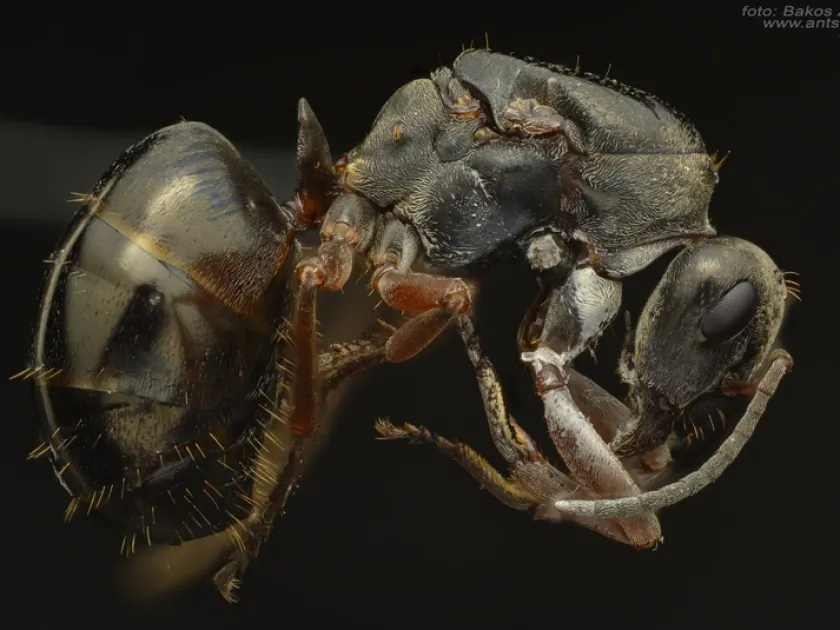
The black shining ant (Formica picea) belongs to the order Hymenoptera, family Formicidae. These are small insects distinguished by their deep coal-black color and a characteristic glossy, shiny chitinous body.
Workers reach a length of 4–6 mm. The head and thorax have a smooth texture, distinguishing them from many other common garden ant species. The species prefers well-lit, warm areas and often inhabits peatlands and dry meadows.
The biology of this species is closely linked to the collection of honeydew secreted by aphids. This interaction makes them protectors of aphid colonies, which indirectly causes significant damage to horticultural and ornamental plants.
The life cycle includes the stages of egg, larva, pupa, and imago. Colonies are typically monogynous, with a single fertile queen that ensures long-term population stability and consistent reproduction.
Ants build underground nests or utilize natural shelters under stones and tree roots. Their activity level is highly dependent on soil temperature and the proximity of food sources near the nest.
What it damages
Direct damage to cultivated plants is rare, but the activity of these ants promotes the mass proliferation of sap-sucking pests that drain vitality from the plants.
Aphids, scale insects, and mealybugs are the primary targets of their protection. Ants actively defend these pests from natural predators such as ladybugs and lacewings, facilitating their survival.
During their foraging, ants often transport aphid larvae to new, tender shoots, leading to the rapid infection of healthy plant parts and hindering the overall growth of crops.
Constant ant presence in the root zone can damage the roots of young saplings by creating tunnels, which weakens the plant and creates entry points for soil-borne pathogens and infections.
The most noticeable damage is observed on berry bushes (currants, raspberries) and fruit trees (apples, pears), where ant activity leads to leaf curling and shoot deformation.
Signs of infestation
A primary indicator of a colony is the presence of active ant trails on tree trunks, leading directly to clusters of aphids located on leaves and young stems.
The accumulation of honeydew — a sticky, sugary residue on leaf surfaces — is a clear sign. This substance eventually serves as a substrate for sooty mold growth, damaging the plant further.
The presence of small soil mounds or entrance holes near the base of trees, shrubs, or flower beds indicates that a nest is likely located in the immediate vicinity of the feeding zone.
The sudden appearance of aphids on shoot tips that were previously clean is often a direct consequence of ants actively farming the pests on that specific plant.
Behavioral signs: if ants exhibit increased aggression when a branch is touched and scurry rapidly across shoots, it confirms that the colony is actively guarding the pest population.
Control measures
The primary control measure is to eliminate the aphids, as depriving the ants of their honeydew source forces them to abandon the area or significantly reduce their activity.
Effective measures include the use of sticky adhesive bands applied to tree trunks, which act as a physical barrier to prevent ants from climbing and spreading the pests into the canopy.
The application of approved insecticides (based on diazinon or deltamethrin) for garden use, applied directly to the ant hills during evening hours, is highly effective.
Folk methods, such as dusting ant-prone areas with wood ash, tobacco dust, or planting repellent herbs like tansy or wormwood, provide short-term deterrence for smaller infestations.
To prevent colonization, it is recommended to regularly cultivate the soil in the root zones and keep the garden free of weeds, which provide natural pathways for ants to traverse the area.
Taxonomy
- Latin name
- Formica picea
- Order
- Hymenoptera
- Family
- Formicidae
- EPPO code
- FORMPI
Discussion
No discussions yet — be the first.