
Harvester ant
Formica perpilosa
Description
How to identify
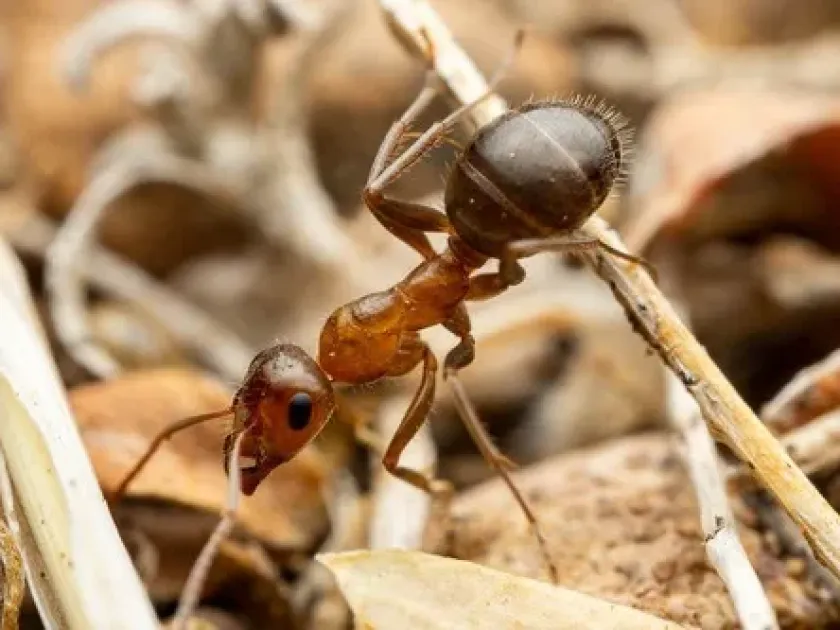
The harvester ant, scientifically known as Pogonomyrmex perpilosus, belongs to the Formicidae family. This species is native to arid environments and is characterized by a dense covering of hair on its body, which provides protection against environmental stress.
These ants possess robust mandibles specifically adapted for grasping, transporting, and processing various types of seeds. The workers are medium-sized and typically exhibit reddish-brown or dark coloration that helps them blend into sandy soil environments.
The nests of Pogonomyrmex perpilosus are easily identified by large, cleared mounds of sand or fine gravel surrounding the entrance. This "crater" structure is essential for maintaining proper humidity and temperature levels within the underground colony chambers.
The species exhibits a highly complex social structure with clear labor division among workers, soldiers, and the reproductive queen. They are known for their defensive behavior and possess potent venom that can cause painful stings.
Their biology is centered around the aggressive collection of plant seeds, which are stored in extensive underground galleries to serve as the primary long-term food source for the colony throughout the year.
What it damages
The primary agricultural damage caused by these ants is the extensive removal of freshly sown seeds. During the planting season, worker ants can transport significant quantities of seeds to their nests, leading to poor crop establishment.
This behavior results in patchy emergence and reduced crop density. Crops with smaller seeds, such as various grasses or small-grained vegetables, are particularly vulnerable to their efficient foraging and hoarding practices.
Beyond seed consumption, the construction of nest entrances near root zones can disrupt soil integrity, leading to faster evaporation and moisture loss. This can leave young, emerging plants vulnerable to water stress and stunt their early growth.
The species also maintains a mutualistic relationship with aphids, actively protecting them from predators to harvest honeydew. This behavior leads to secondary infestations of aphids on crop leaves, which can transmit viruses and reduce photosynthetic capacity.
In regions where Pogonomyrmex perpilosus is abundant, their foraging activity can significantly lower total yields, necessitating proactive management strategies to protect the economic viability of the field.
When it appears
Activity levels for these harvester ants are closely linked to soil temperature and moisture. They emerge from winter dormancy as soon as the soil temperatures rise sufficiently to support outside foraging.
During the spring and early summer, foraging activity reaches a peak as the colony focuses on replenishing food supplies. This period coincides with the most critical stages of crop germination and early seedling growth.
As mid-summer temperatures become extreme, the ants may shift their foraging patterns to cooler parts of the day, such as early morning or late evening, to avoid heat stress while continuing their seed collection efforts.
Autumn brings a decline in foraging intensity. As temperatures drop, the colony gradually retreats into deeper soil layers to avoid the freezing temperatures of winter, entering a state of reduced biological activity.
Monitoring throughout the growing season is essential for detecting early signs of colony expansion, particularly along field borders or uncultivated edges where these ants often establish their primary nests.
Signs of infestation
The most visible indicator of an infestation is the presence of cleared, mound-like entrances surrounded by seed hulls and debris. These structures are often easily spotted on bare soil or in sparse vegetation.
Well-worn foraging trails extending from the nest entrance into the crop rows serve as a clear sign of colony activity. These trails are frequently clear of vegetation, created by the constant passage of thousands of workers.
Finding caches of seeds stored near nest openings is definitive evidence of harvester ant activity. These stored seeds are often damaged by mandibles and show distinctive signs of processing.
A sudden increase in aphid populations on crops, accompanied by the visible presence of ants patrolling the stems, serves as a strong indicator that a colony is actively farming the aphids nearby.
Uneven germination in specific areas of the field, especially those adjacent to visible nest mounds, is a classic sign that the ants have depleted the local seed bank in those sections.
Control measures
Integrated pest management for this species often involves the use of targeted, slow-acting insecticidal baits. These baits are collected by workers and carried deep into the nest, ensuring the queen and brood are effectively eliminated.
Mechanical disruption of nest sites via deep tillage can be effective in breaking down the nest structure and forcing colony relocation, provided the operations coincide with periods when the colony is vulnerable.
Creating barriers around field margins using granular insecticides or specialized dusts can prevent worker ants from entering the crop area, thereby protecting the seedlings during the critical germination phase.
Managing the aphid population is equally important, as removing the secondary food source (honeydew) reduces the incentive for the ants to protect and colonize the crop area.
- Application of bait stations in identified hot spots.
- Deep plowing to destroy subterranean nest architecture.
- Seed coatings that act as natural repellents to ants.
- Routine perimeter inspections to identify and treat nests early.
Taxonomy
- Latin name
- Formica perpilosa
- Order
- Hymenoptera
- Family
- Formicidae
- EPPO code
- FORMPE
Discussion
No discussions yet — be the first.