
Field ant
Formica pallidefulva
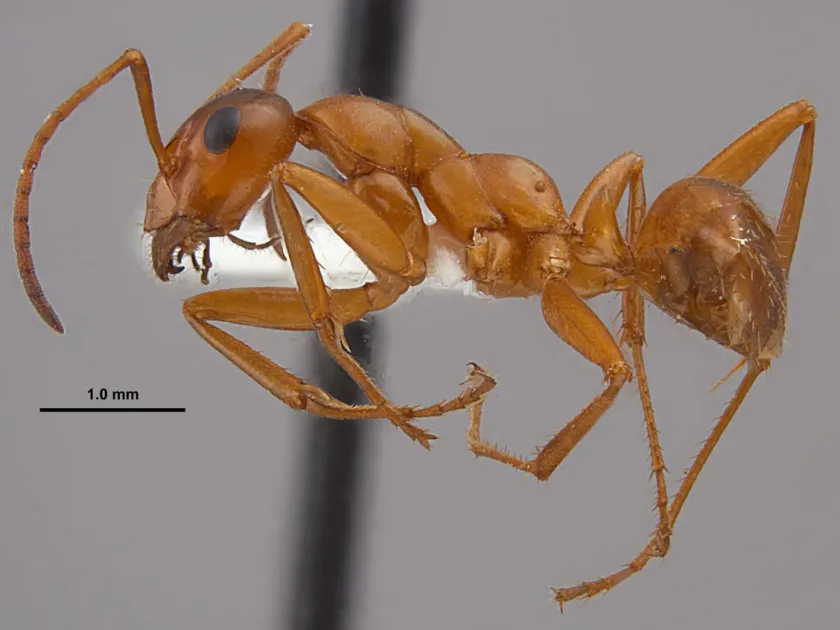
Description
How to identify
The field ant (Formica pallidefulva) belongs to the order Hymenoptera, family Formicidae. It is characterized by its yellowish-brown or reddish-tan body coloration.
Workers of this species generally reach 4 to 7 millimeters in length. They are known for being less aggressive than many other ant species but are extremely fast-moving when disturbed.
They establish nests primarily in the soil, often under rocks, in garden beds, or near the base of plants. They prefer sunny, warm areas, which often brings them into conflict with gardeners.
These ants are active during the day. They spend most of their time patrolling plants and searching for food sources, particularly the honeydew excreted by aphids and scale insects.
The life cycle follows a complete metamorphosis: egg, larva, pupa, and adult. Colony survival is largely dependent on soil moisture and ambient temperature, with activity peaking during the growing season.
What it damages
The primary agricultural damage caused by Formica pallidefulva is their symbiotic relationship with aphids. They actively guard aphid colonies from predators, preventing natural control.
They infest a wide range of plants, including vegetables (peppers, cucumbers) and various fruit shrubs. Aphid feeding causes stunted plant growth, leaf curling, and severe distortion.
The ants also cause direct damage by building tunnels near the roots of young transplants. This can disrupt root contact with soil, leading to dehydration and potential plant mortality.
Honeydew, collected by the ants, promotes the growth of sooty mold fungus on leaves. This mold blocks light, reduces photosynthesis, and lowers the overall yield quality.
Additionally, they may attack ripening fruits. By biting into the skin to reach the sugary juices, they create entry points for secondary infections like bacterial soft rot and fungi.
Signs of infestation
One of the most obvious signs of a field ant presence is the constant movement of ants up and down the stems of plants, indicating a search for honeydew sources.
High populations of aphids on young plant shoots, accompanied by ants that swarm when the plant is touched, confirm that the ants are protecting the aphid colony.
Small mounds of soil at the base of plants or irregular gaps in the soil around roots often indicate the presence of an underground nest entry.
The development of a black, powdery sooty mold on the foliage is a classic indicator that aphids are present and being tended by ant populations.
Wilting of plants during the heat of the day, even when soil moisture seems adequate, can suggest that ant tunnels are disturbing the root zone and preventing proper water uptake.
Control measures
Effective control requires a multi-faceted approach. Eliminating the ants often involves targeting the aphid colonies they support as well as managing the nests directly.
Using bait stations with slow-acting insecticides is highly effective. The ants carry the bait into the nest, eventually reaching the queen and collapsing the entire colony.
Physical barriers, such as sticky bands applied to the trunks of fruit trees, prevent ants from climbing up, which naturally discourages them from maintaining aphid colonies in the canopy.
- Routine soil cultivation to disrupt tunnels and expose nesting sites.
- Encouraging natural predators of aphids like lady beetles and lacewings.
- Removing debris and weeds around crops that provide shelter for ant colonies.
If chemical intervention is required, choose targeted insecticides approved for agricultural use that have low toxicity to pollinators when applied correctly according to label directions.
Taxonomy
- Latin name
- Formica pallidefulva
- Order
- Hymenoptera
- Family
- Formicidae
- EPPO code
- FORMPA
Discussion
No discussions yet — be the first.