
Western mound ant
Formica obscuripes
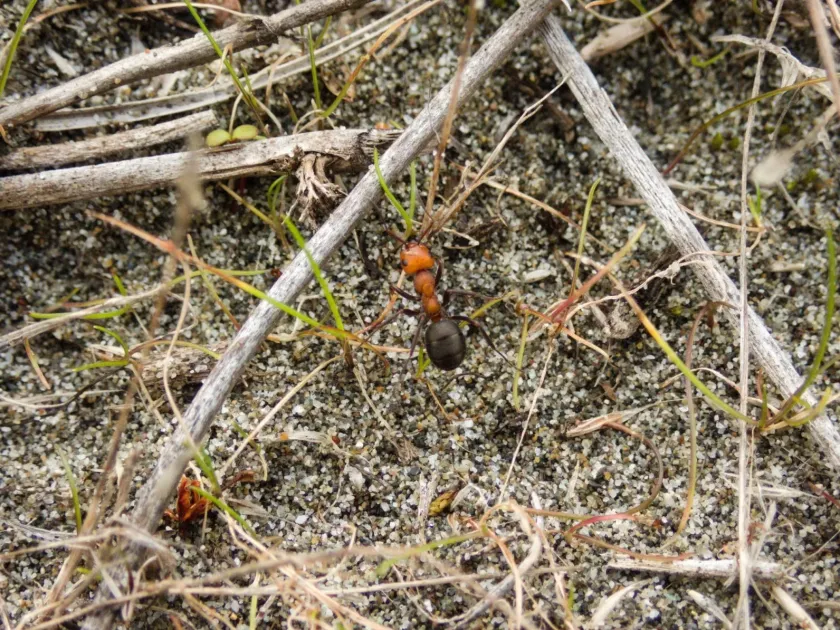
Description
How to identify
The Western mound ant (Formica obscuripes) is a large, aggressive ant species characterized by a reddish-brown thorax and a dark, nearly black abdomen. Workers typically measure between 5 to 8 millimeters in length.
They are well-known for their impressive dome-shaped mounds constructed from twigs, needles, and other debris. These structures are often found in open, sunny areas of forests and home gardens.
This species is highly territorial and will vigorously defend its mound. When threatened, they spray formic acid, which can cause significant irritation if handled or disturbed.
Colonies are often polygynous, meaning they possess multiple queens. This biological trait allows the colony to grow rapidly and survive disturbances better than monogyne species.
Taxonomically, they belong to the family Formicidae, order Hymenoptera. They are complex social insects capable of efficient foraging and colony cooperation.
##damage##The primary agricultural issue with the Western mound ant is its symbiotic relationship with aphids. These ants protect aphid colonies from predators such as lady beetles, allowing aphid populations to explode.
As a result, plants infested with aphids suffer from nutrient loss, stunted growth, and leaf curling. The continuous feeding by aphids severely weakens the host plant over time.
Aphids excrete a substance known as honeydew, which attracts ants and serves as a medium for sooty mold. This mold covers leaves, inhibiting photosynthesis and damaging the plant's health.
Ants can also cause direct physical damage to plants by gnawing on young buds or disrupting the soil structure around roots, which leads to plant wilting and collapse.
In nursery settings, they are considered pests because their tunnels in the root zone can dry out the soil and prevent proper root development for young seedlings.
When it appears
Activity begins in early spring as soon as the soil temperatures rise. During this phase, workers focus on repairing and expanding the mound after the winter dormancy.
The peak activity period occurs throughout mid-summer when the colony is at its largest. This is when foraging and aphid-tending behavior are at their most intense.
As autumn approaches, activity levels decline significantly. The colony prepares for winter by moving deeper into the mound and below the soil surface to maintain heat.
The life cycle involves complete metamorphosis, including egg, larva, pupa, and adult stages. Development from egg to worker usually takes several weeks depending on environmental temperatures.
Colonies can expand for many years, often through budding, where a portion of the colony moves away with a queen to establish a new mound nearby.
Signs of infestation
Clearly defined trails leading from the mound to nearby trees or shrubs are a primary indicator of their presence and foraging routes.
The existence of large, dome-shaped mounds made of organic debris in the yard is an unmistakable sign of an established colony.
Heavy aphid infestations on plants accompanied by persistent ant activity suggest a protected symbiotic relationship between the two species.
Unexplained wilting of seedlings in a concentrated area can indicate that ants have constructed tunnels in the root zone, creating air pockets.
The presence of sticky honeydew or black sooty mold on the leaves of your garden plants is a common side effect of ant-tended aphids.
Control measures
The most effective physical control is the use of sticky barriers placed around tree trunks. This prevents ants from climbing up to tend to aphids in the canopy.
Gel baits containing slow-acting insecticides are highly effective. Foragers take the bait back to the mound, ultimately neutralizing the queens and the rest of the colony.
Frequent tilling of the soil around the base of plants can disrupt the nest structure and discourage ants from settling in specific areas of the garden.
Applying diatomaceous earth around the base of plants can serve as a non-toxic mechanical barrier, though it must be reapplied after rain.
- Focusing on aphid control to eliminate the ants' primary food source.
- Using horticultural soaps to wash away honeydew and suppress aphid populations.
- Removing debris or overhanging branches that provide bridge paths for ants to access plants.
Taxonomy
- Latin name
- Formica obscuripes
- Order
- Hymenoptera
- Family
- Formicidae
- EPPO code
- FORMOB
Discussion
No discussions yet — be the first.