
Neorufibarbis ant
Formica neorufibarbis
Description
How to identify
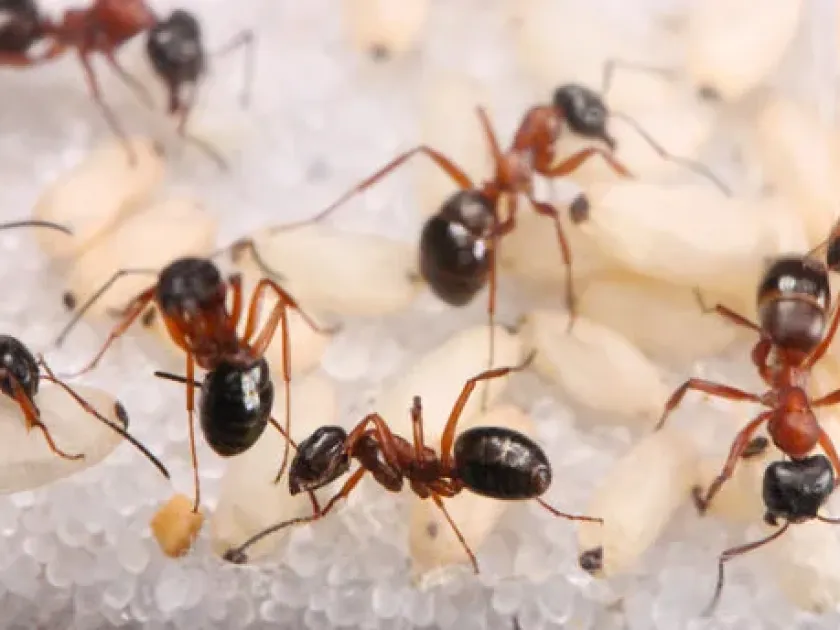
The Neorufibarbis ant belongs to the order Hymenoptera and the family Formicidae. These are medium-sized insects, often characterized by a reddish-brown color on the thorax, which makes them similar to other wood ants.
A distinctive feature of this species is its body structure, adapted to living in temperate climates. Workers possess strong mandibles used both for defense and for manipulating various substrates.
They prefer to build nests in the soil near tree roots, under rocks, or in decaying wood. They form colonies with a strictly hierarchical structure where each caste plays a specific role.
Unlike some specialized predators, Neorufibarbis demonstrates high plasticity in habitat selection, which allows them to thrive in both forest environments and domestic gardens.
They can be distinguished by their defensive behavior: when threatened, they actively release formic acid and aggressively defend the boundaries of their territory.
What it damages
The primary damage caused by these ants is their close symbiosis with garden pests, particularly aphids, scale insects, and mealybugs. Ants protect these colonies from natural predators.
In the course of their activity, ants transport aphids to young plant shoots. This leads to mass infestations of fruit trees and berry bushes, weakening the plant's overall immunity.
Root damage occurs due to the ants actively digging tunnels directly beneath plants. Disrupting the soil integrity negatively affects the nutrient uptake of the trees and shrubs.
The honeydew collected by ants becomes a breeding ground for sooty mold. This film hinders photosynthesis, eventually leading to a significant decrease in crop yields.
Young seedlings of apples, pears, and currants often suffer most, as these are the areas where ants frequently establish their "farms" with sap-sucking pests.
When it appears
Ant activity begins in early spring as soon as the topsoil warms up. During this time, the overwintered individuals start emerging to the surface in search of food.
Activity peaks in May and June when the colony grows rapidly. During this period, worker ants are most actively engaged in distributing aphids across garden crops.
The summer period is characterized by the constant activity of ants gathering honeydew. They expand their nests during this time, which may lead to undermining of root systems.
As autumn approaches and temperatures drop, insect activity gradually fades. They migrate to deeper soil layers for successful overwintering within the nest.
Their life cycle is closely linked to the phenology of garden crops, as ants are strictly dependent on the availability of carbohydrate sources provided by aphid secretions.
Signs of infestation
The first sign of ant presence is the formation of distinct "ant trails" on tree trunks leading to large clusters of pests on the foliage.
Noticeable signals include leaf curling and the presence of a sticky residue on the shoots. This is a clear indicator that a colony of aphids is developing under ant protection.
Small mounds of soil or nest entrances can be found at the base of trees or shrubs. Continuous movement at these points confirms the presence of an established colony.
Wilting of young plants for no apparent reason often indicates root damage caused by the ants' underground construction activities.
The presence of large numbers of ants on branches is usually accompanied by the absence of beneficial entomophages, such as ladybugs, which the ants actively deter.
Control measures
A comprehensive approach is used, starting with the installation of sticky barrier bands on tree trunks. This creates a physical barrier that prevents ants from reaching the canopy.
The use of contact insecticides against aphids effectively removes the food source, forcing the ants to abandon the area.
The use of slow-acting poisonous baits allows for the elimination of the entire colony, including the queen, which is the most critical factor for long-term control.
Traditional methods include the use of wood ash, lime, or essential oils, which confuse the insects and repel them from garden crops.
- Clearing the garden of rotting wood and weeds.
- Regular watering of nests to disrupt brood development.
- Attracting natural predators to control aphid populations.
Taxonomy
- Latin name
- Formica neorufibarbis
- Order
- Hymenoptera
- Family
- Formicidae
- EPPO code
- FORMNE
Discussion
No discussions yet — be the first.