
Northern wood ant
Formica lugubris
Description
How to identify
The northern wood ant Formica lugubris is a member of the Hymenoptera order and the Formicidae family. They are known for building large, conspicuous mounds made of pine needles, twigs, and other forest detritus.
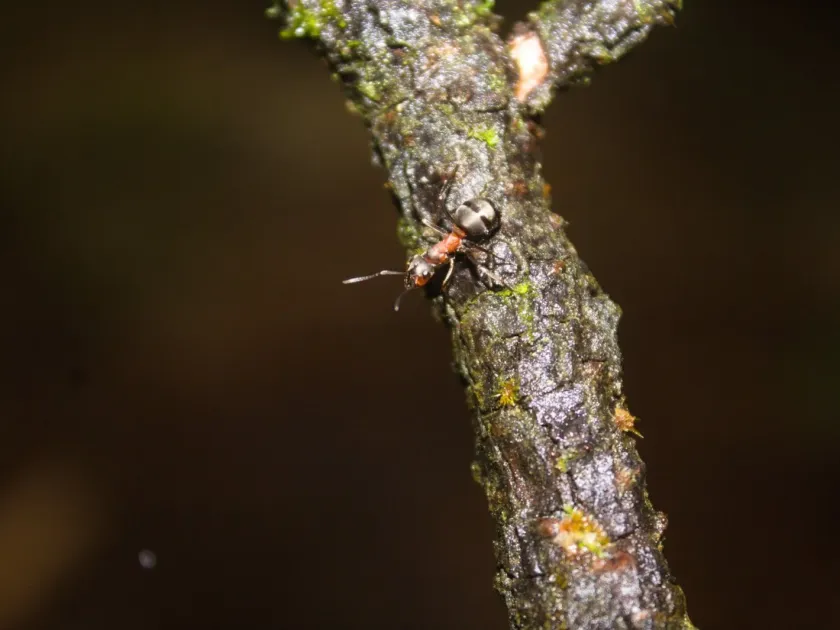
Workers measure between 4 and 9 mm in length and possess a distinct dark, matte appearance due to a dense covering of hairs on their body. They are polygynous, meaning colonies contain multiple queens, which allows them to maintain large populations.
While they are beneficial in forest ecosystems, they become agricultural nuisances when their habitat overlaps with crop fields or home gardens. Their behavior is largely centered around protecting resources.
Their life cycle consists of complete metamorphosis: egg, larva, pupa, and adult. Large colonies can persist for many years, expanding their reach across the garden area.
Understanding their social structure is key to managing them, as they communicate and forage in highly organized patterns, creating stable paths to food sources.
What it damages
The primary agricultural damage caused by Formica lugubris is their symbiotic relationship with sap-sucking insects like aphids, scales, and mealybugs. Ants protect these insects from predators to ensure a steady supply of honeydew.
This protection leads to massive aphid infestations, resulting in stunted shoot growth, leaf curling, and overall tree weakening. Severe infestations significantly reduce fruit set and tree vitality.
Honeydew secreted by aphids covers leaves and fruits, creating a substrate for sooty mold. This fungal coating inhibits photosynthesis and diminishes the aesthetic and commercial value of the produce.
When nesting at the base of trees or shrubs, the ants can damage delicate root systems during their soil-excavation activities. This can lead to increased vulnerability to drought or nutritional deficiencies.
Additionally, they act as vectors for various plant pathogens, carrying spores on their bodies as they move across the tree canopy.
When it appears
Ant activity begins in early spring as ground temperatures rise. Foraging activity and protection of honeydew-producing insects remain at their peak throughout the summer months.
Signs of infestation
Evidence of their presence includes visible ant trails on tree trunks, clusters of aphids on tender leaves, and the presence of sticky, black sooty mold on the foliage.
Control measures
Applying sticky adhesive bands around the trunks of trees is a mechanical control method that prevents ants from accessing the canopy and tending to aphids.
The use of targeted insecticidal baits is highly effective, as the worker ants carry the toxic substances back to the nest, ultimately destroying the colony, including the queens.
Cultural practices such as regular soil cultivation around trees can disturb nesting sites. Additionally, applying organic repellents like wood ash can deter them from returning.
Systemic insecticides against aphids can help reduce the attractiveness of the tree to ants, indirectly causing them to migrate to other areas.
Finally, keeping the garden free of weeds and tall grasses is essential, as these provide secondary nesting sites and routes for ants to access fruit-bearing trees.
Taxonomy
- Latin name
- Formica lugubris
- Order
- Hymenoptera
- Family
- Formicidae
- EPPO code
- FORMLU
Discussion
No discussions yet — be the first.