
Lasius ant
Formica lasioides
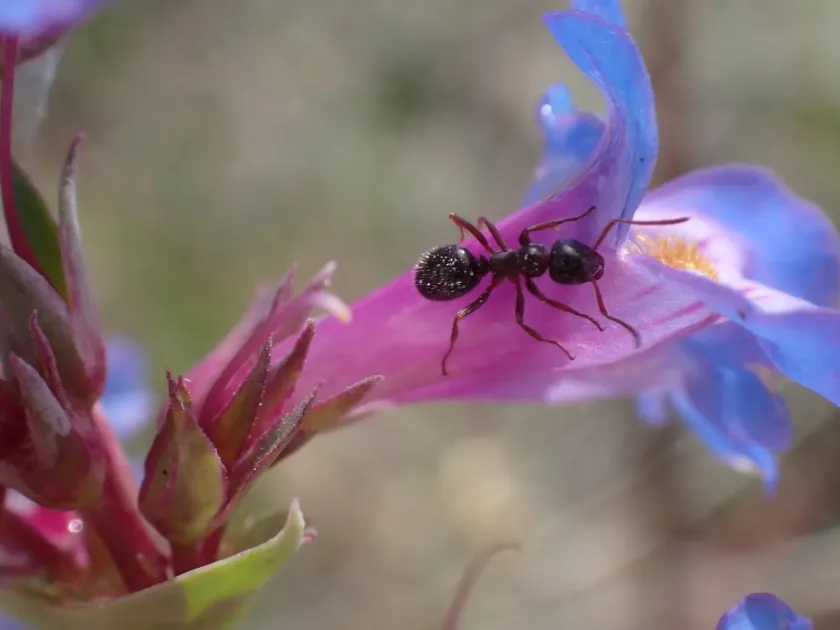
Description
How to identify
The Lasius ant (lat. Formica lasioides) belongs to the order Hymenoptera, family Formicidae. These are small insects, typically appearing like other members of the Chthonolasius subgenus, to which they are often classified in modern taxonomy.
Externally, they are characterized by a yellowish-brown or dark brown body color. Worker ants measure approximately 3–5 mm in length. A key identification feature is the presence of dense hairs on their body, giving them a matte texture.
Distinguishing them from other species can be difficult without microscopic examination; however, for agronomists, their lifestyle is key: they are primarily underground dwellers that rarely appear on the surface in large numbers.
Colonies of this species can be monogynous or polygynous, often building complex subterranean nests. They prefer nesting in well-warmed soils, frequently beneath the roots of perennial grasses and shrubs.
Their life cycle includes complete metamorphosis: egg, larva, pupa, and adult. They overwinter as adults and larvae deep within the nest, entering diapause when soil temperatures drop.
What it damages
The primary damage caused by Lasius ants stems from their symbiosis with sap-sucking pests, specifically root aphids and mealybugs. The ants "herd" these insects, protecting them from predators.
They actively spread pests across the site by transporting them to the healthy roots of plants. As a result of aphid activity, the roots lose vital nutrients, leading to the weakening and potential death of the crops.
Beyond indirect harm, the creation of numerous tunnels in the root zone disrupts soil structure and damages the delicate fine root hairs of seedlings and young trees.
The most vulnerable crops include berry bushes (currants, raspberries), fruit trees, and ornamental plants with sensitive root systems.
When the root system is heavily infested, the plant suffers from overall suppression: stunted growth, yellowing leaves, and premature leaf fall, which significantly reduces yield.
Signs of infestation
The first sign of ant presence is the appearance of characteristic ant mounds—small piles of soil or holes around the base of the plant stem.
The presence of aphids on young shoots and leaves, constantly tended by ants, is a clear indicator that a nest is located in the soil directly beneath the plant.
Plants wilting without apparent cause despite adequate irrigation often indicate damage to the root system caused by underground pest activity.
Excavating the root zone often reveals clusters of aphids being "serviced" by the worker ants.
The appearance of a sticky substance (honeydew) on the leaves and around the base of the tree also signals high ant activity and their associated aphid colonies.
Control measures
The primary protection strategy is to eliminate aphid outbreaks, as without a food source, the ants may abandon the site or lose interest in the roots.
Applying systemic insecticides via soil drenching can help eliminate both the aphids and restrict the movement of the ants.
Regular cultivation and loosening of the soil in the root zone are recommended to destroy underground tunnels, forcing the ants to relocate.
Natural repellents can be used for deterrence: planting pungent-smelling crops around sensitive plants, such as garlic, marigolds, or mint, helps deter ant colonies.
In cases of severe infestation, specialized granular baits based on diazinon or fipronil are used. The ants carry these baits into the nest, which leads to the eradication of the queen.
Taxonomy
- Latin name
- Formica lasioides
- Order
- Hymenoptera
- Family
- Formicidae
- EPPO code
- FORMLA
Discussion
No discussions yet — be the first.