
Glacier ant
Formica glacialis
Description
How to identify
The glacier ant (Formica glacialis) belongs to the Formicidae family of the Hymenoptera order. It is a resilient species known for its cold tolerance.
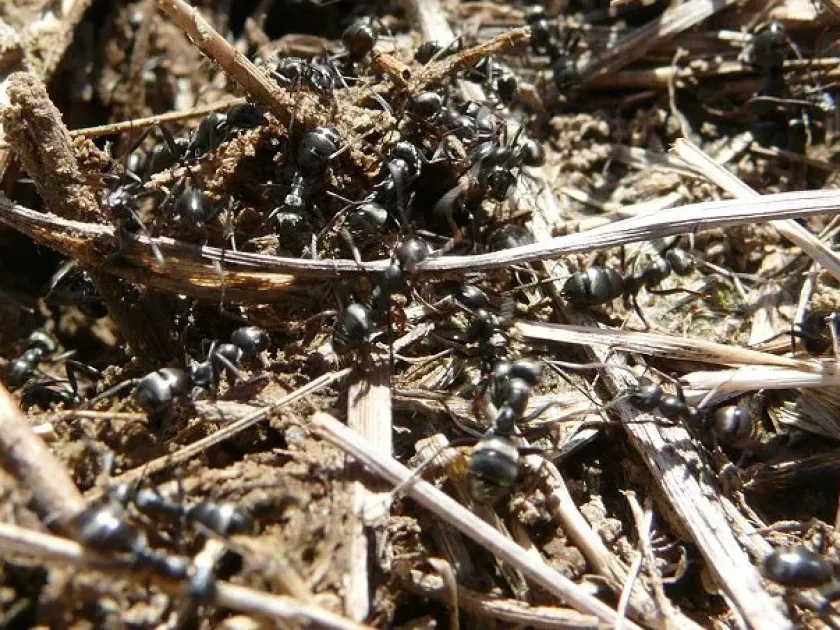
Adult workers are typically dark brown or black, featuring a shiny cuticle and relatively robust mandibles used for foraging and nest maintenance.
These ants often build their nests in soil, sometimes under rocks or decaying wood, which provides insulation against harsh environmental conditions.
Unlike many other species, they are highly active in cooler temperatures, allowing them to colonize northern habitats effectively.
They live in complex colonies where labor is divided among individuals, ensuring the survival and expansion of the nest across the infested area.
What it damages
Direct damage occurs when these ants construct tunnels near the root systems of garden plants, leading to soil desiccation and root injury.
They are notorious for their mutualistic relationship with aphids, which they tend and protect from natural predators in exchange for honeydew.
Infested plants, such as fruit trees and shrubs, suffer from heavy aphid feeding, which causes stunted growth, leaf curling, and overall plant decline.
In greenhouses and seedbeds, these ants may remove seeds, leading to poor crop germination and uneven field density.
The presence of large colonies can alter soil composition locally, affecting the nutrient uptake of vegetable crops like tomatoes and cucumbers.
When it appears
Activity typically begins early in the spring, as soon as temperatures rise enough for the ants to exit their hibernation sites.
The population reaches its peak density during the warm summer months, which coincide with the most intensive reproductive phase of the colony.
Autumn triggers a decline in activity, as the colony prepares to retreat to deeper soil levels for the winter dormancy period.
Development cycles are strictly temperature-dependent; thus, unseasonable weather can significantly impact the timing of brood emergence.
Effective scouting should prioritize the spring months to catch the colony before it expands significantly near valuable crops.
Signs of infestation
A primary indicator is the continuous, organized movement of ants along plant stems, often heading towards aphid colonies.
The presence of aphid infestations, manifested as sticky honeydew on leaves and curled shoots, is a reliable sign of ant-tending behavior.
Visual confirmation of nest entrances, characterized by small piles of soil at the base of plants, confirms their presence in the root zone.
Plants may show symptoms of water stress and nutrient deficiency despite adequate irrigation and fertilization.
- Heavy ant traffic on stems and branches.
- Visible aphid populations on the underside of leaves.
- Soil disturbances at the base of affected crops.
Control measures
Sticky bands applied around the trunks of fruit trees are highly effective in physically blocking the path of ants to their aphid herds.
Using slow-acting bait stations containing insecticides allows foragers to transport toxins back to the queen, effectively collapsing the nest.
Controlling aphid populations with systemic insecticides or organic sprays removes the food source, often forcing the ants to abandon the site.
Regular cultivation and tilling of the soil around plants disturb established tunnels and can displace the colony.
Biological controls, including predatory insects or nematode applications, can help reduce the overall pressure from these ant colonies.
Taxonomy
- Latin name
- Formica glacialis
- Order
- Hymenoptera
- Family
- Formicidae
- EPPO code
- FORMGL
Discussion
No discussions yet — be the first.