
Allegheny mound ant
Formica exsectoides
Description
How to identify
The Allegheny mound ant (Formica exsectoides) is a species of ant in the family Formicidae, widely recognized for its impressive large, dome-shaped mounds made of soil and plant debris.
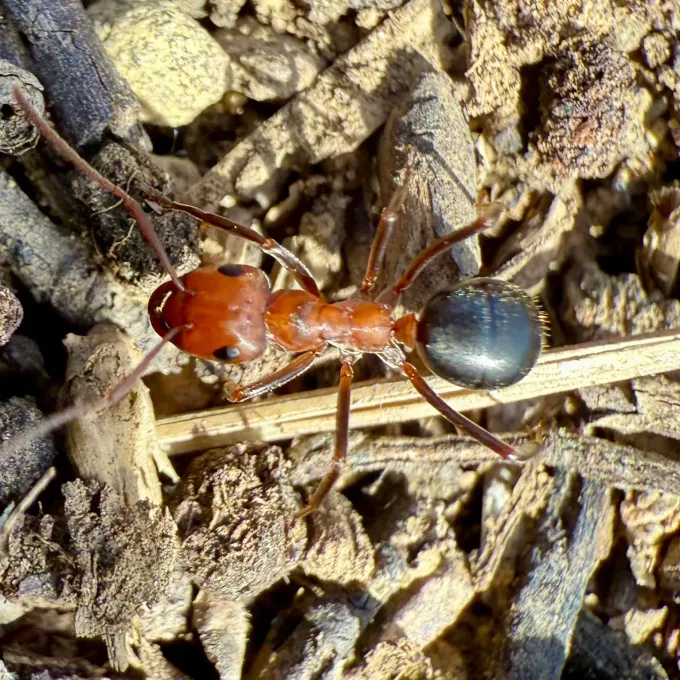
Workers are characterized by a rusty red head and thorax contrasting with a black abdomen, typically measuring between 4 and 8 millimeters in length.
These ants are highly aggressive and defend their nesting sites fiercely; when disturbed, they spray formic acid to protect their colony and territory.
They are colonial insects, often forming large super-colonies where multiple queens coexist, which allows them to persist and dominate specific areas for many years.
The mounds can reach up to a meter in height and several meters in diameter, creating significant landscape modifications in fields, forest edges, and nurseries.
What it damages
The primary agricultural impact of Formica exsectoides is the protection and distribution of honeydew-secreting insects, most notably aphids and scale insects.
By preventing natural predators like ladybugs from feeding on aphids, these ants cause aphid populations to surge, leading to severe damage to buds, leaves, and young shoots.
The honeydew deposited on leaves supports the growth of sooty mold, which blocks sunlight and reduces the photosynthetic capacity of the affected host plants.
In addition, their tunneling activity around the root systems of young trees and shrubs can lead to soil drying and nutrient deprivation, often killing small plants.
The physical presence of large mounds can also interfere with machinery and maintenance operations, making them a significant nuisance for commercial agriculture.
When it appears
The activity of Allegheny mound ants is strictly seasonal, beginning in early spring as soon as the soil temperatures rise enough to facilitate movement.
During the summer months, they are at their peak, constantly foraging for food and tending to their aphid colonies on trees, shrubs, and weeds.
As autumn approaches, activity slows down as the ants prepare for winter, moving deeper into the subterranean parts of their mound to avoid freezing.
The entire life cycle is tightly coupled with environmental warmth, which dictates how quickly the brood develops and how much food the colony requires.
Winter dormancy is essential for the species, allowing them to survive harsh conditions and emerge again to restore their visible mounds in early spring.
Signs of infestation
The most obvious sign of infestation is the appearance of large, well-defined mounds of soil, twigs, and needles in sunny locations within the planting area.
Visible trails of ants ascending and descending tree trunks clearly indicate that they are tending to aphids or scales in the canopy of the plants.
Sticky, shiny foliage resulting from aphid honeydew, often accompanied by black sooty mold, points directly to ant-mediated aphid farming activities.
Stunted growth, yellowing leaves, or premature wilting of saplings are common side effects of the root zone disturbance caused by extensive tunnel networks.
The absence of natural aphid predators on plants heavily frequented by these ants confirms that a protective relationship is in progress.
Control measures
Effective control strategies focus on both reducing the ant population and managing the aphid populations they are actively farming and protecting.
Installing adhesive bands on tree trunks is a physical barrier that prevents ants from accessing the canopy, leaving aphids vulnerable to their natural predators.
Targeted application of insecticides directly into the mounds can be effective for severe infestations, though it often requires repeating to eliminate the queens.
Cultural practices, such as removing weeds and thinning out dense foliage, help reduce the habitats suitable for both ants and their mutualistic aphid partners.
In ecological management, encouraging predatory insects to control aphid outbreaks is a sustainable way to diminish the importance of ants in the local ecosystem.
Taxonomy
- Latin name
- Formica exsectoides
- Order
- Hymenoptera
- Family
- Formicidae
- EPPO code
- FORMEX
Discussion
No discussions yet — be the first.