
Formica exsecta
Formica exsecta
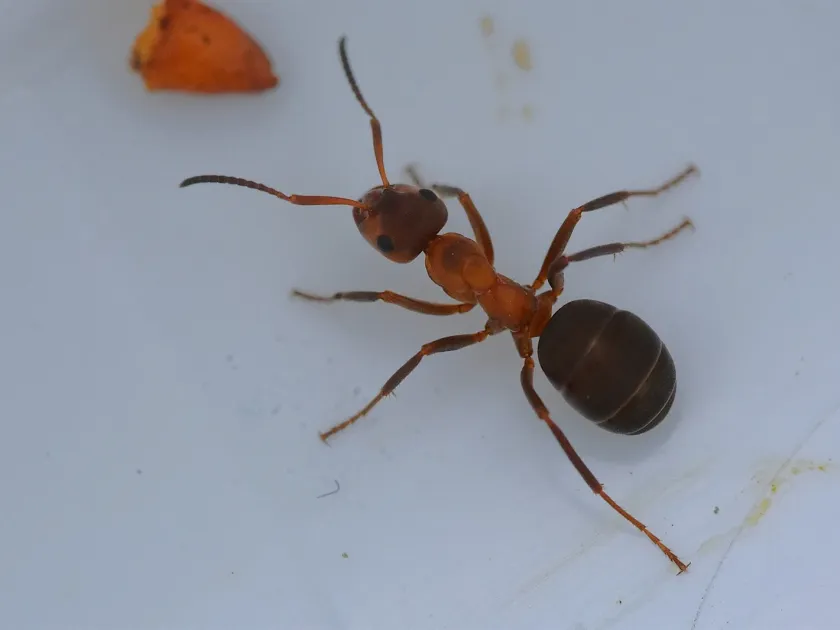
Description
How to identify
Formica exsecta, commonly known as the narrow-headed ant, is a species of ant characterized by a distinct notch on the back of its head. These insects are medium-sized and belong to the Formicidae family.
Workers vary in color from reddish-brown to dark brown, which helps them blend into forest litter and soil. They are highly active and aggressive when protecting their complex, dome-shaped nests.
The nests are constructed from organic materials like twigs and needles, helping the colony maintain a stable internal temperature. These ants are known for their ability to thrive in diverse environments.
The colony structure is polygynous, meaning it contains several queens, which allows the nest to grow rapidly and colonize adjacent agricultural land efficiently.
Due to their high adaptability, they frequently migrate from natural habitats into gardens and orchards, where they establish permanent colonies that can be challenging to eradicate.
What it damages
The primary agricultural damage caused by Formica exsecta is not direct consumption of plants but rather their symbiotic relationship with aphids. The ants actively protect aphid colonies from predators.
By preventing natural enemies like ladybugs from feeding on aphids, the ants cause an exponential increase in the aphid population. This leads to severe sap-sucking on young shoots and leaves.
Plants infested with aphids protected by ants exhibit stunted growth, curled leaves, and a significant reduction in overall health. The plants become covered in honeydew, which promotes the growth of sooty mold.
Furthermore, these ants can physically disrupt the root systems of seedlings during their nest building and excavation processes, potentially leading to plant death.
In some cases, they may also damage seeds or young sprouts in vegetable patches, interfering with the uniform emergence of crops and reducing yields.
When it appears
The activity period of these ants begins in early spring as the soil temperatures rise. Workers emerge to repair and expand their nests after the winter dormant period.
Peak activity occurs from May through July, coinciding with the rapid development of aphid populations. During this time, constant traffic between the nest and plants is observed.
The nuptial flight, where winged individuals disperse to form new colonies, typically happens in mid-summer. This is a critical time for monitoring potential new infestation sites.
As temperatures begin to drop in late autumn, the ants decrease their surface activity and move deeper into the mound to prepare for winter survival.
The total active season lasts approximately five to six months in temperate regions, requiring consistent observation and intervention throughout the vegetative cycle.
Signs of infestation
The most obvious sign of infestation is the presence of distinctive dome-shaped mounds near garden trees, vegetable beds, or along fence lines.
Continuous ant trails running along tree trunks or across garden paths indicate a stable food source and a proximity to their nest locations.
Sticky residue on leaves (honeydew) and the presence of numerous aphids on the stems are clear indicators that Formica exsecta is tending the aphids in the immediate vicinity.
Sudden wilting of young plants or seedlings, particularly those near established mounds, often suggests that the ants have disrupted the soil structure or damaged roots.
Aggressive defensive behavior when a human or animal approaches the mound is another classic sign of a well-established colony.
Control measures
Effective control requires a multi-pronged approach, focusing primarily on eliminating the aphid colonies that the ants rely on for their carbohydrate source.
Using physical barriers like sticky bands on tree trunks is a highly effective, non-chemical method to prevent ants from reaching the canopy where aphids reside.
Systemic ant baits containing slow-acting insecticides are very effective. Workers carry the bait back to the nest, ensuring the destruction of the queens and the entire colony.
Regular cultivation of the soil around nest sites can disrupt their underground passages and force the colony to relocate, making the area less attractive for long-term settlement.
Maintaining garden hygiene, including the removal of weeds that act as secondary hosts for aphids, is essential for reducing the overall pest pressure in the orchard.
Taxonomy
- Latin name
- Formica exsecta
- Order
- Hymenoptera
- Family
- Formicidae
- EPPO code
- COPFEX
Discussion
No discussions yet — be the first.