
Meadow ant
Formica cunicularia
Description
How to identify
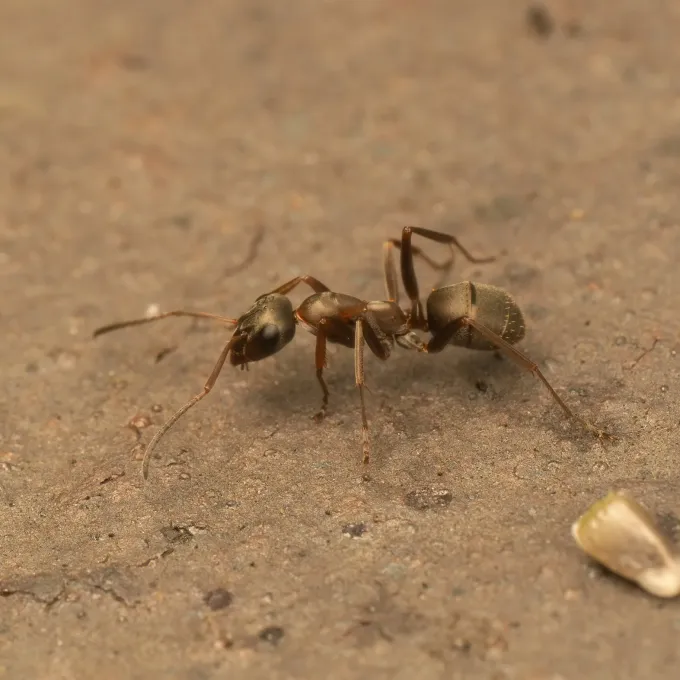
The meadow ant (Formica cunicularia) belongs to the Formicidae family (order Hymenoptera). It is a medium-sized ant species with a brownish-black body.
Worker ants typically reach 4–6 mm in length. A distinctive feature of this species is its relatively smooth body with a slight metallic sheen and a specific thoracic structure.
Colonies of these ants often build their nests directly in the soil, creating surface exits under stones, pieces of wood, or within dense turf patches.
Their activity on sunny days is very high, which is why they are often referred to as "nimble" or "quick." They move rapidly along foraging trails in search of food.
This species frequently competes with other ants for territory and resources, making it a highly visible inhabitant of meadow and vegetable garden ecosystems.
What it damages
Direct damage to crops occurs when ants damage young shoots and buds while searching for sap or digging tunnels for their nests.
The main economic harm is linked to their trophobiotic relationship with aphids and scale insects. Ants "herd" these colonies, protecting them from natural predators like ladybugs and lacewings.
Active aphid farming leads to critical damage of crops, causing leaves to curl, yellow, and stunt in growth due to the loss of vital plant nutrients.
Furthermore, ants can act as mechanical vectors, transporting viral and fungal pathogens from one plant to another across the garden.
In gardens, they often ruin the aesthetics of lawns by building earthen mounds, which disrupt the root systems of grasses and impede regular mowing.
When it appears
Seasonal activity begins in early spring as soon as the soil warms up and lasts until late autumn, when temperatures drop below 10 degrees Celsius.
The peak of activity occurs during the flowering period of fruit and berry crops, which coincides with the rapid reproduction of aphids on young shoot tips.
By mid-summer, the colony reaches its maximum size, requiring worker ants to aggressively forage for carbohydrate sources, such as aphid honeydew.
Reproduction (the flight of winged individuals) happens during the summer, allowing the species to colonize new areas of gardens and agricultural plots.
With the onset of frost, surface activity ceases, and the colony retreats deep into the soil to overwinter in a state of diapause.
Signs of infestation
A clear sign of ant presence is the existence of established "ant trails" on tree trunks or plant stems leading to aphid clusters.
Small holes in the soil, often hidden by plant debris and surrounded by active insect movement, indicate the entrance to a nest.
The constant presence of sugary secretions (honeydew) on leaves is a reliable indicator that an aphid colony is under the protection of ants.
The presence of large numbers of ants near the roots of seedlings often leads to wilting, as the insects damage fine root hairs while excavating tunnels.
Curling of young leaves and the appearance of yellow spots on shoots are indirect signals that ants have created favorable conditions for sucking pests.
Control measures
To control ants, chemical insecticides based on diazinon or chlorpyrifos are applied directly into the soil where the nests are concentrated.
The use of sticky barrier bands on tree trunks prevents ants from accessing aphid colonies located in the plant canopy.
Effective home remedies include baits made of boric acid mixed with sugar, which worker ants carry back to the nest, ultimately eliminating the queen.
Regular weeding is recommended, as weeds serve as primary reservoirs for aphid reproduction, along with timely pruning of dense branches.
- Application of biological preparations based on entomopathogenic fungi.
- Regular cultivation and aeration of soil in tree root zones.
- Planting repellent crops such as mint or garlic.
Taxonomy
- Latin name
- Formica cunicularia
- Order
- Hymenoptera
- Family
- Formicidae
- EPPO code
- FORMCU
Discussion
No discussions yet — be the first.