
Grey field ant
Formica cinerea
Description
How to identify
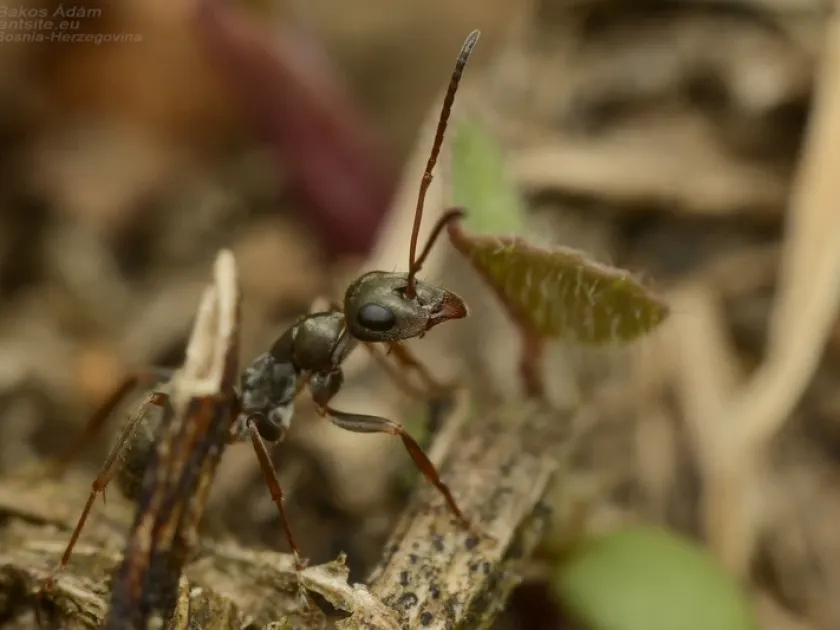
The grey field ant (Formica cinerea) is a member of the Formicidae family, known for its distinct ashy-grey appearance caused by a dense layer of fine body hairs.
These ants are highly mobile and energetic, typically preferring open, sunny habitats with sandy soils where they establish their elaborate subterranean colonies.
Physically, they feature a matte finish due to their pubescence, with head and thoracic regions often appearing darker than the abdominal segments.
As social insects, they maintain a rigid caste system with a queen and worker population, ensuring that the colony remains highly organized and resilient to environmental stressors.
When disturbed, they display aggressive behavior and can release formic acid, which is a common defensive mechanism among this specific genus of ants.
What it damages
While the grey field ant does not consume plant tissue directly, its impact on agriculture is significant due to its mutualistic relationship with aphids and scale insects.
By protecting these sap-sucking pests from natural predators, the ants facilitate massive aphid outbreaks, causing severe damage to leaves, shoots, and fruit development.
The excessive growth of aphid populations leads to stunted plant growth, leaf curling, and the production of honeydew, which encourages the growth of sooty mold.
Furthermore, their tunneling activity around root systems can disrupt soil structure, creating air pockets that dry out the roots and weaken young seedlings.
They also act as vectors, potentially transporting fungal spores or other plant pathogens across the field while foraging and tending to their aphid herds.
When it appears
Activity for the grey field ant typically begins in early spring once soil temperatures rise sufficiently to allow the colony to emerge from hibernation.
The period between late spring and mid-summer marks their peak operational phase, as the colony grows and requires a steady food supply for developing larvae.
During the summer months, workers are consistently observed patrolling plants and shrubs, maintaining aphid colonies and protecting them from various biological threats.
As autumn approaches and temperatures drop, their activity levels decrease, and the colony shifts focus to preparing for the winter by moving deep into the soil.
The life cycle, characterized by metamorphosis from egg to larva to pupa and finally adult, is heavily influenced by regional climate conditions and food availability.
Control measures
Management should focus primarily on aphid suppression, as eliminating the source of honeydew significantly reduces the ants' incentive to inhabit the garden area.
Installing sticky bands around tree trunks creates a physical barrier that prevents ants from ascending to reach the foliage and protect aphids.
Bait stations containing slow-acting insecticides are highly effective, as worker ants transport the poisoned bait back to the nest, ultimately targeting the queen.
Mechanical cultivation and frequent hoeing of the soil around nest entrances can disturb their galleries, forcing the colony to relocate away from valuable crops.
- Utilizing botanical repellents like tansy or wormwood to discourage colony settlement.
- Applying diatomaceous earth around plant bases to create a physical irritant.
- Maintaining field hygiene to eliminate weeds that serve as alternate hosts for aphids.
Taxonomy
- Latin name
- Formica cinerea
- Order
- Hymenoptera
- Family
- Formicidae
- EPPO code
- FORMCI
Discussion
No discussions yet — be the first.