
Northern wood ant
Formica aquilonia
Description
How to identify
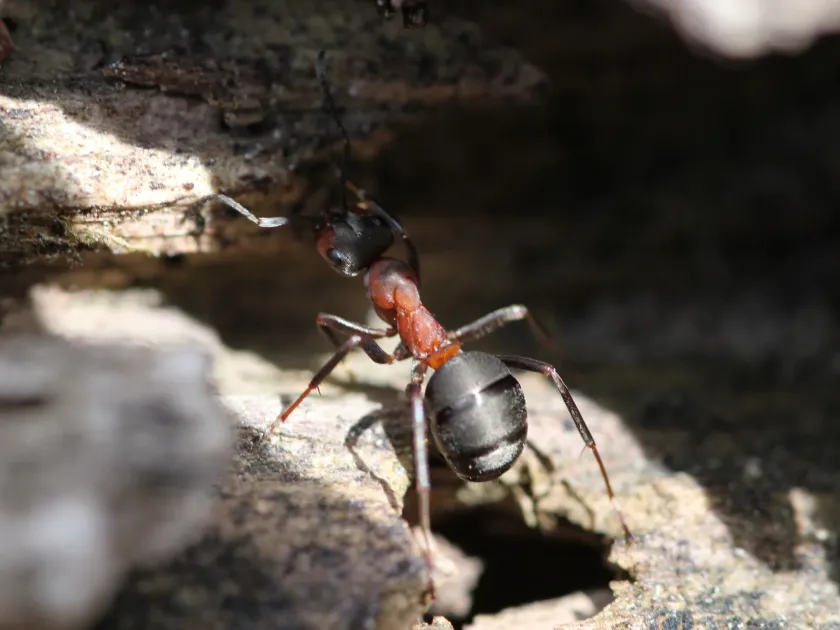
The Northern wood ant (Formica aquilonia) is a species of the family Formicidae, belonging to the order Hymenoptera. These ants are relatively large, with workers ranging from 7 to 10 mm in length.
Their body color varies from dark brown to black, often with a distinct reddish tint on the thorax. They are known for constructing large, dome-shaped mounds made of twigs, pine needles, and other forest debris.
A key biological feature of this species is polygyny, meaning multiple queens inhabit a single colony, which allows the population to expand rapidly within a garden environment.
They are highly aggressive in defending their territory and food sources, utilizing both strong mandibles and formic acid to ward off potential threats.
The life cycle involves complete metamorphosis, and colonies hibernate deep within their mounds during the winter months when ground temperatures drop significantly.
What it damages
The primary agricultural damage caused by the Northern wood ant stems from their intense symbiotic relationship with aphids and other sap-sucking insects.
The ants protect aphid colonies from natural predators such as ladybugs, lacewings, and hoverfly larvae, ensuring the survival and proliferation of these plant pests.
Aphids extract vital nutrients from young shoots and leaves, causing leaf curling, stunted growth, and significantly reduced crop yields in fruit trees and berry bushes.
Furthermore, ants facilitate the spread of plant viruses and bacterial infections by physically moving aphid individuals to fresh, healthy host plants throughout the season.
In some cases, their tunneling activity around the root zones of perennials can disturb the soil structure and damage small roots, leading to physiological stress in plants.
When it appears
Seasonal activity typically commences in early spring, as soon as soil temperatures reach a threshold of approximately 8–10 degrees Celsius.
The period of peak nuisance coincides with the flushing of buds and the emergence of new growth, which provides the high-sugar sap that fuels both the aphids and the ants.
During the summer months, the number of foraging workers reaches its maximum, as they are continuously engaged in tending their "aphid farms" and collecting honeydew.
Activity gradually tapers off in autumn as temperatures decrease, and the colony begins to move deeper into the mound to prepare for the winter period.
Gardeners should be particularly vigilant from late spring through mid-summer, when the foraging activity of the colony is at its most intense across the landscape.
Signs of infestation
A primary indicator of their presence is the appearance of well-defined ant trails leading from the colony toward trees or garden beds.
Large, concentrated groups of aphids found on young foliage, surrounded by active ants, confirm the symbiotic relationship between the two species.
Sticky residue on leaves, commonly known as honeydew, is a hallmark sign of heavy aphid infestation supported by ant protection.
Small mounds of excavated soil near the base of stems or in planting rows often indicate the presence of tunnels or subterranean nests.
- Active ant trails on tree trunks.
- Aphid colonies clustered on new growth.
- Sticky, shiny leaf surfaces (honeydew).
- Slowed plant development in affected areas.
- Frequent movement of ants near blossoms and fruit sets.
Control measures
Applying sticky glue bands to the trunks of fruit trees is a highly effective mechanical method to prevent ants from reaching the canopy.
The use of insecticide-based bait gels is often the most successful strategy, as worker ants transport the poison back to the queen and the brood, eliminating the colony.
Implementing a comprehensive aphid management program is crucial, as removing the aphid food source significantly reduces the ants' interest in the host plants.
Frequent tilling or soil cultivation around the base of plants can destroy shallow tunnels and discourage the establishment of ant nests in those areas.
Using aromatic herbs or essential oils as natural repellents can serve as a supplementary measure to protect smaller, highly sensitive garden plots.
Taxonomy
- Latin name
- Formica aquilonia
- Order
- Hymenoptera
- Family
- Formicidae
- EPPO code
- FORMAQ
Discussion
No discussions yet — be the first.