
Acrobat ants
Crematogaster
Description
How to identify
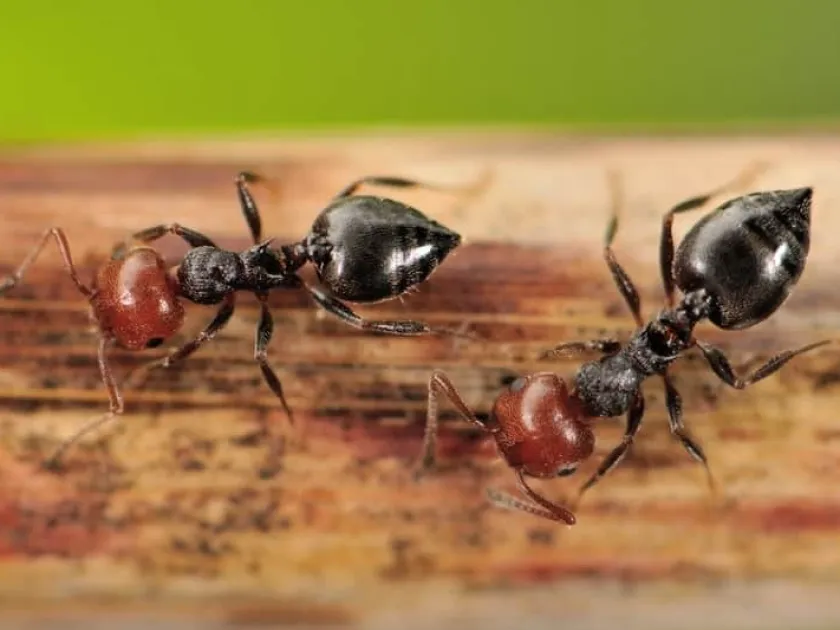
Acrobat ants (genus Crematogaster) are members of the Formicidae family. They earned their common name due to the distinct habit of raising their heart-shaped abdomens over their heads when they are disturbed or threatened.
These ants are generally small, ranging from 2.5 to 4 mm in length. Their color can vary from light brown to black, depending on the specific species, but all share the characteristic narrowed abdomen attachment.
They are eusocial insects living in complex colonies. The queen is responsible for reproduction, while the worker ants focus on foraging for food, maintaining the nest, and protecting the colony from external threats.
Acrobat ants often nest in wood, including decaying trees, hollow branches, or even inside structures. They do not typically create large mounds but rather utilize pre-existing voids or galleries created by other insects.
Their biological success is linked to their mutualistic relationship with honeydew-producing insects like aphids and mealybugs, which they defend against natural predators in exchange for food.
What it damages
Acrobat ants cause indirect damage by tending and protecting sap-sucking insects like aphids. This activity keeps pest populations high, leading to weakened plant growth and the development of sooty mold.
The direct damage occurs when ants enlarge their nests within the wood of living trees. These galleries can compromise the tree's structural integrity and provide entry points for pathogens and wood-decay fungi.
Orchards and gardens with high-density plantings are particularly susceptible to infestations. Young trees may show signs of stunted growth if an ant colony establishes itself within the root zone or trunk.
Fruit-bearing plants such as apples, pears, and citrus are frequent targets. A heavy infestation can lead to significant foliage loss and reduced fruit quality due to the constant presence of protected aphid colonies.
While they rarely consume plant tissue directly, in cases where honeydew is scarce, acrobat ants have been observed feeding on the juices of tender plant parts like buds, flowers, and young shoots.
When it appears
The activity of acrobat ants typically begins in early spring, as temperatures rise consistently above 10–12°C. Workers emerge from their nesting sites to scout for food resources and potential nesting locations.
Peak activity occurs during mid-summer, matching the reproductive cycle of aphids and other honeydew-secreting pests. During this time, they are most visible on the leaves and stems of host plants.
As the season progresses, the colony size expands, requiring more food to support the growing number of larvae. Foraging activity remains steady until the cooler temperatures of autumn begin to settle.
During the fall, the ants reduce their outside foraging and prepare for overwintering. They retreat into the deeper, protected parts of their nests within wood or soil to survive the winter months.
They overwinter in a state of diapause inside their nests. These nests protect the queen and workers from freezing temperatures, allowing the colony to survive and resume its lifecycle the following year.
Signs of infestation
One of the most obvious signs is the presence of consistent, organized trails of ants moving up and down the bark of trees. These trails are often marked by chemical pheromones.
An unusual accumulation of aphids on plant tips that are not being managed by natural predators like ladybugs is a strong indicator that acrobat ants are present and protecting the pests.
The presence of fine wood debris or "frass" at the base of a tree indicates that the ants are actively excavating or enlarging their tunnels within the wood.
If you disturb an acrobat ant, it will raise its abdomen over its body as a defensive posture. This behavior is a unique visual identifier of this genus.
A sticky, shiny residue known as honeydew on the leaves is a common sign. This residue often attracts other insects and fosters the growth of black sooty mold on the surface of the plant.
Control measures
The use of sticky barrier bands around the trunks of fruit trees is highly effective in preventing ants from accessing the canopy and protecting their aphid colonies.
Effective management requires targeting the aphids or mealybugs that provide the food source for the ants. Using systemic insecticides on the plants can significantly reduce the ant population.
- Utilizing gel-based ant baits to eliminate the colony at its source.
- Pruning branches that touch buildings or other trees to break the ant's transit paths.
- Maintaining plant vigor through appropriate fertilization and removing dead wood where colonies might thrive.
For active nests found in wood, targeted application of appropriate insecticides directly into the entry points can help eradicate the colony, including the queen.
All chemical control measures should be applied in accordance with local regulations, ensuring safety for non-target species and pollinators, and adhering to pre-harvest safety intervals.
Taxonomy
- Latin name
- Crematogaster
- Order
- Hymenoptera
- Family
- Formicidae
- EPPO code
- CREMSP
Discussion
No discussions yet — be the first.