
Conomyrma
Conomyrma
Description
How to identify
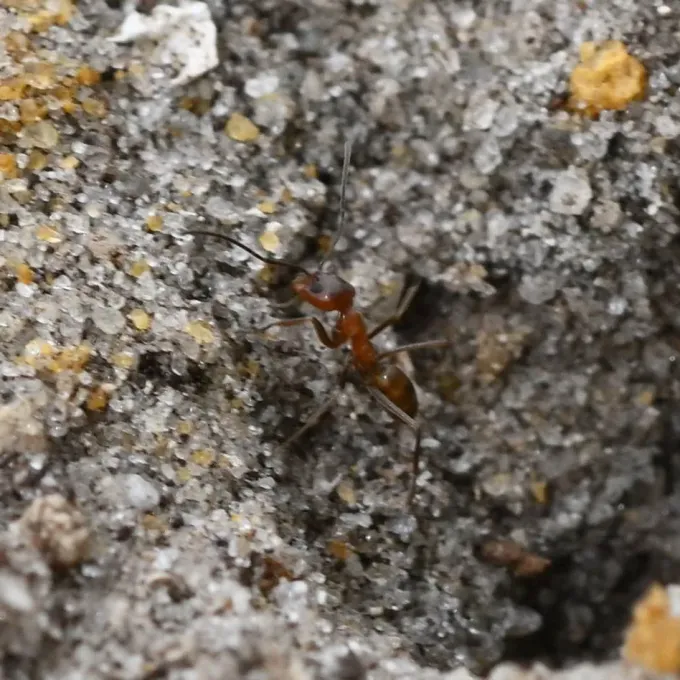
Conomyrma is a genus of ants in the subfamily Dolichoderinae, commonly found in various soil environments and known for their distinct behavioral patterns.
These ants are generally small to medium-sized and possess a coloration ranging from light yellow to brown, which helps them camouflage within the soil substrate.
They are recognized by their lack of a stinger and their ability to produce chemical secretions with a strong, often coconut-like, odor to deter potential predators.
As social insects, they maintain complex colonies with multiple entrances, often nesting directly in garden beds, which creates disturbances for nearby plant roots.
The workers are highly industrious and exhibit defensive behavior when their territory or the aphids they tend are disturbed by external factors.
What it damages
The primary agricultural damage caused by Conomyrma is indirect; they act as primary caretakers and protectors for aphids and scale insects.
By preventing natural predators like ladybugs from accessing aphid colonies, Conomyrma allows these sap-sucking insects to multiply unchecked, damaging plant foliage.
The honeydew excreted by aphids, which the ants harvest, serves as a substrate for sooty mold, a fungus that covers leaves and hinders essential photosynthesis.
Furthermore, their nest-building activities frequently disrupt the soil structure around the root zone, leading to air pockets that can cause roots to desiccate.
Young transplants and seedlings are particularly vulnerable to these soil disturbances, often showing stunted growth or failure to establish properly in infested soil.
When it appears
Conomyrma activity is largely temperature-dependent, with foragers appearing on the surface as soon as the soil warms up during the early spring months.
During the height of summer, the colony's demand for food is at its maximum, leading to peak activity in both foraging and the protection of aphid populations.
This mid-summer period is critical for crop health, as the ants actively transport aphids to the most succulent parts of the plants to maximize honeydew production.
As autumn arrives and soil temperatures drop, the activity levels decrease, and the colony moves deeper into the ground to survive the winter months.
The seasonal life cycle is sustained by a continuous supply of protein and carbohydrates, which the worker ants work tirelessly to secure for the queen and larvae.
Signs of infestation
One of the most obvious signs of a Conomyrma presence is the appearance of small, cone-shaped piles of loose soil located near the base of garden plants.
Well-defined trails of ants moving between their nests and aphid-infested branches serve as a clear indicator of a symbiotic relationship detrimental to the plant.
Leaves covered in a sticky, black residue indicate that aphids are present and protected by ants, signaling an imminent threat to the plant's overall health.
Plants located near large ant mounds often exhibit signs of physiological stress, including leaf curling, yellowing, and general lack of vigor due to root damage.
- Visible soil mounds around plant stems.
- Active ant columns leading up to foliage.
- Heavy aphid concentrations on new growth.
- Presence of black sooty mold on leaf surfaces.
Control measures
Controlling Conomyrma requires a dual strategy: managing the ant population itself while simultaneously removing the aphid colonies they rely on for food.
Application of contact or stomach poison insecticides, formulated as baits, can effectively reduce the number of foraging workers and eventually weaken the colony.
Frequent soil cultivation, such as hoeing or tilling the areas around plants, disrupts their tunnels and forces the colony to relocate away from protected crops.
Implementing sticky barriers or physical traps on tree trunks is highly effective in blocking ants from reaching the canopy, leaving aphids vulnerable to predators.
Introducing natural predators or utilizing horticultural oils to treat the aphid population can indirectly reduce the ants' interest in your garden plants.
Taxonomy
- Latin name
- Conomyrma
- Order
- Hymenoptera
- Family
- Formicidae
- EPPO code
- CONMSP
Discussion
No discussions yet — be the first.