
Cephalotes pusillus
Cephalotes pusillus
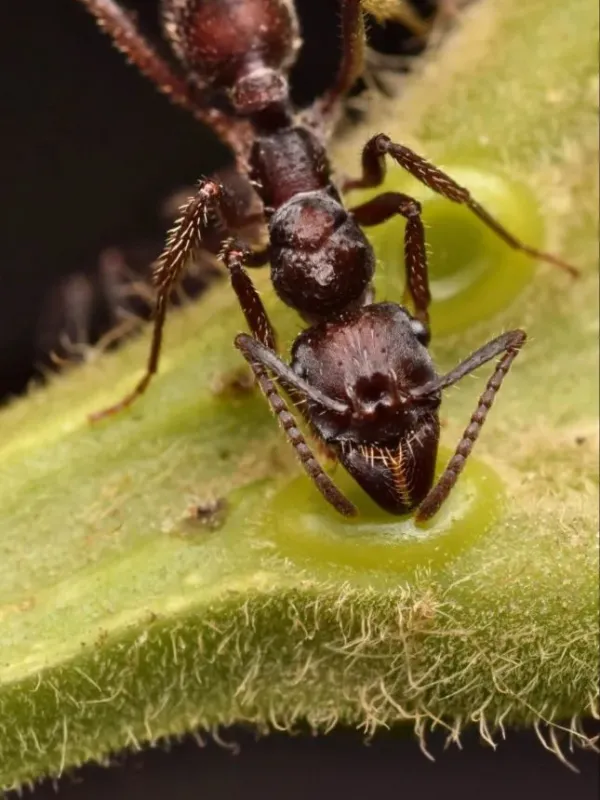
Description
How to identify
Cephalotes pusillus is a species of arboreal ant belonging to the subfamily Myrmicinae. These ants are known for their distinctively flattened body shape, which is an evolutionary adaptation for living and moving within narrow cavities in wood.
The worker ants are small, typically dark-colored, and often display a metallic sheen. Their heads are broad with well-defined margins, which serves as a key identifying characteristic for the genus Cephalotes.
Unlike ground-dwelling ants, Cephalotes pusillus is strictly arboreal. They establish their nests in existing hollows in trees, often expanding them to accommodate the growing needs of the colony.
The colony structure is highly organized, with a clear hierarchy that ensures the efficient maintenance of the nest's microclimate. This social structure makes the colony remarkably resilient to environmental changes.
Though primarily found in the Neotropics, their presence in agricultural zones is increasing. Proper identification through entomological monitoring is essential to distinguish them from beneficial species.
What it damages
These ants are considered pests primarily on coffee and cacao plantations. While they do not consume plant tissue as a food source, their nest-building activities inside branches weaken the structural integrity of the trees.
The primary economic impact is indirect: Cephalotes pusillus maintains mutualistic relationships with honeydew-secreting insects, such as aphids and scale insects. They provide protection to these pests, leading to explosive population growth of the latter.
The accumulation of aphids and scale insects, promoted by the ants, leads to severe sap depletion in trees. This results in stunted growth, yellowing of leaves, and significant drops in fruit production.
Mechanical damage to the conductive tissue within the branches hinders the transport of water and nutrients. Consequently, affected plants often show signs of physiological stress and premature fruit drop.
Furthermore, these ants act as mechanical vectors for various plant pathogens. By moving across the canopy, they facilitate the spread of fungal spores and bacteria to previously healthy parts of the crop.
Control measures
Effective management begins with strict sanitation practices. Regularly pruning and removing branches showing signs of nest occupation significantly lowers the local population density of the ants.
Systemic insecticides are frequently employed to control these ants. Because they feed on the honeydew of sap-sucking insects, they ingest the systemic chemicals present in the plant sap, leading to colony decline.
Slow-acting toxic baits are highly recommended for large-scale operations. When workers transport these baits back to the nest, the queen and brood are exposed, ensuring the total elimination of the colony.
Biological control, including the release of specific predators or the application of entomopathogenic fungi, offers a sustainable alternative to chemical sprays, helping to balance the ecosystem.
Integrated Pest Management (IPM) strategies, including constant monitoring with visual checks and specialized traps, are necessary to prevent infestations from reaching thresholds that cause significant harvest losses.
Taxonomy
- Latin name
- Cephalotes pusillus
- Order
- Hymenoptera
- Family
- Formicidae
- EPPO code
- CEPTPU
Discussion
No discussions yet — be the first.