
Carpenter Ant Vicinus
Camponotus vicinus
Description
How to identify
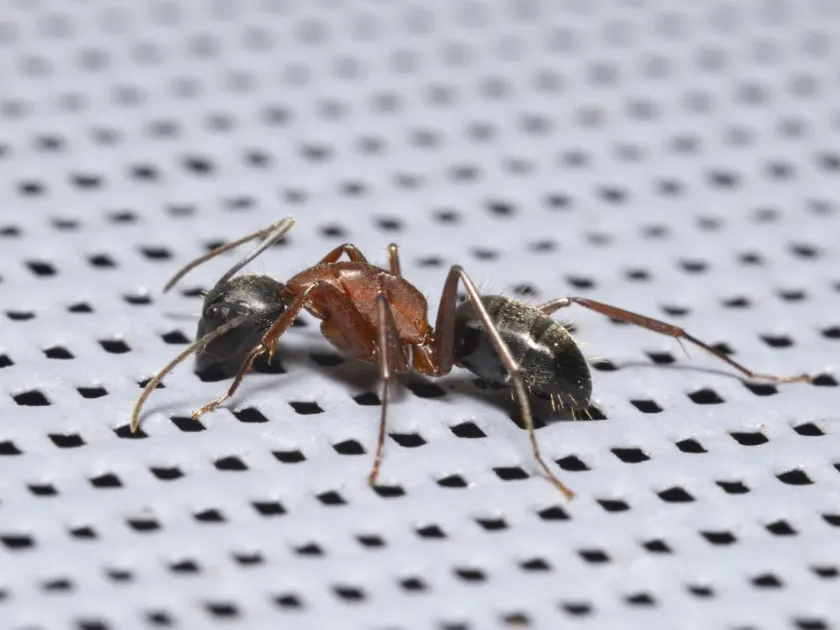
The Carpenter Ant Vicinus (Camponotus vicinus) belongs to the Formicidae family and the Hymenoptera order. It is a large species often characterized by a reddish-brown thorax and a darker abdomen.
This species exhibits polymorphism, meaning worker ants vary significantly in size, adapted for different tasks within the colony. Their robust mandibles are specifically designed for tunneling through wood fibers.
These ants are primarily nocturnal, which often leads to the infestation going unnoticed during the early stages. They prefer nesting in decayed or moist wood, although they can colonize healthy trees.
A mature colony can contain thousands of individuals, all focused on supporting the reproductive queen and expanding the nest structures.
Accurate species identification usually requires expert examination of the ant's thoracic structure and its specific pattern of abdominal pubescence.
What it damages
The primary damage caused by these ants is structural, as they excavate galleries within wood to house their colonies, weakening the timber over time.
Although they do not consume cellulose like termites, their relentless nesting activities compromise the integrity of tree trunks and branches.
Infected trees suffer from reduced nutrient transport, making them susceptible to secondary rot, fungal pathogens, and environmental stress.
The presence of carpenter ants often correlates with the protection of honeydew-producing aphids, which further harms the tree's health.
When trees are heavily infested, they may become structurally unstable, posing a risk of falling during high winds or heavy weather conditions.
When it appears
Activity typically begins in the early spring as temperatures rise and the soil warms up, prompting the ants to emerge from their overwintering sites.
The summer months represent the peak of colonial activity, with intense foraging, brood rearing, and expansion of the nest galleries.
As autumn approaches, activity levels gradually decrease as the ants retreat deeper into their nests to prepare for the coming winter.
They overwinter within their excavated wood nests or deep in the soil beneath decaying plant matter, entering a state of dormancy.
The dispersal of the species occurs during the nuptial flight, where winged reproductive forms emerge to establish new colonies in favorable conditions.
Signs of infestation
The most visible sign of an infestation is the presence of fine, sawdust-like wood shavings (frass) at the base of the tree or near nest openings.
Small, clean exit holes in the bark or wood surface indicate where the ants are discarding debris from their internal tunnels.
A faint rustling or scratching sound can sometimes be heard during the night by placing an ear against the wood, signaling active excavation.
The observation of steady trails of ants traveling along branches and trunks is a clear indicator of a nearby colony or foraging activity.
The presence of aphids on young shoots is a major red flag, as carpenter ants frequently tend these pests to collect their sugary secretions.
Control measures
Sanitary pruning and the removal of dead or rotting wood are the most effective preventive measures to deny nesting sites to the colony.
Applying sticky or insecticidal barriers to tree trunks can effectively disrupt ant movement and prevent them from reaching the tree canopy.
Using slow-acting bait stations containing toxic gels is a highly effective way to eliminate the colony, as the workers carry the bait back to the queen.
Management of aphid populations is crucial, as removing this food source makes the trees significantly less attractive to foraging carpenter ants.
- Maintain tree health to prevent rot and decay.
- Seal large pruning wounds with protective agents.
- Implement professional pest monitoring during peak activity months.
Taxonomy
- Latin name
- Camponotus vicinus
- Order
- Hymenoptera
- Family
- Formicidae
- EPPO code
- CAMOVI
Discussion
No discussions yet — be the first.