
Black-headed sugar ant
Camponotus nigriceps
Description
How to identify
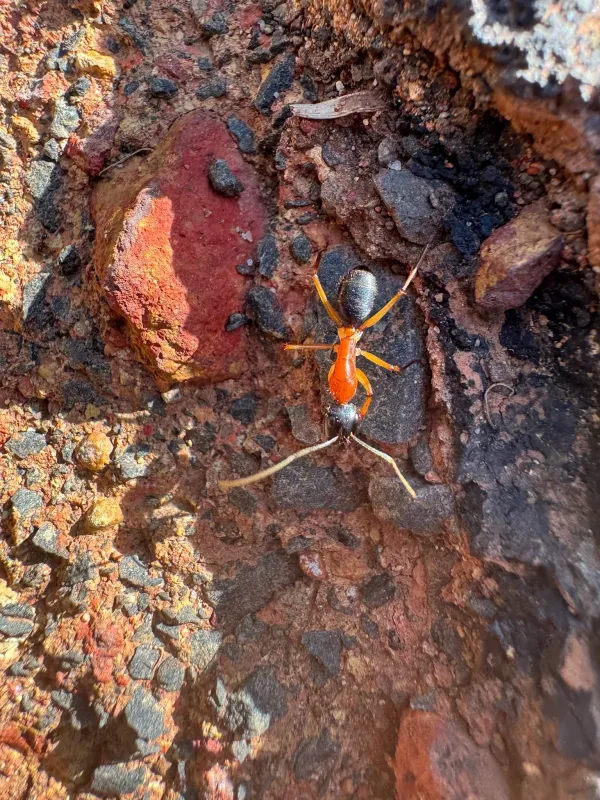
The black-headed sugar ant (Camponotus nigriceps) is a prominent member of the Formicidae family, belonging to the order Hymenoptera. As the name suggests, it is easily identified by its distinctly dark, blackish head contrasted against a reddish-brown thorax and abdomen.
These ants exhibit significant size variation, with workers ranging from 8 to 12 mm in length, while the queens are noticeably larger. Their bodies feature scattered, coarse bristles, providing them with a robust appearance suitable for their ground-dwelling and foraging activities.
Native to specific regions, these ants are primarily terrestrial but are often found nesting in the soil at the base of trees or in decaying timber. They are highly organized and can establish large, deep-reaching colony networks.
The development cycle follows the metamorphosis stages: egg, larva, pupa, and adult. A single queen usually leads the colony, and the population is sustained by the constant production of new workers throughout the warm season.
Reproductive winged ants typically emerge in the spring or summer, initiating mating flights to establish new colonies, which allows the species to spread rapidly across orchards and garden environments.
What it damages
While not primary wood borers in healthy living tissue, they cause significant damage by expanding existing crevices, cracks, and rotting wood within trees. This creates pathways for opportunistic pathogens, leading to structural decay.
Their most harmful impact is the systematic protection and "farming" of aphids and scale insects on fruit-bearing trees. By protecting these sap-sucking pests from natural predators, the ants cause an indirect, massive infestation of aphids.
- Systematic weakening of the tree's vascular system.
- Facilitation of sooty mold growth due to aphid honeydew.
- Destruction of cambium tissue through nest expansion.
- Interference with nutrient flow leading to fruit loss.
Damage to the root zone caused by extensive tunneling can lead to the yellowing of foliage and poor water absorption, particularly during hot summer months. Young trees are especially susceptible to this type of root disruption.
Over time, the combined impact of ant tunnels and secondary pest infestations reduces the lifespan of the host tree, leading to decreased crop yields and eventual mortality of weaker specimens.
Signs of infestation
The most visible sign of infestation is the consistent presence of ant trails moving along the trunk towards the canopy. These trails often lead to clusters of aphids on younger stems and leaves.
You may find piles of fine soil or wood debris at the base of the tree, which indicates active excavating behavior as the ants expand their nest chambers within or beneath the tree structure.
The presence of sticky honeydew on the leaves is a major indicator of an aphid colony protected by ants. If the leaves appear shiny or sticky, it is highly probable that ants are actively farming the aphids there.
Physical damage to the bark, particularly near the roots or in hollow sections of the trunk, often shows signs of being modified by these insects. Listen carefully near these areas; you might hear slight rustling sounds.
Premature leaf drop or branch dieback, occurring without signs of specific fungal diseases, is often a secondary symptom of the root or trunk damage caused by the ants' nest-building activities.
Control measures
The first line of defense is the installation of sticky barrier bands around the trunks of fruit trees. This prevents the ants from accessing the canopy and providing protection to aphid colonies.
Targeting the aphid population is essential; using systemic insecticides or horticultural oils to eliminate the aphids will naturally cause the ant colony to abandon the tree due to a lack of food resources.
For ground nests, the use of liquid or granular bait stations is highly effective. The workers carry the slow-acting poison back to the queen and the brood, resulting in the total collapse of the colony.
Cultural practices are vital for long-term prevention. This includes pruning dead wood, filling tree cavities with appropriate sealants, and maintaining overall tree health through adequate watering and balanced fertilization.
In cases of heavy infestation, localized soil treatments with professional-grade insecticides may be required. Always ensure that such treatments are applied in a way that minimizes impact on pollinators and beneficial insects.
Taxonomy
- Latin name
- Camponotus nigriceps
- Order
- Hymenoptera
- Family
- Formicidae
- EPPO code
- CAMONI
Discussion
No discussions yet — be the first.