
Lateral carpenter ant
Camponotus lateralis
Description
How to identify
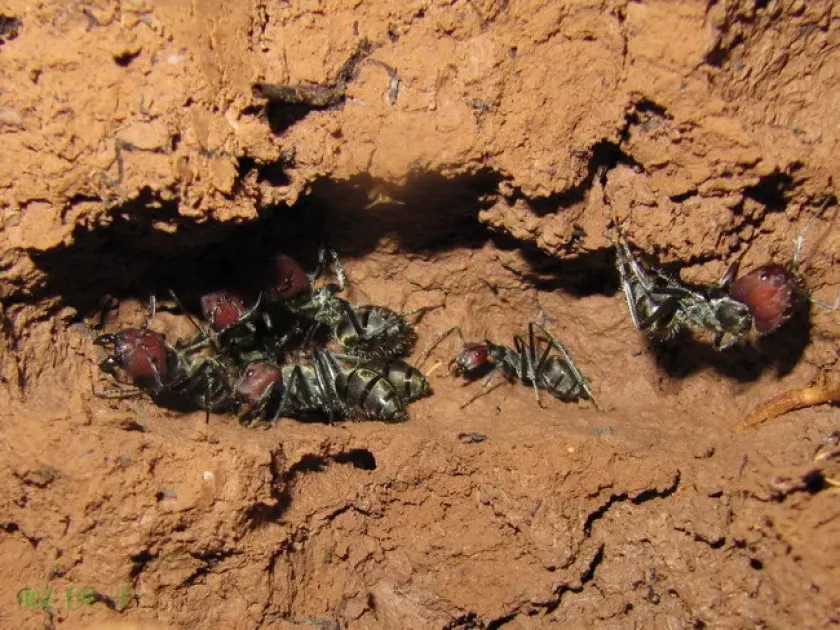
The Lateral carpenter ant, Camponotus lateralis, belongs to the family Formicidae. These ants are known for their distinct appearance, with workers typically measuring 3 to 7 mm in length. Their bodies are usually black or dark brown, often featuring a reddish tone on the head or thorax.
These ants are highly active and aggressive foragers. They prefer nesting in dry, decayed wood or within existing cracks and crevices in the bark of trees, making them a common sight in orchards and gardens.
Unlike some other ant species, Camponotus lateralis does not consume the wood as food. Instead, they excavate galleries within the tree to create nesting sites for their colony, which can lead to structural compromise over time.
The colony structure includes a queen, workers, and, during the mating season, winged reproductive forms. They maintain complex foraging trails, often leading from the nest to the canopy where they tend to aphid colonies.
They are particularly known for their symbiotic relationship with aphids. The ants protect the aphids from predators in exchange for honeydew, a sugary substance secreted by the aphids, which provides the ants with essential carbohydrates.
What it damages
The primary damage caused by Lateral carpenter ants is mechanical. By chewing into the wood to build their galleries, they weaken the internal structure of trees, including apple, pear, plum, and cherry trees.
While an initial infestation might seem minor, continued excavation over several seasons can compromise the integrity of the tree, making it prone to snapping during high winds or heavy crop loads.
The ants indirectly damage plants by promoting aphid outbreaks. By removing natural enemies of aphids, they allow aphid populations to explode, which leads to leaf curling, stunted growth, and reduced fruit yield.
In addition to structural damage, the galleries created by the ants often trap moisture and fungal spores, leading to internal rot that spreads through the tree’s heartwood, significantly shortening the tree's lifespan.
For young saplings, an ant colony nesting near the root flare can be devastating, as it interferes with nutrient transport and can cause the tree to lose vigor or die prematurely.
When it appears
Colony activity starts in early spring, usually as temperatures rise above 10-12°C. Workers emerge from the nest to forage and establish new trails to their primary food sources.
Summer is the peak season for activity. From June through August, the colony is at its most productive, meaning that excavation of new nesting galleries is happening at an accelerated rate.
Mating flights, where winged reproductives leave the parent colony to establish new nests, typically occur in the mid-summer months, often during warm and still weather conditions.
As autumn arrives and temperatures drop, foraging activity decreases significantly. The colony begins to retreat into the deeper, warmer sections of the nest to prepare for winter.
During the winter, the ants enter a period of diapause. They remain deep within the tree trunk or in the soil beneath the root system, where the temperature is more stable, allowing them to survive the cold months.
Signs of infestation
A classic sign of an infestation is the presence of fine wood shavings, known as frass, appearing near the base of the tree or on the branches. This material is ejected from the galleries as the ants expand their nest.
Frequent movement of ants up and down the trunk is a strong indicator. If you observe consistent trails of ants moving towards leaf-curling tips, it is highly likely that they are tending aphids in the canopy.
Small, round entrance holes in the bark are visible signs of nest openings. Over time, these holes may become more numerous if the colony continues to grow inside the wood.
Tapping the trunk with a tool can reveal the presence of internal galleries. If the sound is hollow or "dead," it suggests that significant interior excavation has occurred, indicating a mature infestation.
Wilting or yellowing of specific branches during the heat of summer can indicate that the ants have severely damaged the xylem and phloem tissues, preventing water and nutrients from reaching the foliage.
Control measures
The best control strategy starts with good garden hygiene. Removing dead, dying, or diseased branches eliminates the preferred nesting sites for Camponotus lateralis, making the garden less hospitable for them.
Applying sticky adhesive bands around the trunks of trees is a highly effective mechanical method. These bands prevent workers from reaching the canopy, effectively cutting off their access to aphids.
- Apply systemic insecticides to control aphid populations in the canopy.
- Use slow-acting, bait-based insecticides that foragers take back to the nest.
- Seal pruning wounds and cracks with protective tree wound paint or wax.
- Encourage beneficial predators like ladybugs to keep aphid populations in check.
Chemical control should be targeted and cautious. It is most effective to use baits that can be transported by the workers back into the nest to ensure the queen and larvae are affected.
Finally, maintaining the overall health of the tree is crucial. Strong, healthy trees with intact bark and no rot are far less likely to be chosen as nest sites compared to those already suffering from environmental stress or decay.
Taxonomy
- Latin name
- Camponotus lateralis
- Order
- Hymenoptera
- Family
- Formicidae
- EPPO code
- CAMOLA
Discussion
No discussions yet — be the first.