
Carpenter ant
Camponotus herculeanus
Description
How to identify
The Carpenter ant (Camponotus herculeanus) is a large species within the Formicidae family. These ants are well-known for their size and ability to inhabit woody plants.
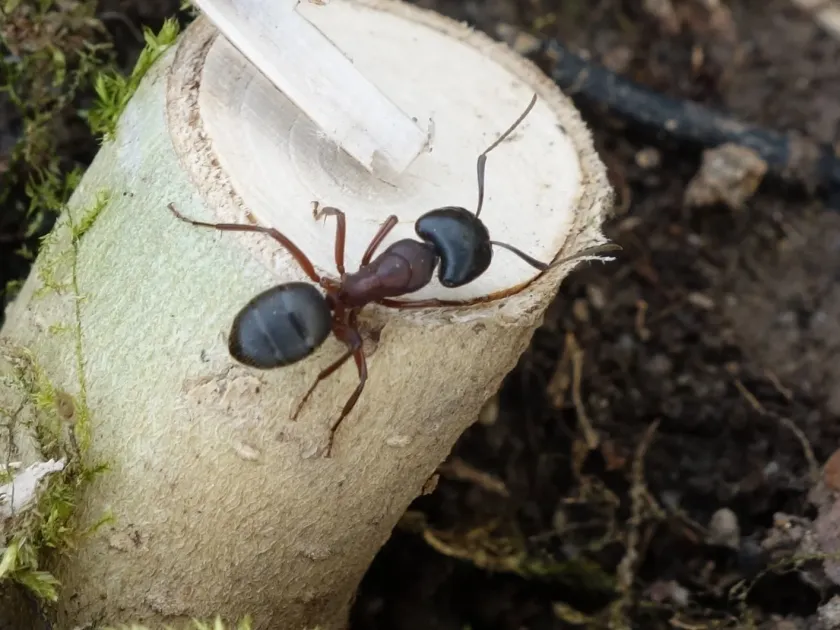
Workers are typically 6–14 mm long, while the queen can be significantly larger. The species is characterized by a reddish-brown or rust-colored thorax and a matte black abdomen.
They possess strong mandibles, which they use to excavate nesting galleries. Unlike termites, they do not eat the wood; they simply remove it to create nesting space.
Colonies are complex and highly organized, often containing several thousand individuals. They are social insects that demonstrate advanced communication and cooperation.
The life cycle progresses through egg, larval, pupal, and adult stages. The time taken to reach maturity is influenced by the surrounding climate and temperature.
What it damages
Carpenter ants primarily infest trees that are already decaying or damp. However, large, established colonies can also penetrate and damage healthy, sound wood.
By tunneling through the interior, they compromise the structural integrity of the tree. This often leads to branches breaking during storms or heavy winds.
The infestation interferes with the tree's nutrient and water transport systems. As a result, the host plant may exhibit stunted growth and decreased fruit production.
They are known to protect aphids and scale insects, which produce honeydew. This relationship promotes the spread of other plant-sucking pests in the garden.
If an infestation spreads to nearby structures like wood sheds or fences, it can cause significant property damage over time if left unchecked.
When it appears
Activity typically begins in the early spring, as temperatures rise consistently above 10°C (50°F). Workers emerge from winter shelters to forage for food.
The mating flight, where winged reproductive members leave the colony to start new ones, usually occurs during late spring or early summer, depending on the region.
Mid-summer is the peak of foraging activity. The colony is most aggressive in collecting resources to sustain the brood and expand their nesting site.
As autumn arrives and temperatures drop, the ants become less active. They begin to retreat deeper into their galleries in preparation for the winter period.
During winter, the colony enters a state of diapause. They stay inactive in the deeper, warmer parts of their nest, sheltered from the frost.
Signs of infestation
Finding piles of sawdust or coarse wood shavings (frass) at the base of a tree is a primary indicator of active tunneling by Carpenter ants.
Listen for a hollow sound when tapping the trunk or large branches. This sound indicates that the interior wood has been compromised by extensive galleries.
Visible trails of ants moving up and down the tree trunk are a clear sign. They often use these routes to reach aphids in the canopy or other food sources.
The presence of ants on the bark during the evening hours suggests the proximity of a nearby nest or a heavily used foraging path.
- Holes in the bark with residual dust.
- Presence of honeydew-producing aphids on leaves.
- Sudden branch failure despite a green appearance.
- Increased ant activity near the tree root flare.
Control measures
Effective management begins with good orchard hygiene. Remove all dead wood, stumps, and debris, as these are primary nesting sites for new colonies.
Use targeted insecticides specifically approved for wood-boring insects. Direct application into the nest openings, if located, is the most effective approach.
Apply sticky barriers or non-drying glues around the trunks of trees to prevent ants from climbing up and reaching the aphids in the canopy.
Implementing a strict control program for aphid populations is essential. By removing the food source, you make the tree less attractive to Carpenter ants.
In cases of severe structural damage, the infested tree should be removed completely, including the root system, to ensure the colony does not relocate nearby.
Taxonomy
- Latin name
- Camponotus herculeanus
- Order
- Hymenoptera
- Family
- Formicidae
- EPPO code
- CAMOHE
Discussion
No discussions yet — be the first.