
Camponotus conspicuus
Camponotus conspicuus
Description
How to identify
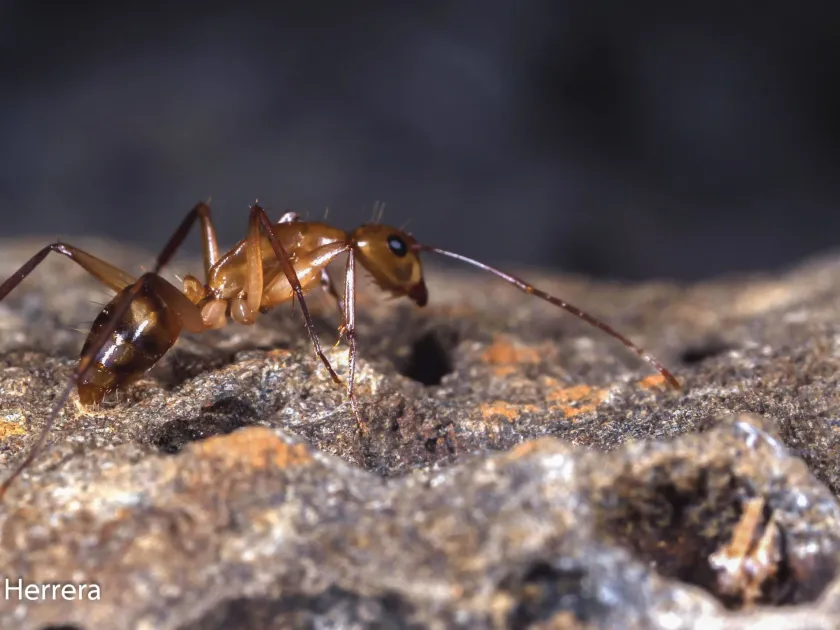
Camponotus conspicuus belongs to the Formicidae family and is a member of the carpenter ant group. These ants are known for their large size and their ability to nest in wood, creating extensive systems of galleries.
The species exhibits polymorphism, meaning that workers vary in size depending on their duties within the colony. Their bodies are robust, often with a shiny or dark appearance, and they are equipped with strong mandibles for wood excavation.
The queen, which is the reproductive center of the colony, is significantly larger than the workers. They possess long antennae and a distinct hairy appearance on the abdomen, which aids in tactile sensing.
Preferring tropical or subtropical environments, they naturally inhabit dead or decaying trees. However, they can easily adapt to healthy trees if they find suitable hollows or existing damage to establish their nests.
These ants are highly organized, with complex communication networks based on pheromones. Their colonies can survive for many years, with worker populations reaching thousands in mature nests.
What it damages
The primary damage caused by Camponotus conspicuus is the structural weakening of trees. By tunneling into the wood, they disrupt the vascular tissue, which is responsible for water and nutrient transport.
These ants also maintain a symbiotic relationship with sap-sucking insects like aphids and scale insects. By protecting these pests from predators, the ants facilitate high levels of infestation on leaves and young shoots.
The galleries they carve out act as entry points for various fungal and bacterial infections. This leads to internal rotting of the wood, which can compromise the overall health and stability of the plant.
In nurseries and orchards, infestation can lead to stunted growth and reduced yields. Affected trees are often less resilient to environmental stresses such as drought or high winds.
In severe cases, the structural integrity of the main trunk is so compromised that the tree becomes susceptible to breaking, representing a significant risk to both agricultural production and garden safety.
Signs of infestation
One of the most obvious indicators of an infestation is the presence of sawdust or wood shavings, known as frass, at the base of the tree. This is ejected by workers as they hollow out their galleries.
Small, neat holes appearing on the bark are clear signs of entry or ventilation points. In some cases, localized staining or darkening of the bark around these holes may also be observed.
Observing a steady trail of ants moving up and down the trunk, particularly toward the canopy, is a strong indicator of an active nest or foraging route.
A hollow sound when tapping on the trunk suggests significant interior damage. This is a classic diagnostic technique used to determine the extent of the hollowed-out area within the tree.
Wilted branches and premature leaf drop in specific areas of the tree are often symptoms of the vascular system being interrupted by the ants' excavations deep inside the wood.
Control measures
Systemic insecticides applied via soil drench or trunk injection are effective in managing the population. These chemicals travel through the tree and target the ants within their galleries.
Applying sticky barriers or adhesive bands around the trunk effectively prevents the ants from climbing up, forcing them to find food elsewhere and disrupting their colony's supply chain.
Proactive management of potential nest sites is crucial. This includes pruning dead wood, removing rotting limbs, and sealing any existing wounds or cavities in the bark with appropriate tree care materials.
Effective aphid and scale management is vital. By eliminating the primary food source (honeydew) for the ants, the attractiveness of the plant for Camponotus conspicuus is significantly reduced.
- Use of slow-acting gel baits that return to the colony.
- Regular inspection of the garden for signs of frass.
- Enhancing plant vitality through proper fertilization and irrigation.
Taxonomy
- Latin name
- Camponotus conspicuus
- Order
- Hymenoptera
- Family
- Formicidae
- EPPO code
- CAMOCN
Discussion
No discussions yet — be the first.