
Camponotus compressus
Camponotus compressus
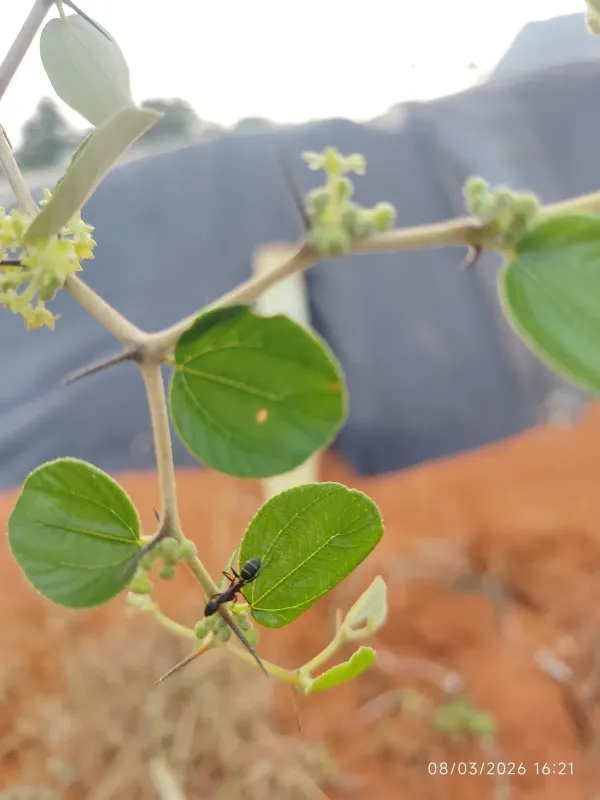
Description
How to identify
Camponotus compressus is a species of carpenter ants within the Hymenoptera order and Formicidae family. These insects are known for their significant size, with workers typically ranging from 8 to 15 mm in length, characterized by a robust and matte-black body structure.
The morphology of this species includes a strong head and mandibles, which are well-adapted for excavating galleries in wood. Their bodies are covered with sparse, long hairs, and they exhibit distinct polymorphic traits where workers of different sizes coexist in one colony.
The colony structure is complex, often led by a long-lived queen. Mating flights occur during warm, humid conditions, after which the fertilized queen seeks out a suitable crevice in weakened wood to establish a new nesting site.
These ants are primarily nocturnal foragers. They are known for establishing well-defined trails from their nest to feeding grounds, often traversing long distances along tree trunks, fence lines, and irrigation pipes.
Identifying them requires observation at night when foraging activity is at its peak. Their presence is often indicated by the constant movement of individuals along established routes on tree bark or nearby structures.
What it damages
The primary concern regarding Camponotus compressus is their strong association with honeydew-producing insects. By actively tending and protecting aphids and scale insects, they prevent natural predators from controlling these sap-sucking pests.
The accumulation of honeydew on foliage encourages the growth of sooty mold, a fungal disease that creates a black film over leaves. This layer significantly inhibits photosynthesis, causing stunted growth and leaf drop in many garden plants.
Although they prefer decayed wood, their excavation activities can create galleries that extend into healthy tissue. This weakens the structural integrity of the plant and creates entry points for moisture, bacteria, and wood-rotting fungi.
During the spring, these ants may chew through the tender bark of young seedlings to access sap, leading to localized tissue death. This damage can result in the loss of young plant vitality and increase susceptibility to environmental stress.
Their persistent defensive behavior against threats makes them a nuisance in orchards. They frequently attack beneficial insects like ladybugs or lacewing larvae that would otherwise provide natural biological control of garden pests.
Control measures
Effective management begins with mechanical exclusion. Installing sticky bands around the trunks of susceptible trees prevents the ants from reaching the canopy where they tend to aphid colonies.
Focusing on the eradication of sap-sucking pests is essential. If the aphids are controlled through biological or chemical means, the ants will lose their primary motivation to protect that specific area, leading to a reduction in their foraging traffic.
For persistent infestations, insecticide-based bait systems are highly effective. These baits are designed to be carried back to the nest by worker ants, where the toxin is shared with the queen, effectively collapsing the entire colony.
Cultural practices, such as pruning dead or damaged branches, are vital for preventing nest establishment. By removing decaying wood, you deprive the ants of the primary habitat they need to thrive within your garden.
- Prune and remove all deadwood from the garden area.
- Install sticky barriers on tree trunks to stop movement.
- Implement a strict aphid control program.
- Use slow-acting bait stations to target the queen.
- Monitor tree health to prevent localized decay.
Taxonomy
- Latin name
- Camponotus compressus
- Order
- Hymenoptera
- Family
- Formicidae
- EPPO code
- CAMOCM
Discussion
No discussions yet — be the first.