
Black carpenter ant
Camponotus aethiops
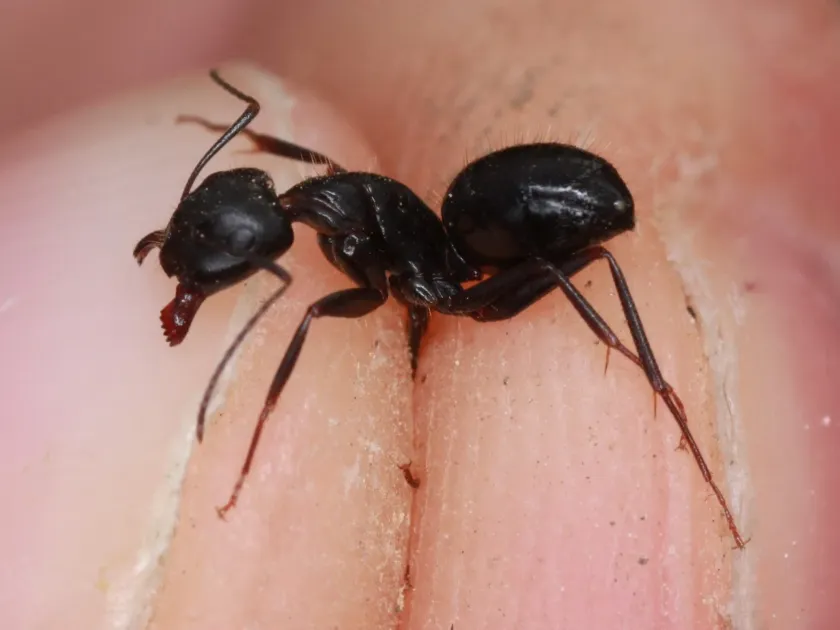
Description
How to identify
Camponotus aethiops is a species of carpenter ant belonging to the Formicidae family. They are distinguished by their black, matte appearance and robust body structure.
Worker ants typically range from 6 to 9 mm in length, while the queen can grow significantly larger, reaching up to 14 mm to ensure colony reproduction.
They possess strong mandibles adapted for gnawing through wood, although they prefer nesting in already decaying or hollow timber rather than solid, healthy structures.
The species is primarily nocturnal, which is a key identifying factor for farmers who may not see them during the day despite their presence in the garden.
Their distribution is largely tied to arid or semi-arid environments, making them particularly prevalent in warm, dry climates where they nest in soil or rocky areas.
##damage##The primary agricultural damage is indirect, caused by their mutualistic relationship with aphids, scale insects, and mealybugs, which they protect from predators.
By protecting aphids, these ants facilitate the rapid buildup of sap-sucking insect populations, leading to severe foliage curling, stunted growth, and reduced fruit yield.
When nesting in fruit trees, they may excavate galleries in weakened or decaying wood, which weakens the tree structure and accelerates the tree's overall decline.
The honeydew produced by the aphids they tend attracts secondary pests and promotes the growth of sooty mold, which blocks sunlight and hinders the plant's photosynthesis.
Their constant movement and nesting activities can disrupt the soil around root zones, potentially affecting the moisture uptake of sensitive young nursery plants.
##season##Activity generally begins in early spring as ground temperatures rise, with the colony becoming fully operational once local temperatures exceed 15 degrees Celsius.
The peak activity occurs during the height of summer, as workers are highly focused on gathering liquid carbohydrates from aphid colonies to feed the queen and larvae.
Activity levels taper off in late autumn, as the colony moves into a state of diapause, nesting deeper in the soil or within protected wood structures for the winter.
Mating flights, where new queens emerge to start independent colonies, typically occur during warm, stable weather windows, often in early to mid-summer.
During the night, their foraging intensity peaks, making it the most effective time to observe their trails and determine the extent of the colony's range.
##signs##The most visible indicator of a Camponotus aethiops presence is a well-established ant trail leading directly from the soil to the canopy of fruit-bearing trees.
Small piles of frass, resembling sawdust, located near the base of trees or in bark crevices indicate that the colony is actively excavating wood nearby.
Plants infested with aphids that remain protected even when natural predators are present suggest the active involvement of a guarding ant colony.
Sticky residue on leaves (honeydew) and a noticeable lack of common aphid predators like ladybugs are classic signs of a manipulated aphid-ant relationship.
- Sawdust-like debris at the base of tree trunks.
- Persistent ant trails ascending tree limbs at night.
- High populations of aphids on young, succulent shoots.
Physical barriers like sticky bands applied to tree trunks are highly effective in preventing ants from accessing the tree canopy to tend to aphids.
The use of slow-acting toxic baits containing sugar or proteins is the preferred method for colony eradication, as workers carry the poison back to the queen.
Sanitation plays a critical role; removing dead wood, fallen branches, and leaf litter from the garden reduces nesting sites, making the area less attractive to them.
Effective management of aphid populations is essential, as removing the primary food source significantly reduces the likelihood of an ant colony establishing itself.
Chemical intervention should be localized and applied with caution to avoid disrupting beneficial insects, prioritizing bait systems over broad-spectrum foliage sprays.
Taxonomy
- Latin name
- Camponotus aethiops
- Order
- Hymenoptera
- Family
- Formicidae
- EPPO code
- CAMOAE
Discussion
No discussions yet — be the first.