
Leafcutter ant
Atta wollenweideri
Description
How to identify
The leafcutter ant Atta wollenweideri is a member of the order Hymenoptera and the family Formicidae, known for its complex social structure and sophisticated farming behavior.
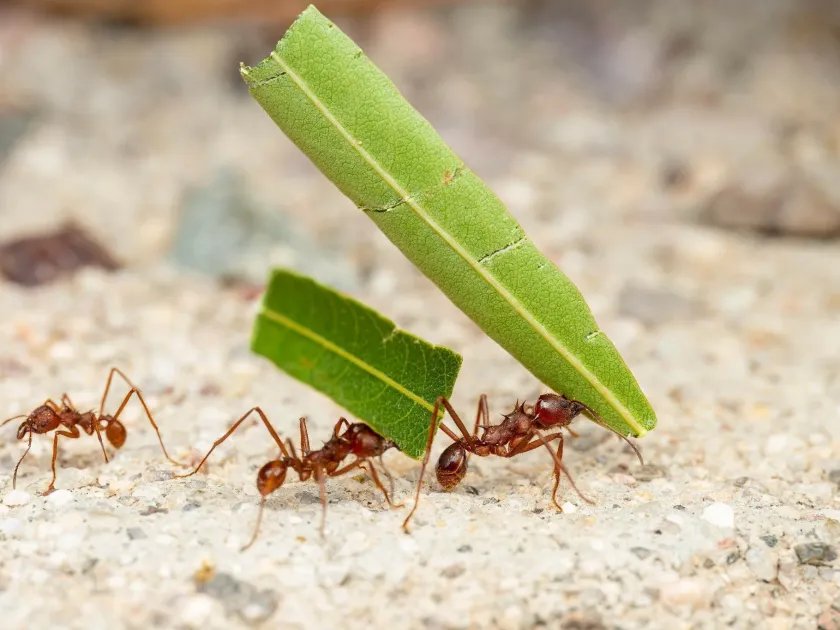
Physically, these ants exhibit significant caste polymorphism, ranging from small workers that care for the fungal gardens to large soldiers with formidable mandibles for defense.
Their exterior is characterized by a reddish-brown color and sharp spines on the thorax, which are adaptations for navigating through dense vegetation and protecting the body.
These ants construct massive underground colonies that consist of hundreds or thousands of chambers, providing a controlled environment for their symbiotic fungal food source.
As one of the most successful social insect species, they have developed a highly organized system of labor that allows them to thrive in diverse environments.
What it damages
Atta wollenweideri causes severe agricultural damage by harvesting large quantities of fresh leaves to create a substrate for cultivating their obligate food fungus.
They are generalist feeders and attack a wide range of crops, including citrus trees, legumes, and cereals, making them a major threat to commercial agriculture.
The total defoliation caused by a single large colony can destroy young seedlings and saplings in a very short amount of time, preventing crop establishment.
Mature plants suffer from reduced photosynthetic capacity and stress, which significantly impacts yields and long-term health, especially during peak growth seasons.
Their constant pruning of vegetative parts disrupts the natural development of plants and can lead to secondary infections and reduced resistance to environmental stressors.
When it appears
Activity is continuous throughout the year; however, foraging intensity is largely governed by seasonal shifts in temperature, humidity, and the phenology of local plants.
These ants are primarily nocturnal, conducting their foraging expeditions during cooler hours to optimize their hydration and energy expenditure during long journeys.
During periods of extreme environmental stress, such as intense heat or heavy flooding, surface activity is reduced as the colony focuses on internal nest maintenance.
The development of the colony is closely tied to the availability of vegetation, as a steady supply of leaf material is essential for the growth of the fungal garden.
High activity periods usually correlate with the flush of new foliage on target crops, which the ants prefer for their superior nutrient content.
Signs of infestation
The most distinctive sign of a colony is the presence of cleared, well-trodden trails that originate from the nest and extend deep into the surrounding fields.
Agricultural areas infested with these ants often show plants stripped of their leaf blades, leaving behind only the stems and major veins as evidence of their presence.
Nests are marked by large, conspicuous soil mounds surrounding the entrances, which are formed by the excavation of tunnels and disposal of waste from the underground chambers.
The sight of long lines of ants carrying large leaf segments overhead, often described as a moving green carpet, is an unmistakable indicator of a leafcutter colony.
Waste deposits or refuse piles found near the nest entrance, where spent fungal substrate is discarded, confirm the presence of a mature and active colony.
Control measures
Managing Atta wollenweideri is inherently difficult due to the depth and complexity of the nest architecture, which shields the queen from superficial treatments.
The most effective strategy involves the use of toxic bait pellets, which are harvested by workers and taken deep into the nest, eventually poisoning the fungal garden.
Fumigation of the underground nest system is an alternative for smaller colonies, though it is often impractical for large-scale agricultural settings due to nest size.
Integrated pest management programs incorporate biological control agents, such as specific entomopathogenic fungi, to reduce colony populations naturally.
- Continuous monitoring of field borders to identify incipient colonies early.
- Deployment of protective barriers around high-value individual plants or nursery beds.
- Strategic baiting programs timed with peak foraging activity to maximize colony impact.
Taxonomy
- Latin name
- Atta wollenweideri
- Order
- Hymenoptera
- Family
- Formicidae
- EPPO code
- ATTAWO
Discussion
No discussions yet — be the first.