
Leafcutter ant
Atta versicolor
Description
How to identify
Atta versicolor is a specialized species of leafcutter ant belonging to the family Formicidae, known for their unique symbiotic relationship with fungi.
They exhibit complex social structures with distinct castes, where smaller workers focus on fungal maintenance while larger workers handle leaf collection.
The species is primarily adapted to arid regions, where they construct deep nests with elaborate ventilation shafts to manage the microclimate for their garden.
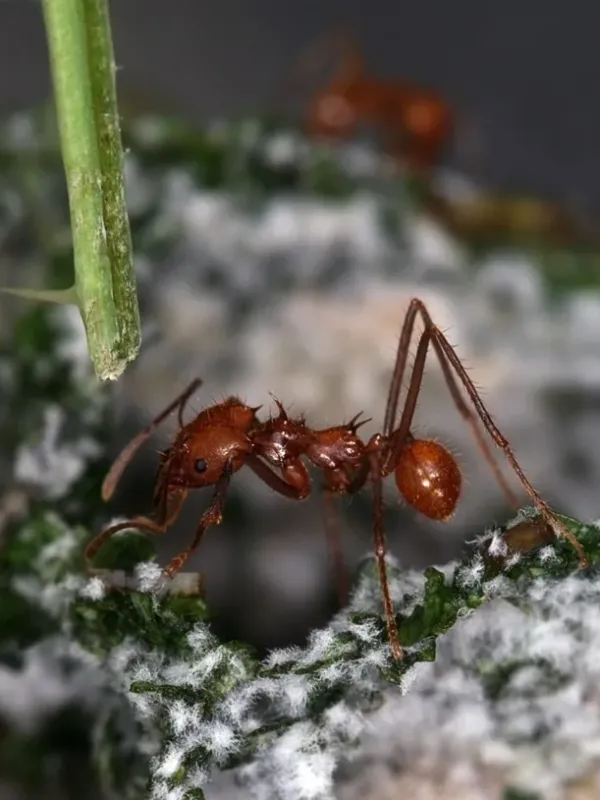
These ants are distinguished by their reddish-brown color and the presence of spines on the thorax, which helps in identifying the specific taxon.
A mature colony can contain thousands of individuals, working in harmony to sustain a massive underground fungus farm that serves as their food source.
What it damages
Leafcutter ants are considered serious agricultural pests as they harvest significant amounts of vegetation to fertilize their subterranean fungal gardens.
They target a wide variety of plants, including fruit trees, vegetables, and ornamental shrubs, often defoliating them completely in a very short time.
The damage is caused by the precise removal of leaf tissues, which significantly reduces the photosynthetic capacity and vitality of the plants.
When attacks occur during the seedling stage, the plants often die due to the total loss of leaf material, causing substantial economic losses.
In addition to direct defoliation, the ants can impact soil structure through extensive tunneling, which may lead to root exposure or damage.
When it appears
Activity levels for Atta versicolor are tied closely to temperature and humidity, which are essential for both foraging and fungal maintenance.
The ants are most active during the warmer months, with foraging peaks often occurring during the night to avoid extreme daytime heat.
During prolonged drought, surface activity may decrease, but the colony remains highly functional within the deep, moist chambers of the nest.
Spring and early summer mark the period when winged reproductive ants emerge, facilitating the spread and creation of new colonies.
Seasonal patterns of plant growth directly influence the intensity of foraging, as the ants prefer fresh, succulent tissue for their gardens.
Signs of infestation
The most reliable sign of a colony is the presence of clear, beaten-earth foraging trails leading from the nest to the host plants.
Small, semi-circular cuts along the margins of leaves are a diagnostic symptom of leafcutter ant activity, often appearing overnight.
Large mounds of excavated soil and discarded refuse, such as exhausted plant fragments, are typically found near the nest entrances.
Rapid and unexplained defoliation of trees or garden beds is a strong indicator of a nearby colony, especially if the damage occurs at night.
Audible rustling sounds and the visual sight of lines of ants carrying leaf fragments are common observations in heavily infested areas.
Control measures
Controlling Atta versicolor is challenging because the main queen and the primary fungal garden are located deep underground.
The most effective strategy involves the use of slow-acting toxic baits that workers carry into the nest, eventually poisoning the entire colony.
Direct nest treatment through fumigation or soil injection can be successful if the nest depth allows for proper saturation with pesticides.
Preventative monitoring and early detection are crucial to manage the colony size before it causes extensive damage to the crop.
- Application of granular toxic baits designed for leafcutters.
- Professional nest fumigation for deep colonies.
- Physical removal and disruption of surface foraging trails.
Taxonomy
- Latin name
- Atta versicolor
- Order
- Hymenoptera
- Family
- Formicidae
- EPPO code
- ATTAVE
Discussion
No discussions yet — be the first.