
Leafcutter ant
Atta striata
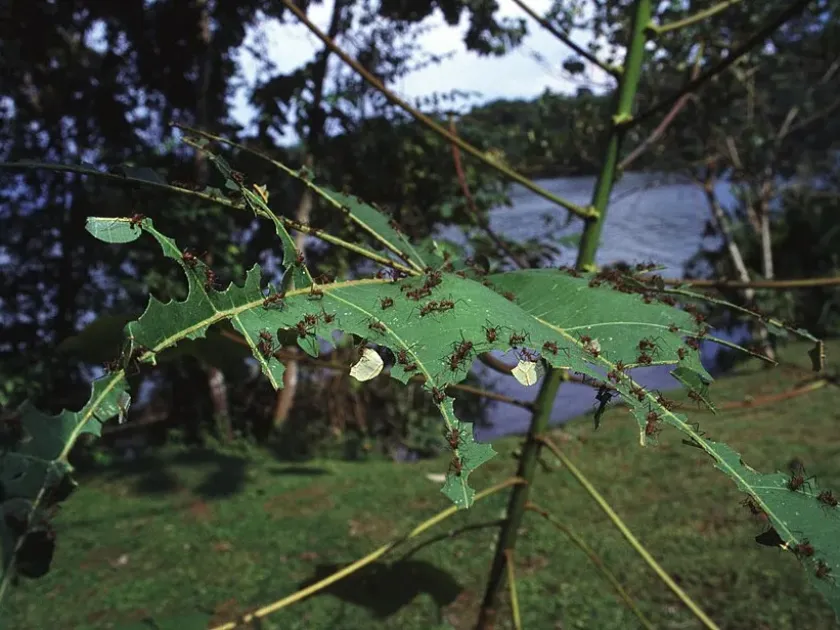
Description
How to identify
The leafcutter ant (Atta striata) is a member of the Formicidae family, renowned for its complex caste system and impressive engineering skills.
These ants are distinguished by their robust bodies and three pairs of dorsal spines, which aid in stability while transporting heavy vegetation.
They live in enormous, deeply excavated underground colonies that can house millions of individuals within a vast network of chambers.
Within the colony, there is a strict division of labor, including soldiers for defense, foragers for plant collection, and workers managing the fungi.
The colony structure is centered around the queen and the symbiotic fungus gardens that provide the primary food source for the ant family.
What it damages
The agricultural impact is severe because leafcutter ants defoliate large quantities of plant matter to cultivate their essential fungi.
While they do not eat the plant tissue directly, they shred it into small pieces to serve as a substrate for the fungus they consume.
They attack a diverse range of crops, including citrus, coffee, fruit trees, and various vegetable crops, causing significant economic loss.
By removing entire leaves and young buds, the ants deprive the plant of its photosynthetic capacity, leading to weakened health or death.
A single mature colony can strip a healthy tree bare in a very short time, making them one of the most destructive pests in their range.
When it appears
Leafcutter ants are active year-round, although their foraging intensity may fluctuate based on local temperature and humidity levels.
They are particularly active during the main growing season when fresh, soft vegetation is plentiful and easily accessible for collection.
In regions with distinct wet and dry cycles, the emergence of new queens often coincides with the onset of the rainy season.
Foraging activity peaks during the nighttime or cooler hours of the day to avoid desiccation and potential predators.
Even during less favorable weather, the interior of the nest remains thermally stable, ensuring the continuous survival of the colony.
Signs of infestation
The most prominent sign of an infestation is the presence of well-worn foraging trails where ants move in continuous lines.
Plants show distinct, neat, semicircular or oval-shaped cuttings along the margins of leaves, which are characteristic of this species.
Large, crescent-shaped or circular soil mounds surrounding the entrances to the underground colony are clear indicators of subterranean activity.
Rapid, overnight disappearance of leaves on young plants or trees often confirms the presence of a nearby leafcutter ant colony.
Accumulations of processed leaf debris and organic waste near nest openings further confirm that the colony is actively maintaining its garden.
Control measures
Effective management requires targeting the queen and the fungal garden rather than focusing solely on the foraging workers seen above ground.
Slow-acting toxic baits are highly recommended, as workers unwittingly carry the poison deep into the nest, eliminating the colony from within.
Soil fumigation of the main nest area is a direct approach to reduce the population density, especially in critical crop zones.
Biological control agents, such as specific fungal pathogens that target ants, offer an environmentally focused alternative to chemical treatment.
- Physical barriers such as sticky tape or copper rings on tree trunks can prevent ants from reaching the canopy.
- Regular monitoring and rapid destruction of new, small colonies can prevent future large-scale infestations.
- Integrated Pest Management (IPM) practices combine baiting, cultural practices, and biological controls for long-term suppression.
Taxonomy
- Latin name
- Atta striata
- Order
- Hymenoptera
- Family
- Formicidae
- EPPO code
- ATTAST
Discussion
No discussions yet — be the first.