
Mexican leafcutter ant
Atta mexicana
Description
How to identify
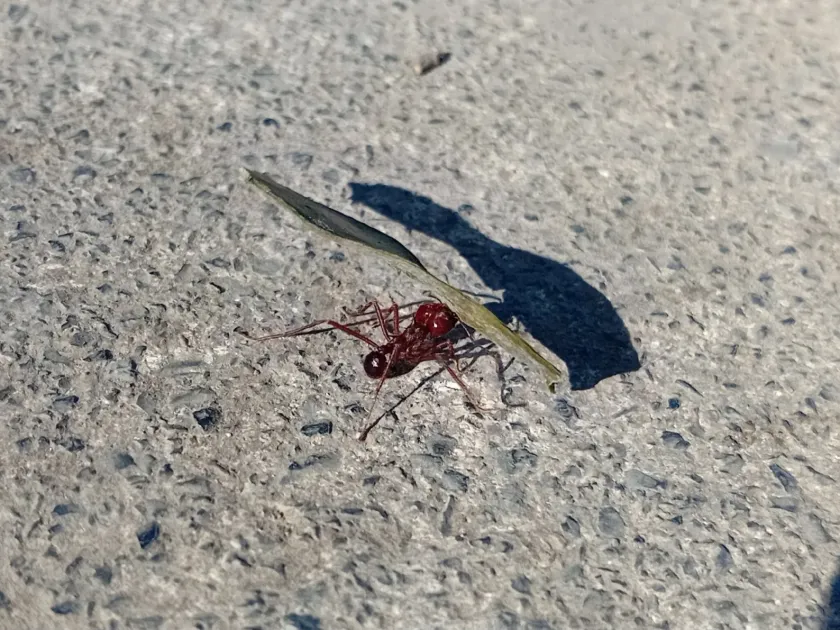
The Mexican leafcutter ant (Atta mexicana) is a species of the Formicidae family, known for its complex social structure and impressive agricultural capabilities in nature.
These ants are characterized by a distinct body shape with several spines on the thorax and various castes within the colony, including major soldiers and minor workers.
They are famous for their symbiotic relationship with a specific fungus, which they cultivate in specialized subterranean chambers within their massive, sprawling nests.
The colonies are among the most sophisticated insect structures, sometimes housing millions of individuals, managed by one or more queen ants located deep underground.
Their ability to organize collective work and transport heavy leaf segments makes them highly efficient, which unfortunately contributes to their status as major agricultural pests.
What it damages
Atta mexicana is considered a significant pest because it harvests fresh foliage from a wide variety of plants to use as compost for its underground fungus gardens.
Their host range is extensive, affecting citrus trees, legumes, fruit orchards, and many ornamental crops, often resulting in severe defoliation of the plants.
By consuming large amounts of leaf tissue, these ants inhibit plant growth, severely reduce crop yields, and in extreme cases, kill the trees and young saplings.
Beyond foliage loss, their nesting behavior involves extensive digging that destabilizes the soil, disrupts irrigation systems, and causes damage to plant root structures.
Within a short period, an established colony can defoliate entire rows of crops, making them one of the most destructive agricultural threats in their native range.
When it appears
Activity remains high throughout the warm season, as these ants require a constant supply of fresh plant material to feed their fungus gardens, which grow year-round.
They are primarily nocturnal or crepuscular, avoiding the heat of the day by foraging during the cooler night hours, which helps maintain their body water levels.
Activity levels can fluctuate with seasonal rains, which often trigger nuptial flights, allowing new queens to establish colonies in the moist and soft soil.
During the peak growing seasons for local crops, the pressure from these ants increases as they seek out young, tender leaves that are easier to cut and process.
As the colony grows, its foraging range expands, meaning the danger to crops increases steadily over time as the system of trails spreads across the farm.
Signs of infestation
The most visible indicator of a Mexican leafcutter ant infestation is the presence of clear, well-trodden foraging trails leading from the nest to the host plants.
Observers will notice lines of ants carrying leaf sections, which look like small sails, moving in continuous columns between the foraging site and the nest entrance.
Significant defoliation of plants, with leaves showing semi-circular cut patterns, is a classic sign of these ants actively stripping vegetation from the area.
The presence of large, often interconnected mounds of soil near nest entrances provides clear evidence of a mature colony located beneath the ground surface.
Finding fungal refuse or discarded plant material in small piles near the base of trees is another common indicator of nearby leafcutter ant activity.
Control measures
Managing Atta mexicana is difficult because the queen, the most critical part of the colony, resides deep underground and is protected by the worker population.
The most effective strategy involves the use of slow-acting toxic baits that workers transport into the nest, eventually poisoning the entire colony, including the queen.
Physical barriers such as sticky bands around tree trunks can help protect individual valuable trees, but they do not eliminate the overall threat of the colony.
- Regular monitoring of foraging trails to pinpoint nest entrances.
- Application of specialized pesticides to identified nest openings.
- Use of natural repellents to discourage foraging on specific valuable crops.
- Mechanical excavation of nest entrances for smaller or newly established colonies.
Professional fumigation is often necessary for large-scale agricultural operations to ensure total colony eradication and protect long-term harvest potential.
Taxonomy
- Latin name
- Atta mexicana
- Order
- Hymenoptera
- Family
- Formicidae
- EPPO code
- ATTAME
Discussion
No discussions yet — be the first.