
Leafcutter ant
Atta discigera
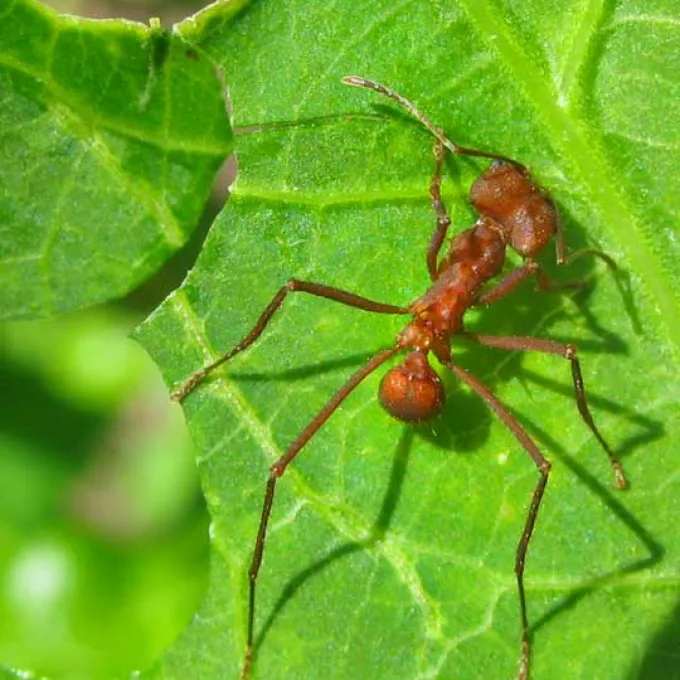
Description
How to identify
The leafcutter ant Atta discigera is a member of the Formicidae family, specifically known for its complex social structure and subterranean nesting habits.
These ants exhibit extreme polymorphism, with workers ranging from very small nursery attendants to large soldiers with formidable mandibles for defense and foraging.
Their exoskeleton is usually reddish-brown, and the presence of distinct spines on the thorax and head segments aids in the identification of this specific genus.
A single colony can house millions of individuals, organized into specialized castes that perform specific roles to ensure the survival of the fungus garden.
They communicate through complex chemical signals, allowing them to coordinate large-scale foraging operations across significant distances from their nest.
What it damages
Leafcutter ants are primary agricultural pests because they harvest fresh vegetation not to eat it, but to cultivate a symbiotic fungus that serves as their food source.
They target a wide variety of crops including citrus trees, legumes, fruit orchards, and diverse ornamental plants in tropical and subtropical climates.
By stripping plants of their foliage, these ants severely inhibit photosynthesis, causing plant growth to stall and significantly reducing overall crop yields.
Young plants and seedlings are at the highest risk, as they often cannot recover from the rapid and complete loss of their photosynthetic surfaces.
Persistent attacks lead to structural weakening of perennial plants, making them more susceptible to drought, secondary diseases, and other pest infestations.
Signs of infestation
The most prominent sign of infestation is the presence of well-defined, cleared paths radiating from the nest entrance into the fields or surrounding vegetation.
Visible cut marks along the edges of leaves, often in a characteristic crescent or semi-circular pattern, are clear indicators of leafcutter ant activity.
Large mounds of excavated soil at nest entrances are typical markers of a mature colony, which can span several meters in depth and width.
Observation of workers actively carrying leaf fragments high above their bodies while returning to the nest is a definitive sign of their foraging activity.
The sudden and rapid loss of foliage on a plant, especially overnight, is a classic symptom of an active infestation of these industrious insects.
Control measures
Successful management of Atta discigera requires targeting the entire colony, as the queen remains safe deep within the nest regardless of surface treatments.
The use of slow-acting toxic baits is the industry standard, allowing workers to transport the poison into the nest, ultimately killing the queen and the fungal garden.
Fumigation of the nest tunnels using specialized equipment is effective for localized outbreaks, though it requires precise application to ensure full coverage.
Physical barriers, such as protective grease bands or sticky traps on tree trunks, can prevent the ants from reaching the foliage of high-value crops.
Integrated Pest Management (IPM) strategies, including early nest detection and habitat monitoring, are crucial to prevent the colony from reaching a critical size.
Taxonomy
- Latin name
- Atta discigera
- Order
- Hymenoptera
- Family
- Formicidae
- EPPO code
- ATTADI
Discussion
No discussions yet — be the first.