
Atta coronata ant
Atta coronata
Description
How to identify
The leaf-cutting ant Atta coronata is a member of the Hymenoptera order and the Formicidae family. These insects are famous for building complex, massive underground colonies that can extend several meters deep into the earth.
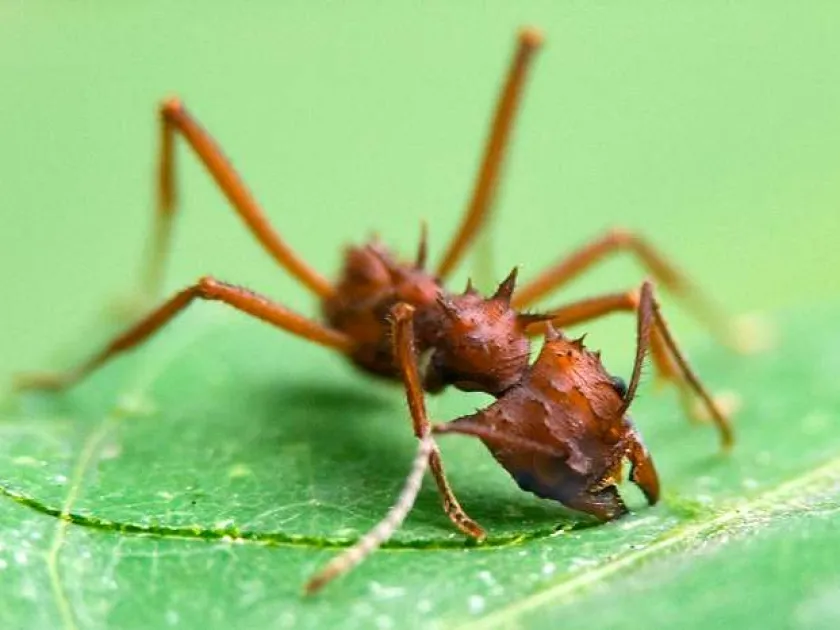
Worker ants exhibit caste polymorphism, ranging from tiny gardeners to large soldiers with formidable mandibles. Their head features distinct spines, giving them their scientific name coronata, meaning "crowned."
The biology of this species is built upon a symbiotic relationship with a fungus of the genus Leucocoprinus. The ants do not eat leaves; instead, they masticate foliage into a paste that serves as a substrate for fungal cultivation inside the nest chambers.
A single colony can house millions of ants and survive for over a decade. The queen is the heart of the colony, and as long as she survives, the population can rapidly recover from surface disturbances.
Native to South America, these ants thrive in tropical environments where moisture and temperature levels are optimal for both the ants and their essential fungal gardens.
What it damages
As a highly efficient herbivore, Atta coronata can devastate a wide range of agricultural crops, including citrus, coffee, eucalyptus, and various vegetable species.
A single foraging column can strip an entire tree of its leaves in a single night. This rapid defoliation disrupts the plant's photosynthesis, causing significant yield losses and often the death of young saplings.
Beyond foliage, the ants feed on buds and tender shoots, which hinders the overall structural development of the crops. In large plantations, these ants are considered severe economic threats.
The cumulative damage often forces farmers to abandon certain fields. Because they can attack both ornamental and commercial crops, their presence is universally feared in tropical agriculture.
The ants also damage the soil structure by creating deep tunnels, which can negatively affect the root development of surrounding plants and facilitate soil erosion in managed areas.
Signs of infestation
The most reliable sign of an infestation is the presence of well-maintained, cleared "foraging trails" leading from the nest entrance to the food source.
Plants affected by Atta coronata display characteristic crescent-shaped cuts along the edges of their leaves. Workers are often seen marching in lines, carrying leaf fragments like umbrellas.
Large soil mounds, or "craters," around nest entrances indicate the location of the colony. These areas are often surrounded by discarded organic matter from the nest.
At night, one can hear a distinct rustling sound made by thousands of workers. A specific earthy smell, associated with the fungus gardens, is often detectable near the colony entrances.
Sudden, unexplained defoliation of trees is a primary indicator. If you notice a tree losing foliage rapidly with no visible insects on the leaves during the day, search the ground for trails.
Control measures
Controlling Atta coronata is challenging because the main nest, including the queen, is located deep underground, making superficial spraying ineffective.
The most successful strategy involves the use of slow-acting toxic baits. The workers forage for these baits, bring them deep into the colony, and share the toxin, eventually eliminating the entire nest.
- Application of granular baits containing insecticides or fungicides.
- Direct injection of chemicals into the nest to target the fungal gardens directly.
- Using physical barriers like sticky bands or protective sleeves on tree trunks to block access to the canopy.
Biological control, using pathogens like specific entomopathogenic fungi, is an area of ongoing research that promises more sustainable management of these persistent pests.
Preventive monitoring of fields is crucial. Identifying new nests early allows for targeted intervention, which is significantly more cost-effective than managing a mature, massive colony.
Taxonomy
- Latin name
- Atta coronata
- Order
- Hymenoptera
- Family
- Formicidae
- EPPO code
- ATTACO
Discussion
No discussions yet — be the first.