
Leafcutter ant Atta bisphaerica
Atta bisphaerica
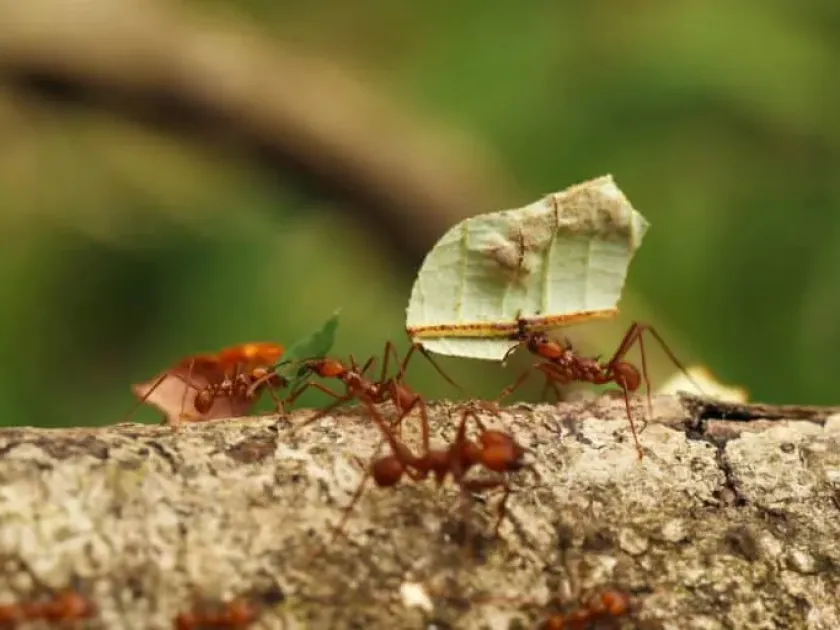
Description
How to identify
The leafcutter ant Atta bisphaerica is a highly evolved social insect belonging to the family Formicidae, known for its complex caste system.
The colony structure is strictly organized, with worker ants assigned specific tasks ranging from foraging for fresh vegetation to maintaining the fungal gardens.
Morphologically, this species is distinguished by specific tubercles on the head and a robust thoracic structure that differentiates it from other Atta species.
Their nests are extensive subterranean complexes, capable of housing millions of individuals and reaching several meters in depth and width.
The ants demonstrate remarkable cooperative behavior, utilizing pheromone trails to coordinate the transportation of organic material over long distances.
What it damages
The primary economic impact of Atta bisphaerica is the severe defoliation of agricultural crops, which the ants use as a substrate to grow symbiotic fungi.
They pose a significant threat to sugarcane plantations, citrus orchards, and various forage grasses, often stripping entire plants within a short timeframe.
By consuming or removing the foliage, these ants severely impede the photosynthetic capacity of the crops, leading to significant yield losses or plant death.
Beyond direct damage, the mechanical disturbance caused by their burrowing activity can negatively impact soil structure and irrigation systems.
The sheer scale of their harvesting activity makes them one of the most persistent and destructive agricultural pests in their native range.
When it appears
Atta bisphaerica remains active throughout the year, with foraging intensity fluctuating based on seasonal temperature and rainfall patterns.
During rainy seasons, the activity levels often increase as the ants require fresh plant matter to maintain their fungal cultures at optimal growth rates.
The reproductive cycle involves the emergence of alates, which usually coincides with the beginning of the wet season, facilitating colony expansion.
During extreme drought conditions, the ants retreat deeper into their nests to preserve the humidity necessary for the survival of the fungal garden and larvae.
Agronomists emphasize that constant monitoring is vital, as the expansion of these ant colonies is a continuous process that does not strictly follow traditional harvest cycles.
Signs of infestation
The most prominent sign of an Atta bisphaerica presence is the development of clean-swept foraging trails extending from the nest into the crop fields.
Visually, one can observe perfectly circular or semi-circular cuts on leaf edges, a trademark of their harvesting behavior.
Large mounds of excavated soil at the nest entrances serve as clear evidence of a nearby colony, often becoming more noticeable after significant excavation efforts.
Observing the movement of worker ants carrying leaf fragments towards the nest entrance at night or dawn confirms their current activity in the area.
- Neatly cut leaf edges and defoliated stems.
- Well-defined, barren foraging paths in the field.
- Large subterranean mound entrances and craters.
Control measures
Controlling Atta bisphaerica is challenging because their nests are deep underground, rendering standard surface-applied insecticides largely ineffective.
The most effective strategy involves the use of toxic baits, which worker ants carry into the nest, effectively poisoning the fungus and the queen.
Specialized bait formulations, often combined with specific fungicides or insecticides, are preferred to ensure the colony is eliminated from within.
Mechanical destruction, such as deep tilling or the use of targeted fumigants, can be used to disturb the nest architecture and suppress local populations.
Integrated Pest Management (IPM) programs increasingly focus on long-term ecological suppression, utilizing biological agents and bait monitoring to protect crop yields.
Taxonomy
- Latin name
- Atta bisphaerica
- Order
- Hymenoptera
- Family
- Formicidae
- EPPO code
- ATTABI
Discussion
No discussions yet — be the first.