
Harvester ant pythia
Aphaenogaster pythia
Description
How to identify
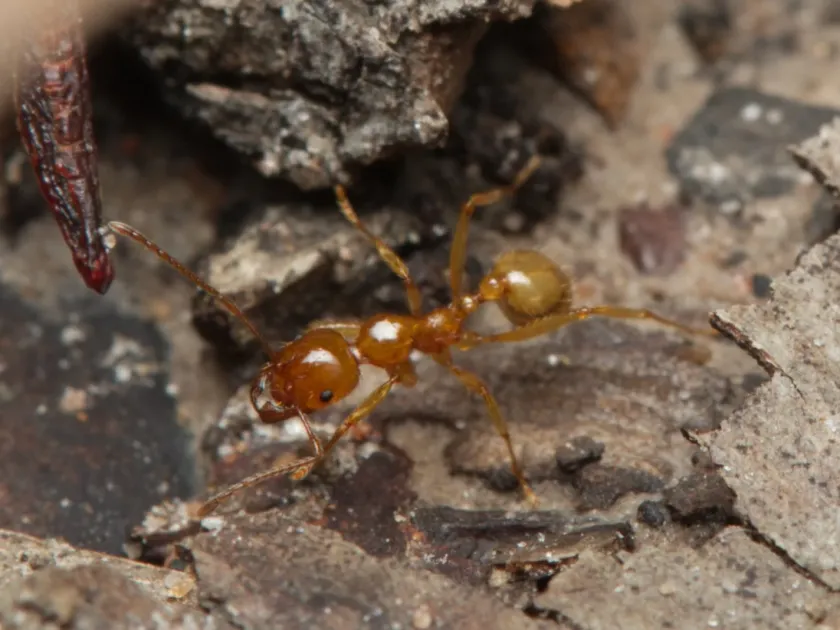
The harvester ant (scientific name Aphaenogaster pythia) belongs to the family Formicidae and the order Hymenoptera. It is a medium-sized ant characterized by a slender body structure and powerful mandibles used for foraging and seed harvesting.
The insect typically has a matte appearance with coloration ranging from brown to reddish-brown. This species is known for its agility and ability to transport various plant seeds back to its subterranean colony.
The colony structure includes a queen and several worker castes, with the workers spending most of their time foraging on the surface. Their nests are constructed deep underground, providing a stable microclimate for the colony.
Identifying this species in the field often requires microscopic examination of structural features, such as the shape of the thorax and the propodeum, to differentiate it from other similar harvester ant species.
These ants are highly social insects, demonstrating complex behavior patterns that allow them to optimize their foraging efficiency across different agricultural and natural landscapes.
What it damages
The primary economic damage caused by Aphaenogaster pythia is the harvesting of seeds of agricultural crops. These ants carry away seeds immediately after planting, which significantly reduces crop density and field uniformity.
Crops most susceptible to their activity include various cereals such as wheat, barley, and millet, as well as various leguminous crops whose seeds are easily transportable by the ants.
Beyond seed consumption, these ants are known to protect aphid colonies on various plants. By defending aphids from predators, the ants sustain the infestation, leading to plant stress and reduced yields due to sap loss.
The extensive tunnel systems dug by these ants can disturb the soil structure and damage the root systems of young seedlings, often causing the plants to wither or die due to lack of soil contact.
The impact is most severe during periods of drought when natural food supplies are scarce, forcing the ants to rely more heavily on agricultural seeds to stock their underground pantries.
When it appears
Harvester ant activity typically begins in early spring as ground temperatures rise. This timing is critical, as it coincides with the initial stages of planting and seed germination in the fields.
Throughout the summer, the ants remain active, shifting their foraging focus between agricultural seeds and wild weed seeds that ripen at different times throughout the growing season.
Activity reaches a peak during the autumn months as the colony intensifies its efforts to build up food reserves required for the long winter period, potentially affecting late-planted crops.
As temperatures drop, the colony retreats deep into the soil to enter a state of dormancy, effectively ending all surface activity until the following spring.
The overwintering period is a crucial phase in their life cycle, where survival depends entirely on the reserves collected during the warmer months of the year.
Signs of infestation
One of the clearest signs of infestation is the presence of well-defined, trodden trails leading from the nest entrance to active foraging areas, such as newly sown crop rows.
Small mounds of soil mixed with seed husks and debris around the nest entrance are common indicators of the colony's cleaning and maintenance activities.
The presence of ants actively tending to aphid colonies on crop stems and leaves is a strong indicator that a harvester ant colony is operating within the vicinity of the field.
Visible patches of bare soil within crop rows where seeds have been extracted by the ants act as a clear confirmation of their harmful impact on the seedling stand.
Excavation of the soil near high-activity areas often reveals storage chambers containing large quantities of seeds, providing undeniable proof of the ants' involvement in seed loss.
Control measures
Effective control begins with proper agronomic practices, such as ensuring seeds are planted at the recommended depth, making them less accessible to foraging ants.
The use of specialized insecticide-treated baits, which the ants carry into their colonies, is one of the most effective ways to reduce populations without broad environmental contamination.
- Frequent, deep soil cultivation to disrupt nest galleries and discourage colony establishment.
- Applying insecticidal seed treatments that include repellent components to discourage ants from gathering seeds.
- Deploying physical barriers or natural deterrents around high-value plots to prevent ant access during germination.
Biological control methods involving entomopathogenic fungi have shown promise in managing ant populations, as these fungi can spread through the nest, significantly reducing the colony size.
Monitoring for aphid infestations is also vital, as controlling aphid populations reduces the food source that sustains the harvester ant colonies, naturally making the area less attractive to them.
Taxonomy
- Latin name
- Aphaenogaster pythia
- Order
- Hymenoptera
- Family
- Formicidae
- EPPO code
- APAGPY
Discussion
No discussions yet — be the first.