
Aphaenogaster ant
Aphaenogaster
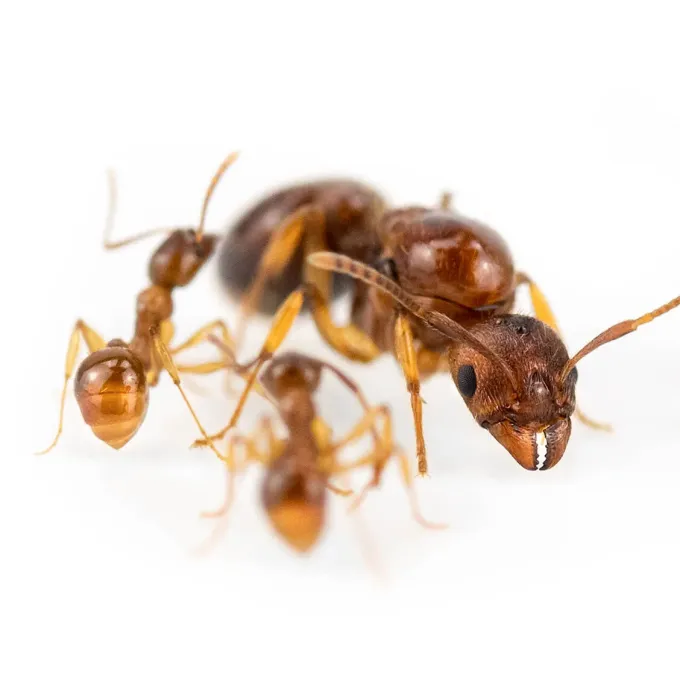
Description
How to identify
The genus Aphaenogaster belongs to the family Formicidae, subfamily Myrmicinae. These are relatively large ants, often distinguished by their elongated bodies and characteristic spines on the thorax segment.
The chitinous exoskeleton of these ants is typically matte, often featuring a rough or granular texture. Their coloration ranges from reddish-brown to dark brown, which provides excellent camouflage within soil and garden debris.
These ants are predominantly terrestrial. A notable behavioral trait is their movement: when sensing danger or foraging, they hold their abdomens high, moving with rapid, jerky motions that set them apart from other common ant species.
Nesting behavior involves creating shallow tunnels directly in the soil. Unlike many other ants, they do not build prominent mounds, making their colonies difficult to locate until they have established a strong presence.
Their mouthparts are robust and adapted for collecting a wide range of organic materials, including seeds, pollen, and small insect carcasses, which makes them highly efficient foragers in agricultural environments.
What it damages
The primary concern regarding Aphaenogaster is their diet, as they are known as "harvester ants." They actively collect seeds from various agricultural crops, which can significantly reduce germination rates in newly sown plots.
Furthermore, these ants have a mutualistic relationship with aphids and other sap-sucking insects. By actively protecting these pests from natural predators, they allow aphid populations to explode, severely damaging vegetable and fruit crops.
When excavating tunnels, Aphaenogaster colonies often disturb the root systems of young seedlings. This root damage inhibits nutrient uptake, causing plants to become stressed and eventually wilt during hot weather.
In greenhouse settings, these ants may cause mechanical damage by chewing on tender shoots, buds, and stems to access sugary plant sap, leading to stunted growth or the loss of flower buds.
The combined damage from seed removal, root disturbance, and aphid protection makes them a significant threat to overall garden productivity, requiring diligent monitoring and prompt intervention.
When it appears
The activity of Aphaenogaster begins in early spring, as soon as the soil temperatures rise above 10–12°C. This is when the colony is most active in foraging to provide for their brood.
Peak activity usually occurs between May and June, coinciding with the critical stages of crop growth and planting. During this time, the colonies expand their foraging range across the garden beds.
In the heat of mid-summer, their surface activity may decrease slightly, shifting to the cooler early morning and late evening hours to avoid dehydration and extreme heat.
As temperatures drop in the autumn, the colony gradually reduces activity and retreats deeper into the soil. They overwinter well below the surface, waiting for the return of warmer spring conditions.
The development cycle is heavily influenced by local weather and food availability. In favorable conditions, a colony can grow significantly, recovering quickly from minor disturbances or control attempts.
Signs of infestation
The most common sign of an Aphaenogaster presence is seeing "trails" of worker ants moving from the nest to feeding areas. They are frequently spotted climbing stems infested with aphids.
Small soil piles or funnel-like holes in the ground near the base of plants without a large mound indicate that the ants are actively tunneling in the root zone.
Finding empty seed shells piled near nest entrances is a definitive sign that your garden beds are being exploited as a food source, often leading to poor stand establishment.
Plants showing symptoms of stress, such as yellowing, leaf curling, and the presence of sticky honeydew, suggest that ants are likely farming aphids on those specific plants.
Observing a large number of ants in areas where plants show wilting or stem damage provides clear evidence that the colony is directly or indirectly affecting plant health.
Control measures
The most effective cultural practice is frequent, deep cultivation of the soil between rows. This destroys underground tunnel networks and forces the ants to abandon the area.
Chemical control using insecticidal baits or granules containing active ingredients like fipronil can be highly effective if applied directly into the nest area according to the label instructions.
To reduce the ants' interest in your garden, you must control the aphid population first. Using insecticidal soaps or systemic treatments removes the ants' sugar source, making the garden less attractive.
Installing physical barriers, such as sticky bands or specialized tree paint, on the trunks of fruit trees and shrubs will successfully prevent ants from reaching the canopy to tend to aphids.
- Utilizing gel-based ant baits that foragers carry back to the colony to eliminate the queen.
- Applying aromatic repellent sprays made from garlic or wormwood around base-prone areas as a natural deterrent.
- Keeping the garden free of weeds, which act as natural highways for ants to navigate between host plants.
Taxonomy
- Latin name
- Aphaenogaster
- Order
- Hymenoptera
- Family
- Formicidae
- EPPO code
- APAGSP
Discussion
No discussions yet — be the first.