
Yellow crazy ant
Anoplolepis gracilipes
Description
How to identify
The yellow crazy ant, scientifically known as Anoplolepis gracilipes, is a highly invasive ant species within the Formicidae family.
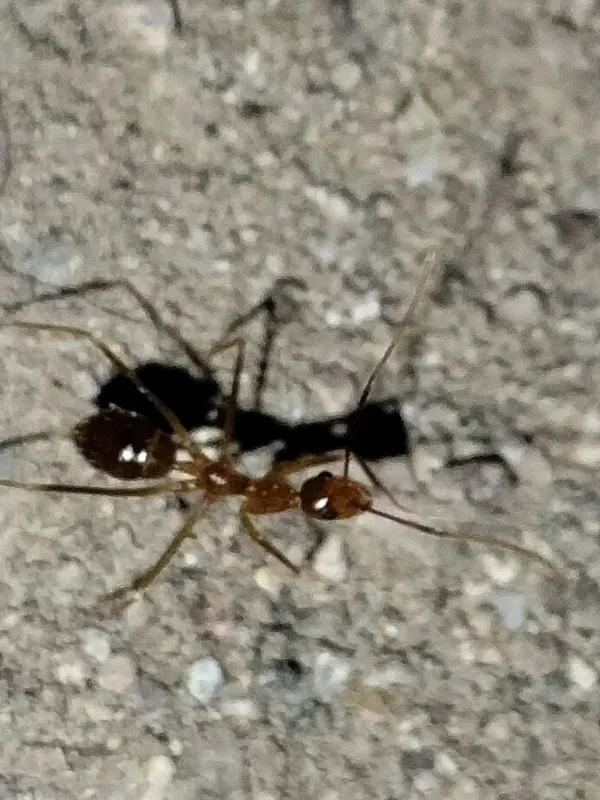
These ants are typically slender, measuring about 3 to 5 millimeters in length, with a light yellow-to-brownish body color.
They are easily identified by their exceptionally long legs and antennae, which give them a very distinct, jerky, and erratic walking style.
Unlike many other ant species, they do not have a stinger, but they can spray formic acid to disable their prey or deter potential predators.
This species is notorious for forming supercolonies, where multiple queens live together, allowing the population to reach extremely high densities across large areas.
What it damages
Yellow crazy ants do not feed directly on plant tissues; however, they are devastating to agriculture because they form mutualistic relationships with scale insects and aphids.
By protecting these sap-sucking insects from predators, the ants cause a massive surge in pest populations that infest various tropical crops.
Major crops affected include cocoa, coffee, coconuts, and various citrus fruits, which suffer from reduced vigor and stunted growth due to excessive sap loss.
The sugary honeydew excreted by the aphids facilitates the growth of sooty mold, which coats leaves and blocks sunlight, further damaging the plant's photosynthetic capacity.
Extreme infestations can cause the death of young seedlings and even lead to the abandonment of agricultural land due to the collapse of local biodiversity.
Signs of infestation
A primary indicator of infestation is an unusually high concentration of aphids or scale insects on tree branches or fruit stalks without typical signs of predatory control.
The presence of sticky honeydew on foliage and the development of black sooty mold are classic secondary signs that the ants are present and active.
Observers will notice large numbers of yellow ants moving in an erratic, disorganized fashion, often scaling trunks or moving quickly across the ground.
A noticeable decline in local insect and small vertebrate populations, as these ants are aggressive predators that outcompete native species for resources.
Visible nest sites in soil, under rocks, or within rotting wood debris located at the base of affected trees or in dense organic mulch.
Control measures
The most effective strategy for managing these ants involves the application of slow-acting toxic bait, which allows workers to transport the poison back to the nest.
Targeting the mutualistic partners, such as aphids and scale insects, can help reduce the ants' food source, making the environment less favorable for them.
Implementing strict quarantine protocols is essential to prevent the human-assisted movement of the ants into new, uninfected agricultural regions.
Physical barriers or grease bands on tree trunks can provide localized protection, preventing the ants from reaching the canopy where the scale insects reside.
Integrated Pest Management (IPM) programs focus on habitat modification, such as removing debris and excessive weeds, to discourage the establishment of new colonies.
Taxonomy
- Latin name
- Anoplolepis gracilipes
- Order
- Hymenoptera
- Family
- Formicidae
- EPPO code
- ANOPLO
Discussion
No discussions yet — be the first.