
Yellow crazy ant
Anoplolepis
Description
How to identify
The genus Anoplolepis belongs to the Hymenoptera order and the Formicidae family. The most destructive species is Anoplolepis gracilipes.
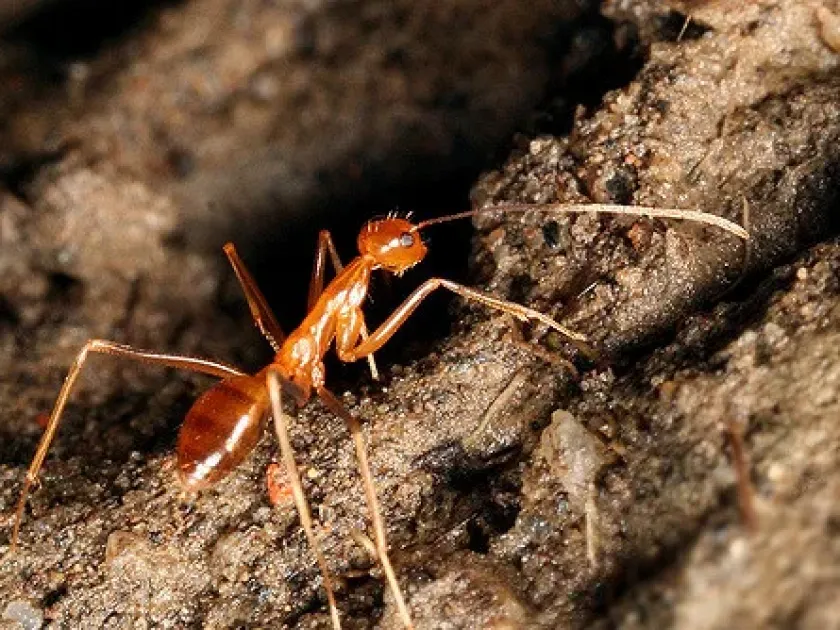
These ants are characterized by their yellowish-brown body, measuring 3–5 mm, and exceptionally long legs and antennae that give them an awkward appearance.
They are known for their erratic, rapid movement patterns, which allow them to spread quickly across various agricultural landscapes.
They do not possess a stinger but spray formic acid to protect themselves and subdue their prey or competitors.
They form supercolonies with multiple queens, making them one of the most successful invasive species in warmer climates.
What it damages
The economic impact stems primarily from their symbiotic relationship with sap-sucking insects like aphids, mealybugs, and scale insects.
By protecting these insects from natural predators, the ants cause outbreaks of sap-suckers that devastate crops and ornamental plants.
The honeydew produced by these pests leads to the growth of sooty mold, which blocks photosynthesis and reduces plant vitality.
They damage plant roots by building extensive tunnel systems, which can lead to seedling mortality and poor overall growth.
In tropical agriculture, they are known to kill ground-dwelling organisms and disrupt pollination, significantly reducing overall yields.
When it appears
In tropical and subtropical regions, Anoplolepis remains active throughout the year, with no distinct seasonal dormancy.
In drier climates, they seek out irrigated crop areas, where stable humidity allows them to maintain high population densities.
During the onset of warmer, humid weather, the colonies experience rapid expansion and increased foraging activity across fields.
New queens and workers are produced in highest numbers during the spring and early summer, facilitating colony dispersal.
During colder months, activity slows down significantly, though the colonies remain protected within their nests underground or in debris.
Signs of infestation
Visual identification of infestation involves spotting high concentrations of ants running rapidly on tree trunks, foliage, and garden beds.
Heavy infestations of aphids or mealybugs on crop plants are a primary indicator of ant-tending behavior.
- Sooty mold accumulation on leaves and stems.
- Deformed or stunted growth in young shoots due to heavy pest pressure.
- Presence of nest entrances at the base of plants or near structural foundations.
Plants may show symptoms of nutrient deficiency and drought stress due to damage to the root zone caused by ant activity.
The distinctive rapid, swarming behavior of the ants when their path is disturbed is a hallmark of this species.
Control measures
Control strategies involve the use of slow-acting toxic bait that workers transport back to the nest, effectively targeting the queens.
Mechanical barriers, such as sticky bands around trunks, are essential for preventing the ants from accessing the upper parts of trees.
Managing the population of sap-sucking pests (aphids and scale) is vital to reducing the food supply that sustains the ant colonies.
Keeping the agricultural environment clean of debris and unnecessary vegetation helps in reducing nesting sites for the ants.
Integrated Pest Management (IPM) practices, including the preservation of native ant competitors, are recommended to maintain ecological balance.
Taxonomy
- Latin name
- Anoplolepis
- Order
- Hymenoptera
- Family
- Formicidae
- EPPO code
- ANOPSP
Discussion
No discussions yet — be the first.