
Acropyga
Acropyga
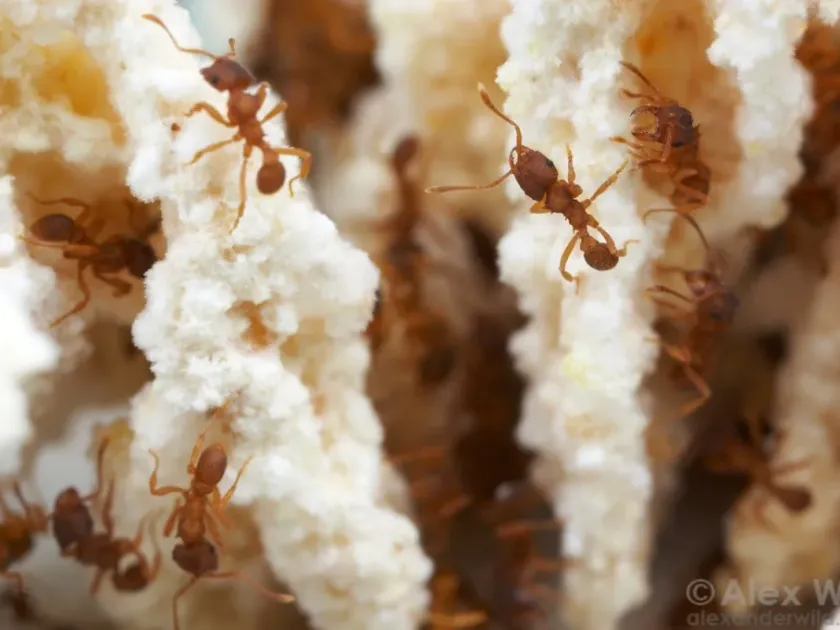
Description
How to identify
Acropyga is a genus of ants in the family Formicidae, well-known for their obligate symbiotic relationship with root mealybugs. They are typically small, pale-colored, and live primarily underground.
These ants are specialized farmers. When a new queen establishes a colony, she carries a mealybug queen in her mandibles to colonize the roots of a new host plant.
Because they spend almost their entire life cycle below the surface, identifying them often requires careful examination of the root zone and soil texture around the plants.
Their social structure is highly organized, focusing on the protection and transportation of their mealybug partners, which provide a constant supply of honeydew for the ant colony.
Biological surveys confirm that Acropyga species are significant drivers of subterranean herbivory in tropical and subtropical agriculture, primarily through their protection of sap-sucking insects.
What it damages
The primary damage caused by Acropyga ants is indirect, resulting from the heavy infestation of root mealybugs that they cultivate on various agricultural crops.
These mealybugs feed on the phloem of plant roots, leading to nutrient deficiency, stunted development, and general weakening of the entire plant structure.
The feeding activity of mealybugs creates lesions on roots, providing entry points for secondary fungal and bacterial infections that can lead to root rot.
Crop loss is characterized by leaf yellowing, premature fruit drop, and, in severe cases, the death of the plant due to complete failure of the root system.
The ants significantly increase the density of the mealybug population by aggressively deterring natural predators and parasitoids that would otherwise keep the pest numbers in check.
Control measures
Management of Acropyga requires a focus on soil-applied control methods, as surface treatments are often insufficient to reach the underground nests.
Systemic insecticides are generally the most effective way to address the issue, as they are absorbed by the plant and target the mealybugs directly via the sap.
Integrated Pest Management (IPM) practices should include soil monitoring and the use of natural enemies of mealybugs, provided the ant population is also suppressed.
- Regular inspection of root systems.
- Application of granular systemic pesticides.
- Enhancing soil health to promote plant vigor.
- Using biological control agents like Beauveria bassiana.
Effective control also involves cultural practices, such as preventing the movement of infested soil between fields and maintaining healthy, high-yield plant conditions.
Taxonomy
- Latin name
- Acropyga
- Order
- Hymenoptera
- Family
- Formicidae
- EPPO code
- ACRQSP
Discussion
No discussions yet — be the first.