
Leafcutter ant
Acromyrmex subterraneus
Description
How to identify
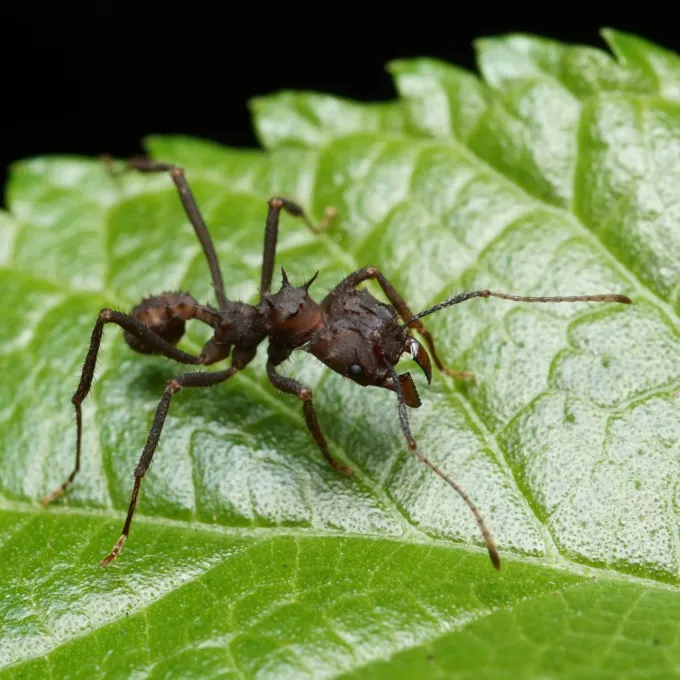
The leafcutter ant (Acromyrmex subterraneus) belongs to the order Hymenoptera and the family Formicidae. They are easily recognized by their distinct appearance, featuring numerous spines covering their thorax, which is a hallmark of the Acromyrmex genus.
The colony structure is highly social and polymorphic, where different castes perform specific roles. The queen remains deep within the subterranean nest, solely focused on reproduction and sustaining the colony's population.
A fascinating aspect of their biology is the obligate symbiosis with fungi. These ants act as farmers, gathering plant material not for direct consumption, but as a medium to cultivate specialized fungus that serves as their primary food source.
The life cycle involves complete metamorphosis, progressing through egg, larval, pupal, and adult stages. Colonies are remarkably long-lived, often persisting for many years and expanding into massive underground complexes.
These ants are predominantly found in tropical and subtropical climates, where they can build stable, well-drained nests that protect their fungal gardens from environmental fluctuations.
What it damages
Leafcutter ants are considered significant agricultural pests due to their relentless demand for fresh vegetation. They can inflict severe damage on a wide variety of crops, including citrus, coffee, soybeans, and ornamental plants.
The damage is primarily characterized by massive defoliation. Using their specialized mandibles, the ants cut leaf fragments, stripping entire plants of their foliage in a very short amount of time.
Seedlings and young plants are particularly vulnerable, as they lack the stored energy reserves to recover from total defoliation, often resulting in complete crop loss within just a few nights.
Beyond direct foliage loss, their nesting habits can damage root systems and soil structure, creating logistical problems for farmers and interfering with mechanical harvesting and tillage operations.
The economic impact is substantial, particularly in South American agricultural regions, where these ants are known to cause millions of dollars in losses annually by decimating plantations.
Signs of infestation
The most visible signs of a leafcutter ant presence are well-defined, debris-free paths leading from the colony to the target plants. These paths can extend for long distances across a landscape.
Leaves that look as if they have been cut with a hole puncher or small scissors are a classic indicator. Typically, the primary veins of the leaves are left behind while the lamina is removed.
During the cooler parts of the day, particularly at dusk, one can observe columns of ants marching in single file, each carrying a segment of a leaf, often referred to as "sails."
Volcano-shaped soil mounds surrounding the entrances to the underground tunnels are a clear sign of an active nest. These mounds represent the earth removed during the excavation of the fungal chambers.
A subtle, earthy smell of decomposing vegetation or fungal growth may be detected near the main nest entrances, caused by the workers removing old, spent substrate from the colony.
Control measures
The most effective management strategy involves the use of toxic bait pellets. The ants carry these baits into the nest, unknowingly introducing the insecticide to the deep chambers, which eventually reaches and kills the queen.
Contact insecticides applied to the surface often provide only temporary relief and may cause the colony to relocate, making deep-penetrating granular baits the preferred professional choice.
Mechanical destruction of the nest, including deep tilling or flooding of the mound, can be effective on smaller scales, but it rarely eliminates the entire colony if the queen survives in deeper tunnels.
Biological control, using entomopathogenic fungi or predators that target the ants, is being studied as a more sustainable alternative to chemical interventions.
- Deploying granular baits along active foraging trails.
- Monitoring fields at night to identify the primary foraging direction.
- Protecting young seedlings with physical or chemical repellent barriers.
- Maintaining field hygiene to reduce attractants for potential colonizing queens.
Taxonomy
- Latin name
- Acromyrmex subterraneus
- Order
- Hymenoptera
- Family
- Formicidae
- EPPO code
- ACRXSU
Discussion
No discussions yet — be the first.