
Leaf-cutting ant
Acromyrmex striatus
Description
How to identify
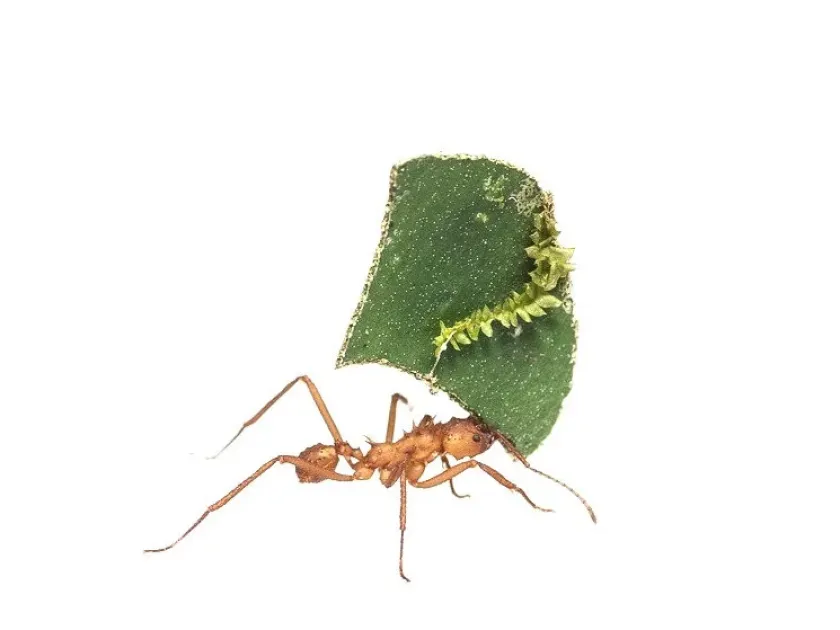
The leaf-cutting ant Acromyrmex striatus is a member of the Hymenoptera order and the Formicidae family. These ants are easily identified by the spines covering their body, which serve as protection and aid in navigation through dense foliage.
These insects are characterized by a sophisticated social organization. The colony's primary focus is the maintenance of internal fungal gardens, which are essential for their survival and development.
The queen ant is the sole reproductive member, while the workers are dedicated foragers tasked with collecting plant material to feed the symbiotic fungi in their nests.
Unlike other ant species, they do not consume plant sap or tissue directly. Instead, they masticate the leaves into a pulp, which serves as a nutrient-rich substrate for the fungus.
In the field, they are recognizable by their distinct foraging trails, where workers move in organized lines, carrying cut leaf fragments back to their subterranean colony.
What it damages
Acromyrmex striatus is a significant agricultural pest, causing damage to a wide variety of plants, including citrus orchards, eucalyptus plantations, and essential vegetable crops.
The primary damage is caused by the mass defoliation of plants. By cutting leaf tissue, the ants severely inhibit the plant's ability to perform photosynthesis, leading to stunted growth.
Young seedlings and recently transplanted crops are the most vulnerable. A large colony can completely defoliate young trees within a few hours, often leading to the death of the plant.
Beyond direct foliage loss, the damage to plant tissue creates entry points for secondary pathogens, such as fungi and bacteria, further compromising the plant's health.
If left unmanaged, these ants can destroy entire plots, resulting in massive economic losses due to the need for replanting and potential yield failure.
When it appears
The activity of Acromyrmex striatus is highly dependent on environmental conditions, particularly temperature and humidity, which must be optimal for fungal growth.
While foraging occurs year-round, activity peaks during warmer periods. Workers typically exhibit nocturnal or crepuscular behavior to avoid the intense heat of the day and minimize water loss.
The reproductive season, often associated with the onset of the rainy season, triggers the dispersal of new queens and the establishment of new colonies in surrounding fields.
During cold winters, external activity decreases significantly, but the ants remain active within their protected, temperature-regulated underground nests.
Agronomists must monitor crops consistently throughout the growing season, especially during periods of rapid leaf development when the ants are most attracted to the fresh, nutrient-dense foliage.
Signs of infestation
The most visible sign of an infestation is the presence of well-maintained, cleared trails leading from the nest to the host plants, often extending for many meters.
Plants affected by these ants exhibit characteristic leaf damage: the leaf margins look as though they have been precision-cut with a sharp blade in a curved pattern.
Mounds of excavated soil around nest entrances are common. These piles are the result of the colony expanding its internal tunnel and chamber system.
Underneath trees being raided, one can often find piles of discarded plant material that the ants have rejected after processing, signaling a heavy foraging presence.
Sighting large numbers of ants on tree trunks or stems during dusk is a reliable indicator that an active colony is nearby and aggressive protection measures are required.
Control measures
The most effective method for controlling Acromyrmex striatus is the use of slow-acting toxic baits. The foragers carry these baits into the nest, allowing the poison to reach and eliminate the queen and the entire colony.
Physical barriers, such as adhesive bands placed around tree trunks, can offer short-term protection for individual trees but do not address the root cause of the infestation.
Biological control methods are being researched, including the use of phorid flies that parasitize the ants, though such methods are not yet widely available for general field application.
Chemical soil treatments at nest entrances can be effective, but require precise application; otherwise, the ants will simply seal off the tunnels and continue foraging from other exits.
- Application of insecticide-based baits with delayed toxic effects.
- Routine monitoring of crop perimeters for new foraging trails.
- Mechanical destruction of nest mounds combined with localized fumigation.
- Use of sticky barriers to protect valuable orchard trees.
Taxonomy
- Latin name
- Acromyrmex striatus
- Order
- Hymenoptera
- Family
- Formicidae
- EPPO code
- ACRXST
Discussion
No discussions yet — be the first.