
Leafcutter ant
Acromyrmex lundii
Description
How to identify
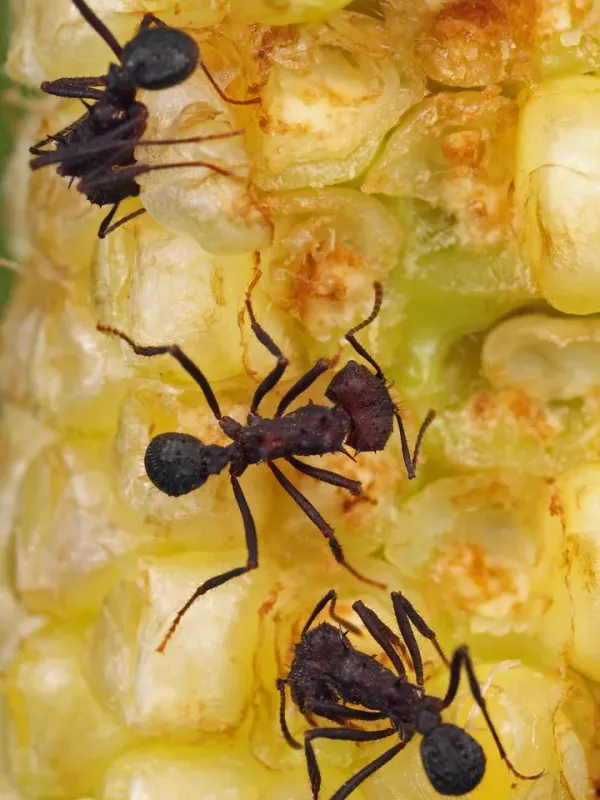
The leafcutter ant (Acromyrmex lundii) belongs to the Formicidae family, subfamily Myrmicinae. These are highly organized insects known for their complex caste system and unique symbiotic relationship with fungi.
Worker ants feature distinct spines on their thorax, which assist in carrying leaf fragments. Their color typically ranges from dark brown to reddish-tan.
Colonies of these ants can number in the tens of thousands, organized around a central queen. Nests are built underground, often at significant depths, with complex tunnel systems and chambers for fungus cultivation.
The biology of the species is inextricably linked to the cultivation of fungi in the genus Leucoagaricus. These ants do not eat plants directly, instead using them as a substrate to grow their fungal gardens.
Equipped with powerful mandibles, these ants can strip vast amounts of plant biomass in a short period to sustain the colony.
What it damages
The pest affects a wide range of crops, including citrus, legumes, grapevines, ornamental plants, and various vegetable crops within its geographical distribution.
The primary damage is caused by massive defoliation, which impairs photosynthesis and leads to significant reductions in agricultural yield.
Young saplings are at high risk, as total defoliation over a few nights can result in the complete death of the plant, as it loses its ability to recover.
They are particularly dangerous in nurseries, where ants can destroy entire stocks of seedlings or young trees by harvesting them as raw material for their fungus nests.
Beyond direct foliage loss, the excavation of underground tunnels can disturb soil structure and damage the root systems of crops.
When it appears
Leafcutter ant activity occurs year-round, although peak periods of harvesting intensity correlate with warm seasons and active plant growth cycles.
The ants are most active at night when foraging, which poses a significant challenge for agronomists trying to monitor crop damage in real-time.
The colony development cycle involves a continuous turnover of worker generations, ensuring a steady pressure on surrounding vegetation regardless of the season.
Reproductive flight events are often triggered by the onset of rainy seasons, facilitating the expansion of their territory and the establishment of new colonies.
The growth rate of the colony is directly dependent on the availability of fresh plant material, which acts as the critical fuel for the survival of the fungus garden.
Signs of infestation
A primary indicator of infestation is the presence of neatly cut leaf fragments, which are transported by ants in organized lines toward their nest entrance.
Visible "ant trails" on the soil surface, where vegetation has been worn down to bare dirt, are clear evidence of high colony activity.
The detection of dome-shaped soil mounds or ventilation holes above ground indicates the proximity of the nest or the extensive underground chamber system.
The sudden appearance of skeletonized or completely defoliated branches on plants, with no pests visible during the day, is a hallmark of leafcutter activity.
- Presence of crescent-shaped cuts along leaf margins.
- Fresh soil mounds near the base of plant stems.
- Constant traffic of worker ants along established foraging trails.
Control measures
The most effective control method involves using toxic baits that worker ants carry back into the nest, ultimately destroying the entire colony, including the queen.
Contact insecticides applied directly to foraging trails are largely ineffective, as the colony can quickly recover if the queen remains protected underground.
Environmentally friendly control includes physical barriers like sticky bands or the use of specific repellents to temporarily deter foragers from high-value crops.
Biological control strategies may involve the use of entomopathogenic fungi specifically targeting this species, which requires professional application and close monitoring.
Regular field scouting to identify early signs of ant activity allows for the localization and eradication of colonies before they reach a stage that causes significant economic loss.
Taxonomy
- Latin name
- Acromyrmex lundii
- Order
- Hymenoptera
- Family
- Formicidae
- EPPO code
- ACRXLU
Discussion
No discussions yet — be the first.