
Heyer's leafcutter ant
Acromyrmex heyeri
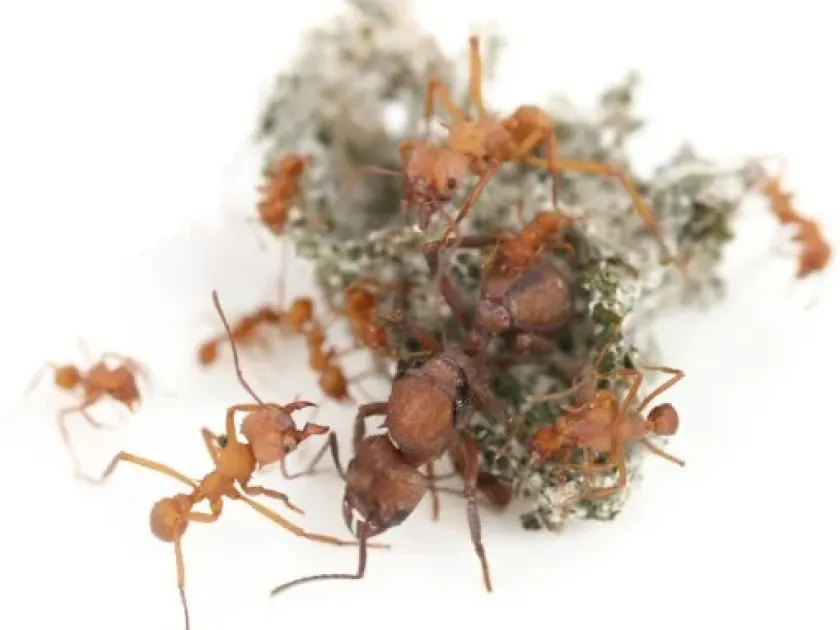
Description
How to identify
Heyer's leafcutter ant (Acromyrmex heyeri) is a member of the Formicidae family, known for its obligate mutualism with fungi, which serves as the colony's primary food source.
Workers of this species are characterized by their polymorphic nature and the presence of spines on their thorax, which help them navigate through vegetation and transport heavy loads.
The colony structure is complex, featuring a queen that manages the growth of the fungus garden and numerous worker castes tasked with foraging, maintenance, and defense.
Underground nests are the heart of the colony, containing elaborate tunnel systems and chambers designed to regulate temperature and humidity for the fungal crops.
Reproduction involves nuptial flights where virgin queens leave the parent colony to establish new nesting sites, taking a starter fungus culture with them to initiate the cycle.
What it damages
This species is a significant agricultural threat in its native range, as it consumes plant material to cultivate its fungus, rather than feeding directly on the plants.
It impacts a wide variety of crops including soybeans, corn, citrus, and various timber species like eucalyptus, leading to substantial yield losses.
Rapid defoliation is the most common form of damage; young saplings can be completely stripped of their foliage overnight, often resulting in mortality.
The persistent harvesting of leaves weakens the plant's physiological condition, making it more susceptible to environmental stress and secondary pathogen infections.
Economic damage is high because the ants can traverse long distances to reach preferred food sources, turning healthy plantations into barren areas within a short time.
Signs of infestation
The most visible sign of infestation is the presence of well-trodden trails leading from the nest to the host plants, often maintained by constant traffic of worker ants.
Leaf damage appears as clean, semicircular or irregular cuts along the edges of leaves, leaving a distinct pattern that differentiates it from typical chewing damage.
Accumulation of soil mounds near nest entrances, combined with piles of rejected organic matter or debris, indicates an active and growing colony underground.
Night-time observations usually reveal high foraging activity, as these ants are more active when temperatures are cooler and predation risk is lower.
An increasing number of leafless stems and missing canopy sections in fruit or timber trees provides strong evidence of Acromyrmex presence.
Control measures
The primary control strategy involves applying toxic baits that foragers bring back to the nest, ultimately killing the fungus and the queen, which eradicates the colony.
Physical barriers such as sticky bands around tree trunks can effectively prevent worker ants from climbing up to the canopy to forage on leaves.
Soil fumigation of nest galleries is another technique used for direct eradication, although it requires precise application to be effective against the deepest chambers.
Biological monitoring and surveillance of the plantation perimeter are critical to detect new nests early, allowing for targeted intervention before populations explode.
Integrated pest management (IPM) programs prioritize early detection and the use of bait formulations to minimize the total amount of pesticide released into the environment.
Taxonomy
- Latin name
- Acromyrmex heyeri
- Order
- Hymenoptera
- Family
- Formicidae
- EPPO code
- ACRXHE
Discussion
No discussions yet — be the first.