
Leafcutter ant
Acromyrmex crassispinus
Description
How to identify
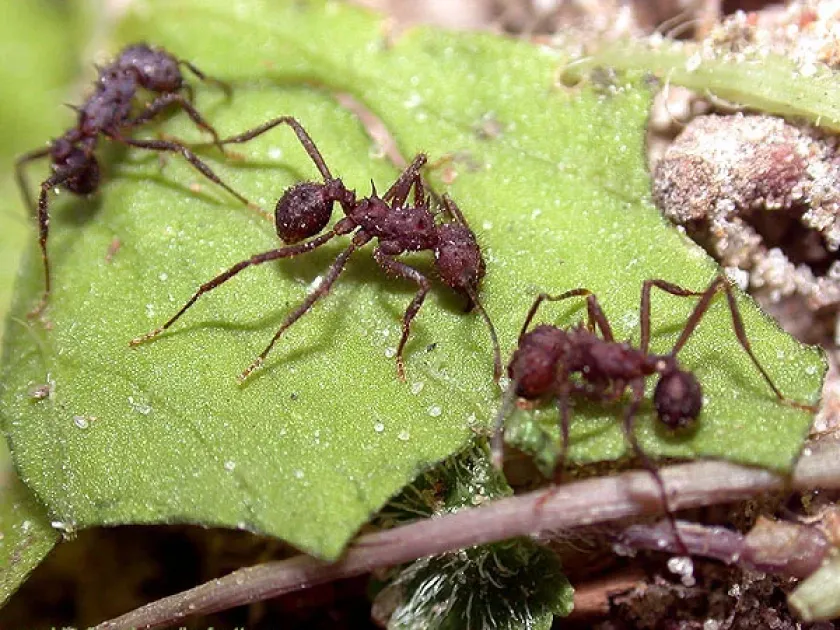
The leafcutter ant (Acromyrmex crassispinus) is a member of the Hymenoptera order and the Formicidae family. This species is easily identified by the presence of numerous prominent spines on its thorax, which provide protection against natural enemies in their environment.
The core biological characteristic of these ants is their symbiotic relationship with fungi. They do not feed on plant tissue directly; instead, they harvest leaf fragments to use as a substrate for cultivating a specific fungus inside their underground nests, which serves as their sole food source.
The nests are complex subterranean systems where worker ants maintain a highly controlled microclimate. This environment is essential for the health of the fungal garden, which supports the growth and survival of the entire colony.
The colony structure is defined by a strict caste system where individuals vary in size according to their assigned roles. These tasks range from foraging and clearing paths to gardening the fungus and caring for the larvae and the queen.
The life cycle follows a standard metamorphosis through egg, larva, and pupa stages. The queen can live for over a decade, ensuring the continuous reproduction and longevity of the colony despite environmental fluctuations.
What it damages
As highly polyphagous pests, leafcutter ants cause significant damage to a wide variety of agricultural crops. Major targets include citrus trees, leguminous plants, vineyards, and various ornamental species that are susceptible to rapid defoliation.
The damage is characterized by a high intensity of herbivory. A single, well-established colony can strip a bush or a small tree of its leaves in a matter of hours, severely impacting the plant's ability to photosynthesize and leading to its rapid decline.
Nurseries and young plantations are particularly at risk, as they lack the biomass reserves to recover from such sudden and heavy attacks. The economic impact can be devastating, resulting in total loss of seedlings and young woody perennials.
The ants establish well-defined foraging trails that can extend over long distances, allowing them to exploit food sources far from their nest entrance. This mobility makes them efficient and difficult-to-contain agricultural pests.
Beyond leaf removal, ants can damage stems and bark. These wounds create pathways for secondary infections, such as bacterial or fungal pathogens, which further weaken the plant's vitality and structural integrity.
Signs of infestation
The most prominent sign of an infestation is the presence of clear, debris-free foraging trails leading from the nest entrance toward target crops. These paths are maintained meticulously by the worker ants.
The damage pattern is highly distinctive: leaves are cut with precision into semi-circular shapes, often leaving behind only the central vein. This look is a classic indicator of leafcutter ant activity as opposed to irregular chewing by other insects.
The presence of large, excavated soil mounds near the nest entrance is a clear indicator. These mounds represent the primary ventilation and exit points for the deep, expansive underground network of the colony.
Observing the area during crepuscular or night hours often reveals columns of ants carrying leaf sections high above their heads. This behavior is a definitive indicator of an active leafcutter colony in the immediate vicinity.
- Defoliated branches and trees.
- Fresh soil excavation mounds around burrow entrances.
- Distinctive clear-cut tracks on the soil surface.
Control measures
Effective management of Acromyrmex crassispinus requires targeting the entire colony, including the queen hidden deep underground. Relying solely on surface-level control rarely yields long-term results due to the depth of the nest.
The application of slow-acting toxic baits is the most efficient control method. Workers transport the bait into the nest, where it is shared with the queen and the fungus, leading to the collapse of the colony's central support system.
Mechanical destruction of the nest is often impractical due to its complexity and depth. However, in specific cases, fumigation of the main nest entrances can help reduce the population in high-pressure areas.
Biological control methods involve the use of entomopathogenic fungi designed to infect the colony from within. This approach requires precise application and favorable environmental conditions to be successful.
Preventive measures include the installation of physical barriers or sticky traps around the base of high-value trees to obstruct the foraging paths. These methods can protect specific crops during the most vulnerable stages of their growth cycle.
Taxonomy
- Latin name
- Acromyrmex crassispinus
- Order
- Hymenoptera
- Family
- Formicidae
- EPPO code
- ACRXCR
Discussion
No discussions yet — be the first.