
Leafcutter ants
Acromyrmex
Description
How to identify
Leafcutter ants, belonging to the genus Acromyrmex within the Formicidae family, are remarkable social insects. They are famous for their complex subterranean colonies and their unique symbiotic relationship with fungi.
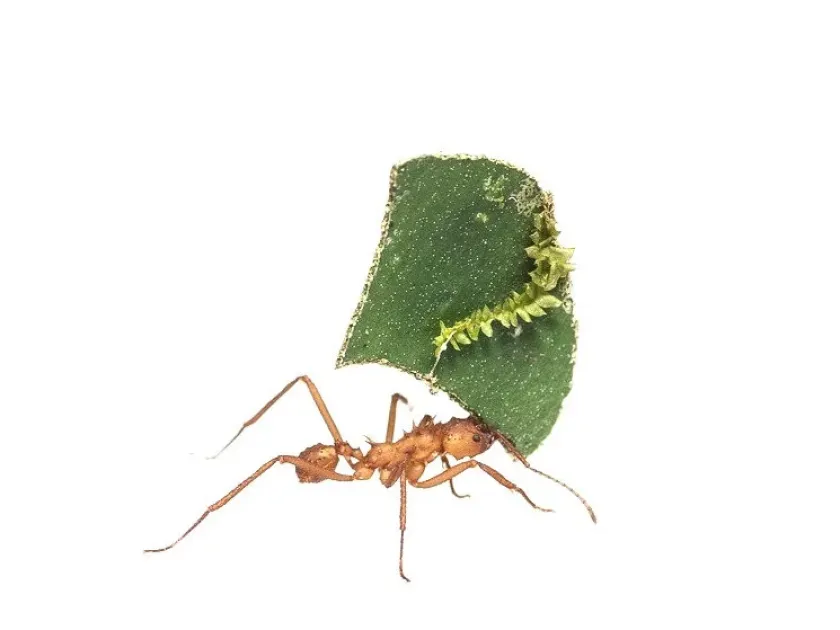
They are easily identified by the presence of prominent spines on their thorax, which help them transport bulky foliage. The colony exhibits a strict caste system where individuals perform specific tasks based on their size.
Unlike most herbivores, they do not eat the plant material itself. Instead, they use collected leaves as a substrate to cultivate a specific fungus, which serves as the exclusive food source for the entire colony.
Colonies can grow to enormous sizes, consisting of hundreds of thousands of individuals. They construct intricate tunnels with ventilation shafts designed to maintain the exact temperature and humidity required for fungus growth.
The queen is the heart of the colony and can live for over a decade, constantly producing eggs to maintain the workforce. This allows colonies to survive for many years in the same location if left unchecked.
What it damages
Leafcutter ants are considered major agricultural pests as they can defoliate a wide variety of plants, including citrus, coffee, vegetables, and ornamental shrubs. No plant is entirely safe from their foraging habits.
The damage is caused by the rapid and massive removal of leaf tissue. A large colony can strip a medium-sized tree or a significant portion of a vegetable crop overnight, severely impacting plant health.
Defoliation reduces the photosynthetic capacity of the plants, leading to stunted growth, reduced yields, and, in severe cases, the death of young seedlings that cannot recover from the loss of foliage.
They also damage buds and young shoots, which interferes with the reproductive development of crops. This causes significant economic losses for farmers and gardeners in infested areas.
Beyond direct damage to leaves, the sheer physical activity of building mounds can disturb soil structures and root systems, further stressing the vegetation in the area.
Signs of infestation
The most distinctive sign of a leafcutter ant presence is the well-worn, cleared trails they create between their nest and the host plants. These paths often look like miniature roads devoid of any debris.
Observers can easily spot ants carrying large, circular or irregular pieces of leaves over their backs. This behavior is so characteristic that the ants appear to be marching in a green line.
The presence of large, circular mounds of excavated soil at the entrance to the nest is another hallmark of their activity. Multiple entrances are common in larger colonies.
Visual inspection of the plants will reveal neatly cut, semi-circular edges on the leaves. This is a clear indicator that leafcutters are foraging in the vicinity.
Since these ants are often most active during the night, performing a night survey with a flashlight is the most effective way to identify their activity level and locate their main trails.
Control measures
Controlling leafcutter ants is notoriously difficult because contact insecticides rarely reach the heart of the colony. The main fungus garden is protected deep underground, far from the foraging workers.
The most effective strategy involves the use of toxic baits. Workers mistake the bait for food and carry it deep into the nest, where it is incorporated into the fungus garden, eventually poisoning the entire colony and the queen.
Baits containing active ingredients like fipronil or sulfluramid are highly effective when applied correctly along the foraging trails. Timing the application when the ants are most active is crucial.
- Place bait stations strategically near main ant trails.
- Avoid manual destruction of mounds as it often causes the colony to relocate.
- Maintain a vigilant monitoring schedule to detect new foraging activity.
In addition to chemical baits, some biological control agents targeting the symbiotic fungus are being developed to provide a more sustainable long-term solution for large-scale agricultural operations.
Taxonomy
- Latin name
- Acromyrmex
- Order
- Hymenoptera
- Family
- Formicidae
- EPPO code
- ACRXSP
Discussion
No discussions yet — be the first.