
Neanastatus cinctiventris
Neanastatus cinctiventris
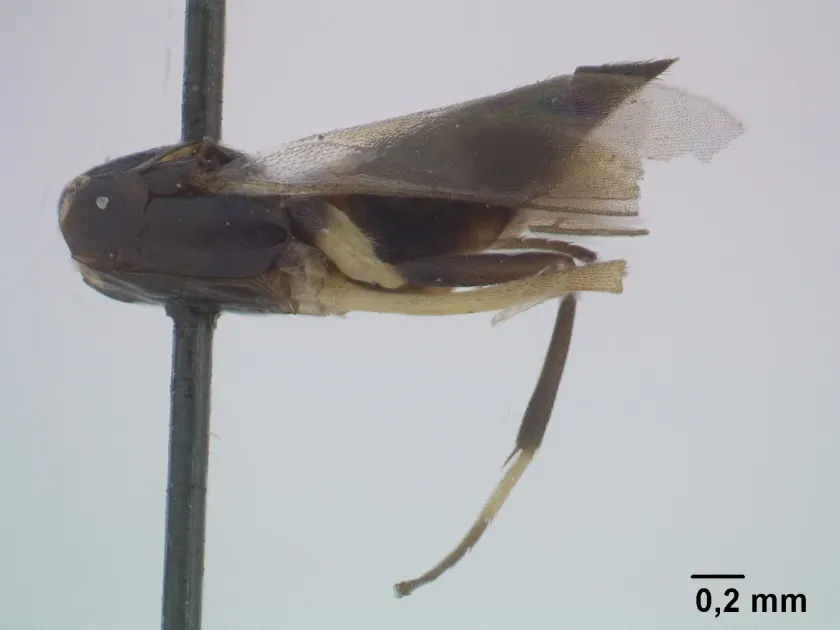
Description
How to identify
Neanastatus cinctiventris is a species of parasitic wasp belonging to the family Eupelmidae. These insects are small and often exhibit metallic colorations, which is typical for many chalcidoid wasps in the Hymenoptera order.
Identification of this species usually requires the examination of specific diagnostic traits such as the wing venation patterns and the structure of the antennae. In a field environment, identifying this insect can be challenging due to its small size and often cryptic behavior.
The life cycle of the insect is closely linked to the developmental stages of various cereal grasses. Understanding the phenology of the pest is crucial for agronomists to determine when the insects are most active and likely to pose a threat to crops.
Adults are capable of flight and disperse throughout fields, often seeking suitable hosts for oviposition. Monitoring programs using yellow sticky cards are standard practice to detect the arrival and population density of the pest.
Researchers focus on the biological characteristics of the species to differentiate it from beneficial parasitic wasps that might be present in the same agro-ecosystem, as misidentification could lead to unnecessary pesticide application.
What it damages
This pest primarily affects cereal crops, including wheat and barley. The larval stage is responsible for the damage, as they feed within the plant tissues, often causing physiological disruption to the host.
As larvae develop inside the stems, they hinder nutrient and water transport within the plant. This leads to stunted growth, reduced tillering, and an overall decrease in the biomass of the infested crop.
The damage is most severe when infestation levels are high, leading to significant yield losses. Affected plants often exhibit weakened stems, which increases the risk of lodging, especially under adverse weather conditions.
Besides the direct damage caused by feeding, the presence of the pest can weaken the structural integrity of the crop, making it more susceptible to environmental stress and secondary infections by fungi or bacteria.
Economic losses are not only due to the reduction in total grain weight but also due to the lower quality of the grain, which can result in reduced market value for the harvest.
Control measures
Integrated pest management (IPM) strategies are essential for controlling Neanastatus cinctiventris. Crop rotation remains one of the most effective methods to disrupt the lifecycle of the insect by removing the host plants from the area.
Cultural practices, such as deep plowing after harvest, are recommended to bury crop residues where the pest might be overwintering. This simple step can significantly reduce the local population density for the next season.
Chemical control should be implemented based on careful monitoring and the assessment of economic thresholds. Systemic insecticides are generally effective when applied during critical periods of the insect's life cycle.
It is vital to use pesticides responsibly to avoid harming the natural enemies of the pest, which can often play a role in suppressing population growth in unsprayed areas.
- Regular monitoring of fields using traps.
- Selecting resistant crop varieties.
- Proper disposal of crop stubble after the harvest.
Taxonomy
- Latin name
- Neanastatus cinctiventris
- Order
- Hymenoptera
- Family
- Eupelmidae
- EPPO code
- NEANGR
Discussion
No discussions yet — be the first.