
Eupelmus xiphidii
Eupelmus xiphidii
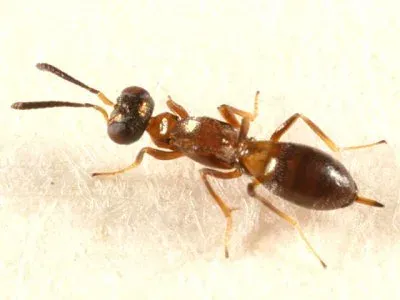
Description
How to identify
Eupelmus xiphidii is an insect belonging to the order Hymenoptera and the family Eupelmidae. It is a specialized species that can act as a significant pest in agricultural ecosystems under favorable conditions.
Adults exhibit a metallic luster and slender body structure. Accurate identification typically requires professional entomological expertise due to the similarities with other Hymenoptera species.
The life cycle encompasses a complete metamorphosis, including egg, larva, pupa, and adult stages. This biological trait allows the insect to adapt to various environmental conditions.
Larvae develop within plant tissues, which serves as a natural defense mechanism against environmental stressors and many traditional biological enemies.
The species displays high reproductive potential, allowing populations to grow rapidly when the host plants are abundant and weather conditions are optimal.
What it damages
This pest primarily affects cereal crops, causing structural damage to the stems and developing grain heads during the critical stages of maturation.
By feeding inside the stalks, the larvae disrupt the vascular system, which limits nutrient and water transport to the upper parts of the plant.
The damage often results in stunted growth and a significant reduction in grain weight, directly impacting the final yield and market quality of the harvest.
Furthermore, weakened plants are more susceptible to opportunistic pathogens, leading to an increased risk of fungal or bacterial infections in the field.
Economic losses vary, but in high-density infestation cases, the reduction in yield can be substantial, necessitating urgent intervention.
Signs of infestation
The most visible sign of infestation is the premature yellowing of spikes in wheat or barley fields, which stands out against the green canopy.
Distorted or bent stems, often referred to as "lodging," can occur as a direct result of larval activity inside the hollow part of the stalk.
Upon closer inspection, farmers may find tiny exit holes on the plant surface, indicating that the larvae have completed their development and emerged.
Grain samples from affected fields often show signs of shriveling and poor filling, which is a common indicator of underlying pest presence.
- Premature yellowing of spikes.
- Stalk distortion and weakness.
- Exit holes on stems.
- Shriveled, low-quality grain.
Control measures
Cultural practices, such as proper crop rotation, are essential to break the life cycle of the pest and reduce its population density in the field.
Deep plowing after harvest is highly effective, as it buries crop residues and destroys the overwintering sites for the larvae and pupae.
Chemical control should be applied based on economic thresholds, using systemic insecticides during the peak activity period of the adult population.
Field monitoring using yellow sticky traps is a reliable way to detect early signs of infestation and determine the optimal timing for spray applications.
Selecting resistant crop varieties with thicker stems can provide a significant defense against the penetration of the pest and minimize overall damage.
Taxonomy
- Latin name
- Eupelmus xiphidii
- Order
- Hymenoptera
- Family
- Eupelmidae
- EPPO code
- EUPEXI
Discussion
No discussions yet — be the first.