
Eupelmus vesicularis
Eupelmus vesicularis
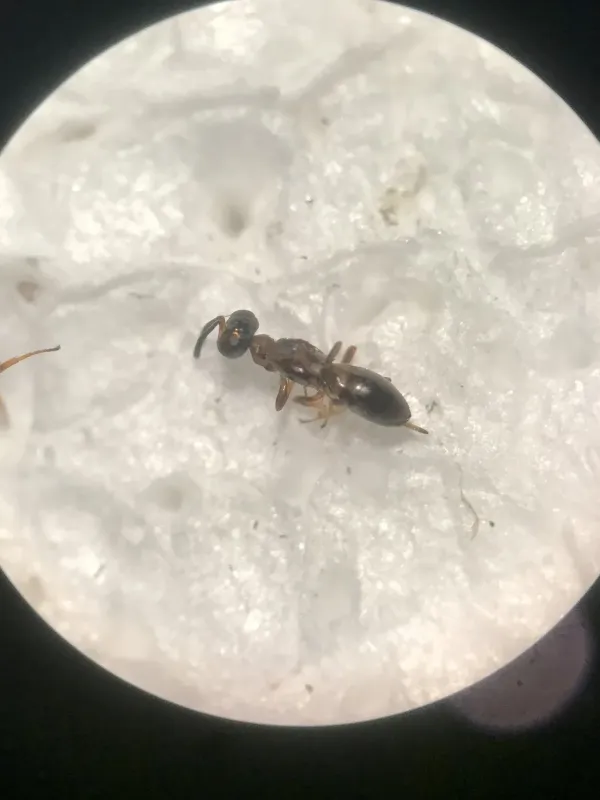
Description
How to identify
Eupelmus vesicularis is a small parasitic wasp belonging to the family Eupelmidae, characterized by a metallic sheen on its body, often exhibiting green or bronze reflections.
Females are typically larger than males and possess a specialized ovipositor, which is essential for piercing plant tissues or accessing hosts hidden within stems.
The morphology of this species allows it to thrive in diverse environments, displaying significant plasticity in its life cycle strategies depending on the available host species.
As a member of the Chalcidoidea superfamily, it exhibits complex behavioral patterns related to host location and subsequent larval development.
The larval stage is white, legless, and adapted to consume internal fluids of its host, completing its development within a protected environment such as a gall or a burrow.
What it damages
In agronomic practice, Eupelmus vesicularis is often categorized as a secondary parasite, which can complicate the natural control of primary cereal pests.
It does not directly feed on crops, but by parasitizing the larvae of beneficial insects (such as other parasitoid wasps), it may reduce the overall efficiency of biological control.
Cereal crops like wheat, barley, and rye are primary habitats where this insect interacts with a wide range of host larvae, including sawflies and other cereal-infesting species.
The ecological impact is highly dependent on the density of host populations and the presence of other natural enemies in the same crop ecosystem.
Excessive population growth of this species can lead to a disturbance in the balance of integrated pest management (IPM) programs on cereal fields.
When it appears
The flight of adult wasps typically aligns with the active growing season of cereal crops, ensuring that suitable hosts are available for the next generation.
Overwintering occurs primarily at the larval or pupal stage, often tucked away in crop residues or stubble, providing protection against harsh winter conditions.
Emergence in the spring is triggered by rising temperatures and environmental cues that signal the onset of host activity in the fields.
Depending on geographical location and local climatic conditions, the insect can produce one or more generations throughout the growing season.
Adult longevity is relatively short, focusing primarily on mating and locating appropriate hosts to deposit eggs for successful larval development.
Signs of infestation
Identifying the presence of Eupelmus vesicularis is challenging because it leaves no visible external damage on the leaves or stems of the host plants.
Entomologists detect its activity by analyzing the mortality rates of beneficial insects within collected field samples or by observing exit holes on pest larvae.
Field monitoring using yellow sticky traps or sweep netting provides data on adult wasp density, which serves as an indicator of potential parasitic activity.
The presence of mummified or collapsed pest larvae inside plant stalks is a key diagnostic feature indicating that a parasitoid has completed its life cycle.
Because the insect is small and elusive, high-precision laboratory methods are often required to accurately determine the level of parasitism in a field.
Control measures
Managing Eupelmus vesicularis is rarely a primary concern, as it is part of the natural complex of insect species found in agricultural landscapes.
The most effective strategy is to implement IPM practices that favor the biodiversity of beneficial insect populations rather than attempting to eradicate specific species.
Good agricultural practices, such as the proper disposal or incorporation of crop residues, can limit the availability of overwintering sites for the wasp.
Avoiding the unnecessary use of broad-spectrum insecticides helps preserve the natural balance between parasites, hyper-parasites, and agricultural pests.
Continuous monitoring of the field entomofauna enables farmers to make informed decisions that promote long-term ecological stability and crop health.
Taxonomy
- Latin name
- Eupelmus vesicularis
- Order
- Hymenoptera
- Family
- Eupelmidae
- EPPO code
- EUPEVE
Discussion
No discussions yet — be the first.