
Eupelmus tachardiae
Eupelmus tachardiae
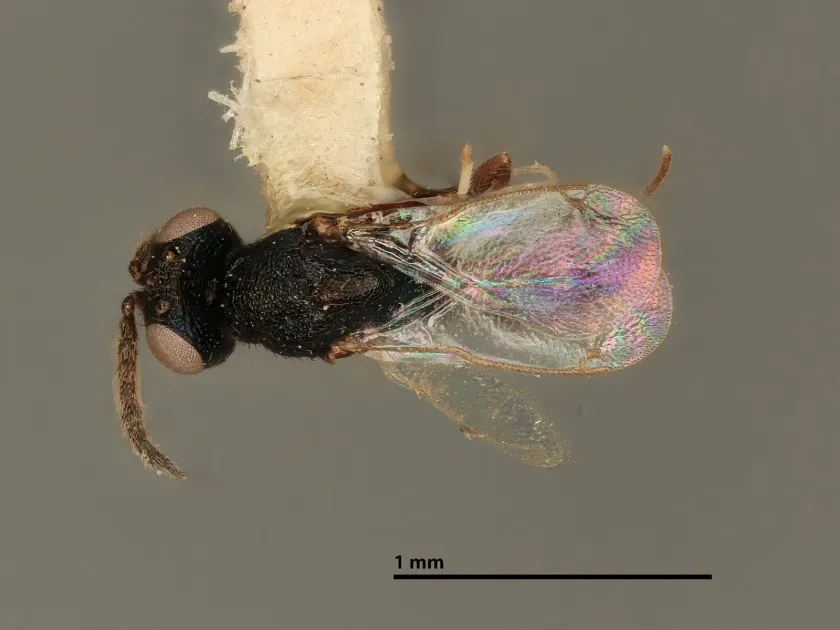
Description
How to identify
Eupelmus tachardiae is a species belonging to the order Hymenoptera and the family Eupelmidae. These insects are known for their complex parasitic lifestyle and distinct morphology.
Adults often display a metallic sheen, and the females of this species frequently exhibit wing reduction or absence, which is a key diagnostic feature.
The larvae are typically endoparasitic, developing inside the body of a host insect, often associated with scale insects or other pests on woody plants.
Accurate identification usually requires specialized entomological equipment due to their microscopic size and complex taxonomy within the Eupelmidae family.
Their life history involves specialized sensory organs on the antennae used to locate hosts, making them highly efficient, albeit potentially harmful, components of the orchard ecosystem.
What it damages
The primary concern regarding this species is its role as a hyperparasitoid, meaning it targets the beneficial natural enemies of agricultural pests.
By attacking the parasitoids and predators that keep scale insect populations in check, Eupelmus tachardiae can lead to outbreaks of primary pests.
It impacts a variety of trees and shrubs, often going unnoticed until the primary pest population causes visible damage to the plant host.
Economic damage is largely indirect, resulting from the suppression of biological control agents in commercial orchards and plantations.
The cumulative effect of their activity is a destabilized ecological environment, which complicates the management of sensitive plant varieties.
When it appears
The life cycle of Eupelmus tachardiae is highly dependent on environmental factors, particularly ambient temperature and humidity levels in the canopy.
Activity levels typically surge during the growing season, aligning with the reproductive cycles of their primary and secondary hosts.
Multiple generations per year are possible, allowing the species to rapidly colonize new areas when conditions are favorable.
Overwintering occurs at the larval or pupal stage, often sequestered under the bark of host trees to survive cold weather conditions.
The emergence of adults usually follows the onset of sustained warm temperatures in the spring, marking the beginning of their parasitic activity.
Signs of infestation
Infestation is often identified by the presence of small, characteristic exit holes in the cuticles of host insects like scale insects.
Stunted growth or chlorosis in the affected parts of the plant may indicate a collapse of the beneficial insect population due to parasite intervention.
Yellow sticky traps placed in the canopy can capture adult specimens, confirming their presence and helping to estimate population density.
Microscopic analysis of host remains reveals the presence of larval stages or pupal chambers associated with this species.
Observation of high primary pest activity without a corresponding presence of beneficial parasitoids suggests the presence of hyperparasites like this species.
Control measures
Control strategies must prioritize the preservation of the local predator population to maintain natural balance within the agricultural landscape.
Chemical control should be avoided or limited to highly specific, systemic products that do not broad-spectrum damage the surrounding ecosystem.
Integrated Pest Management (IPM) practices, including regular monitoring and field sanitation, are essential for effective population control.
- Pruning and removing infested branches to destroy overwintering sites.
- Applying horticultural oils to manage host insect populations.
- Utilizing biological controls like fungi to regulate insect populations.
Maintaining high biodiversity in and around fields provides a buffer that naturally limits the influence of hyperparasitoids on the farm.
Taxonomy
- Latin name
- Eupelmus tachardiae
- Order
- Hymenoptera
- Family
- Eupelmidae
- EPPO code
- EUPETA
Discussion
No discussions yet — be the first.