
Eupelmus microzonus
Eupelmus microzonus
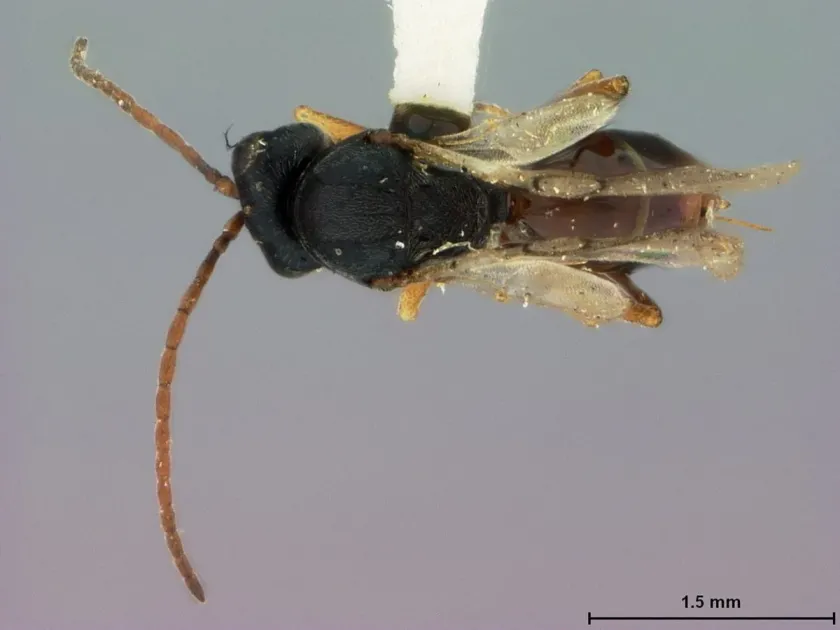
Description
How to identify
Eupelmus microzonus is a species of parasitic wasp belonging to the family Eupelmidae (Order: Hymenoptera). The adult insect is characterized by a small body size and a distinct metallic sheen.
Females are equipped with a specialized ovipositor that enables them to pierce dense plant tissues to reach their hosts. This morphological feature is essential for their survival in the complex environment of cereal ears.
Identifying this species in the field is difficult due to its microscopic size. Agronomists typically rely on sweep netting and subsequent laboratory examination under a microscope for accurate confirmation.
This species often acts as a parasitoid, impacting the population dynamics of other arthropods within the agroecosystem. Its complex life cycle is intricately linked to the availability of specific hosts throughout the season.
The insects are adapted to the microclimatic conditions found within the canopy of cereal crops, which provides them with protection from extreme environmental stressors.
What it damages
The primary hosts for Eupelmus microzonus include wheat, barley, and rye. The pest focuses its activity on the ear of the plant, which is the most critical organ for grain production.
Damage occurs primarily during the grain filling stage. The piercing of plant tissues interferes with nutrient flow, leading to stunted grain development and overall yield loss.
Beyond direct damage, the activity of these wasps can disrupt the natural biological control of other pests, such as thrips or cereal flies, causing secondary infestations to escalate.
Physical injuries to the ear tissues can also facilitate the entry of secondary fungal pathogens. This results in reduced grain quality and potential contamination issues.
The economic impact of the pest depends on population density and environmental conditions. Significant infestations can drastically reduce the thousand-kernel weight of the crop.
When it appears
The activity of Eupelmus microzonus typically begins during the stem elongation and heading phases of cereal development. This is when adults migrate to the fields for mating and egg-laying.
Optimal environmental conditions for reproduction include temperatures between 20 and 25 degrees Celsius. Moderate humidity levels are also critical for the survival of the developing larvae.
The species completes several generations during a single growing season. This reproductive strategy allows the population to increase rapidly when favorable conditions persist.
Overwintering usually occurs in the larval or pupal stage within crop residues, stubble, or the top layer of soil. The emergence of the new generation in spring is triggered by rising temperatures.
Phenological synchronization between the crop and the wasp is a major factor in determining the severity of the infestation. Late seeding dates may shift the pest cycle relative to the plant growth stages.
Signs of infestation
The first signs of infestation include the presence of minute puncture marks on the glumes. A closer inspection may reveal uneven development of the ear compared to healthy plants.
Plants affected by these wasps may appear paler and show symptoms of retarded growth. In severe cases, partial sterility of the spikes can be observed during the ripening stage.
Adult wasps are often visible on the ears during the early morning hours when they are less active. Field monitoring should be conducted during these calm periods.
An indirect sign of the presence of Eupelmus microzonus is the occurrence of other pest colonies, such as thrips, which are frequently targeted by this parasitoid.
- Minute punctures on ear tissues
- Uneven grain maturation
- Reduced filling of ears in the central section
- Identification of adults via microscopic analysis
Control measures
Cultural control is the cornerstone of managing Eupelmus microzonus. Deep plowing of harvest residues after the season significantly destroys overwintering sites.
Effective crop rotation practices prevent the build-up of the pest population on the same acreage over consecutive years. This disruption of the life cycle is vital for sustainable management.
Chemical control should be reserved for instances where the economic injury level is exceeded. Insecticides such as pyrethroids or organophosphates are effective when applied during adult emergence.
Monitoring field margins and adjacent wild grass areas is essential, as these locations often serve as reservoirs for the pest. Integrated Pest Management (IPM) strategies should be prioritized.
Future management efforts are focusing on biological control agents that can naturally regulate the wasp population, reducing the reliance on broad-spectrum synthetic pesticides.
Taxonomy
- Latin name
- Eupelmus microzonus
- Order
- Hymenoptera
- Family
- Eupelmidae
- EPPO code
- EUPEMC
Discussion
No discussions yet — be the first.