
Eupelmus degeeri
Eupelmus degeeri
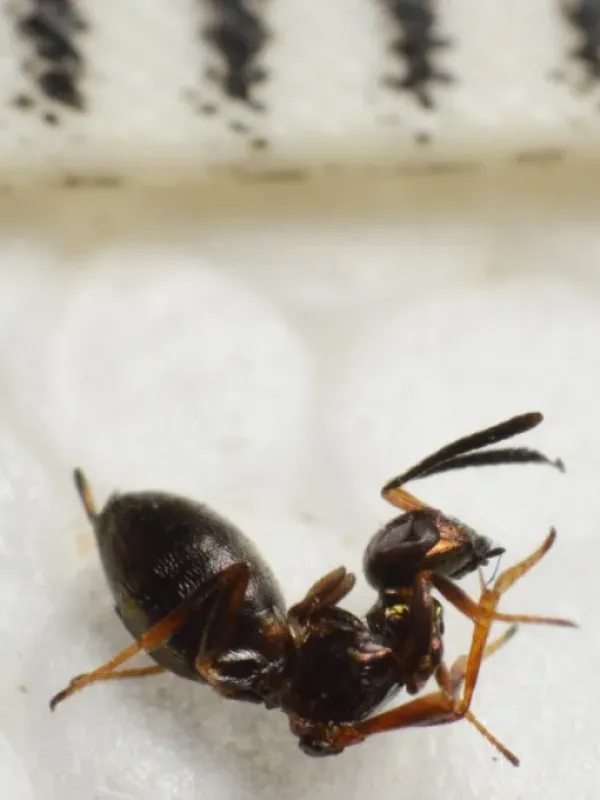
Description
How to identify
Eupelmus degeeri belongs to the order Hymenoptera and the family Eupelmidae. These insects are small wasps that play a significant role in agricultural ecosystems, acting as both potential pests and natural biocontrol agents depending on the host plant.
The adult form is characterized by a slender body with a metallic sheen. They are highly mobile and possess specialized ovipositors that allow them to penetrate plant tissues or the cuticle of their host organisms.
Their life cycle consists of four distinct stages: egg, larva, pupa, and adult. They undergo complete metamorphosis, with the larval stage often occurring internally within the host plant or host insect.
Development is highly synchronized with the growth phases of cereal crops. Environmental factors such as temperature and humidity significantly influence the timing and intensity of their annual outbreaks.
Monitoring for adults can be conducted using yellow sticky traps or visual inspection of stems during the active vegetative growth phase of crops like wheat or barley.
What it damages
The primary impact of Eupelmus degeeri is observed in cereal crops where larvae bore into stems. This internal feeding disrupts the plant's vascular system, leading to restricted nutrient transport.
Symptoms of infestation include premature yellowing of the upper leaves, stunted stem growth, and structural weakness of the plant base, which makes the crop susceptible to lodging.
In cases of high infestation, the formation of the ear is compromised, resulting in unfilled or "blank" grain, which drastically reduces the commercial value and yield potential of the harvest.
The punctures made by the female during oviposition often serve as entry points for phytopathogenic fungi, leading to secondary diseases that further deteriorate the health of the plants.
Economic damage is most severe when infestations occur during early development stages, as the plant lacks the vigor to compensate for the damage caused by the larval feeding process.
Control measures
Managing Eupelmus degeeri requires a combination of preventative agricultural practices and, when necessary, targeted chemical interventions during peak activity periods.
Cultural control measures, such as deep plowing and the thorough incorporation of crop residues into the soil, are essential for destroying overwintering populations and reducing future infestation risks.
Crop rotation remains the most effective long-term strategy. By avoiding the cultivation of susceptible cereal hosts in consecutive seasons, farmers can break the life cycle of the pest.
When pest population thresholds are exceeded, systemic insecticides should be applied during the initial stages of adult emergence to prevent egg-laying and minimize initial damage.
Biological control methods, focusing on the preservation of natural predators and the use of entomopathogenic fungi, are becoming increasingly important for sustainable management in modern agriculture.
Taxonomy
- Latin name
- Eupelmus degeeri
- Order
- Hymenoptera
- Family
- Eupelmidae
- EPPO code
- EUPEDE
Discussion
No discussions yet — be the first.