
Eupelmus afer
Eupelmus afer
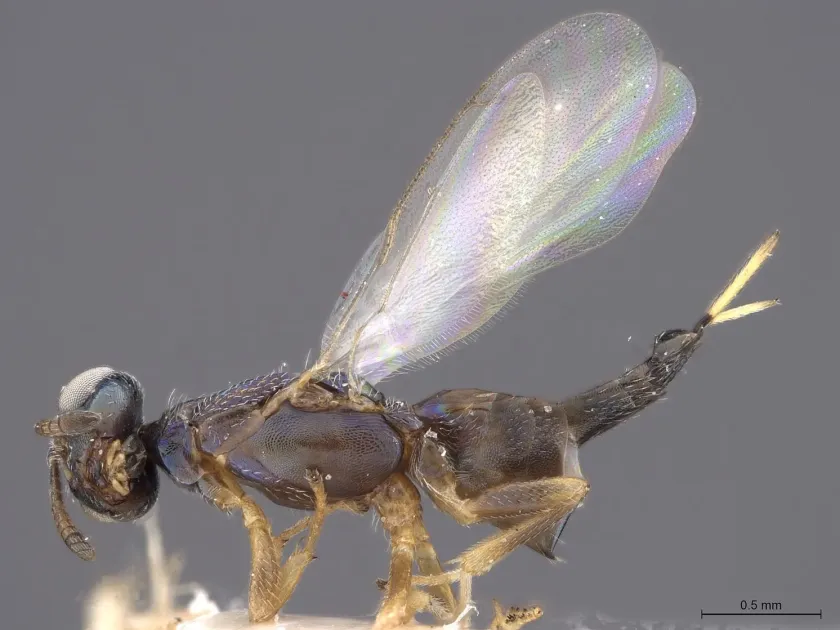
Description
How to identify
Eupelmus afer is a species belonging to the order Hymenoptera and the family Eupelmidae. This insect is a small parasitic wasp that can exhibit dual behavior, acting as either a beneficial entomophagous species or a primary pest of cereal crops depending on the environmental conditions.
Adults are characterized by an elongated body with a distinct metallic sheen, typically displaying dark green or black colors. Their wings are well-developed, facilitating active dispersal across agricultural landscapes in search of host plants or prey.
The larvae are whitish in color and exhibit a morphology typical of parasitic hymenopterans. Due to their endoparasitic lifestyle, they develop within plant tissues or the bodies of other insects, making them difficult to detect without careful field scouting.
The life cycle involves complete metamorphosis, closely synchronized with the phenology of cereal crops. The insect typically targets the grain-filling stage, where the nutritional resources are optimal for larval development.
Accurate identification of Eupelmus afer is crucial, as its classification as a pest or a beneficial agent depends on the specific ecosystem balance and the presence of alternative hosts within the agricultural area.
What it damages
Eupelmus afer primarily damages cereal crops, with wheat, barley, and rye being the most susceptible hosts. The damage occurs during the generative stage of plant development, impacting the spike and the forming grain.
The larvae feed on the content of the kernels, causing them to become shriveled, malformed, or entirely hollow. This direct damage significantly reduces the quality and quantity of the harvest, impacting both yield weight and grain marketability.
Besides direct feeding damage, the presence of the larvae compromises the structural integrity of the spike. This often facilitates the entry of secondary fungal pathogens, leading to further decay and spoilage of the crop.
Economic losses are associated not only with the loss of total grain mass but also with a downgrade in grain quality classes, which significantly affects the profitability of cereal production.
In cases of high infestation, the pest can cause extensive damage to the spike, resulting in empty glumes and a visible reduction in yield that can be measured during harvest season assessments.
When it appears
The emergence of adult Eupelmus afer typically coincides with the booting, heading, and flowering stages of cereal crops. During this time, adults are most active in searching for suitable sites for oviposition.
Activity levels are highly influenced by meteorological conditions, particularly temperature and humidity. Warm and dry weather conditions generally accelerate the development of generations, potentially leading to population spikes.
The species overwinters primarily in the larval or pupal stage, residing in plant debris, stubble, or within the bodies of hosts. As temperatures rise in spring, development resumes, leading to adult emergence before or during the susceptible crop growth stages.
The number of generations per year depends on the local climate and available hosts. The most critical generation for agricultural producers is the one that coincides with the grain-filling period of the major grain crops.
Effective monitoring should begin during the early stages of crop development, utilizing sweep netting or sticky traps to detect the presence and density of the pest at the field edges.
Signs of infestation
The initial signs of infestation include tiny entrance holes on the glumes or premature yellowing of the spikelets. These symptoms are often localized and not directly related to water or nutrient stress.
Inspection of individual kernels often reveals the presence of larvae or evidence of feeding inside the grain. Damaged kernels lack an endosperm, appear desiccated, and often show signs of structural deformation.
Increased insect activity on the upper parts of the plants during early morning or evening hours can serve as an indirect indicator of pest presence and the need for closer inspection of the spikes.
It is important to differentiate between Eupelmus afer damage and damage caused by other grain-feeding insects such as cereal flies. Eupelmus larvae are typically found deep within the caryopsis, a diagnostic feature detectable by microscopic examination.
Pheromone traps are highly effective for detecting and identifying the pest early in the season, allowing producers to make informed decisions about intervention strategies.
Control measures
A diversified crop rotation is the primary preventive measure, as it prevents the buildup of pest populations in specific areas. Avoiding cereal-on-cereal monocultures is key to breaking the pest's life cycle.
Deep fall tillage is an effective cultural practice that destroys overwintering sites, including pupae and larvae hidden in crop residues and stubble, thereby significantly reducing the potential population for the following year.
Chemical control should be implemented only when the economic threshold is exceeded. Systemic insecticides are generally used during the heading stage, with careful selection of products to minimize impact on beneficial non-target insects.
Biological control strategies focus on preserving natural enemies. Maintaining a healthy ecosystem with a diversity of predatory and parasitic insects helps keep Eupelmus afer populations below the economic injury level.
Post-harvest management, including stubble incorporation and timely field sanitation, is essential for reducing overwintering populations and ensuring that no life stages survive to infest the next season's crop.
Taxonomy
- Latin name
- Eupelmus afer
- Order
- Hymenoptera
- Family
- Eupelmidae
- EPPO code
- EUPEAF
Discussion
No discussions yet — be the first.